Japanese construction firm Shimizu Corporation has developed a series of bold architectural plans for the world of tomorrow. Here is a preview of seven mega-projects that have the potential to reshape life on (and off) Earth in the coming decades.
* * * * *
- Luna Ring
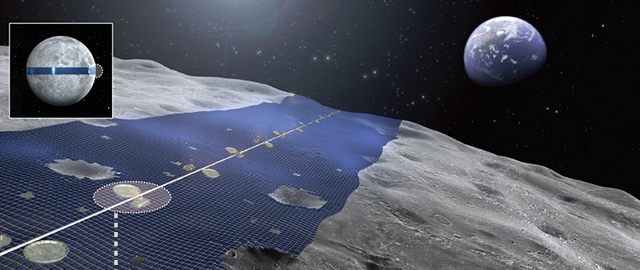
In response to the ever-growing demand for energy, Shimizu has developed plans for the Luna Ring, a project that seeks to transform the Moon into a massive solar power plant.
Luna Ring's 11,000-kilometer (6,800-mile) "solar belt" spans the Moon's equator
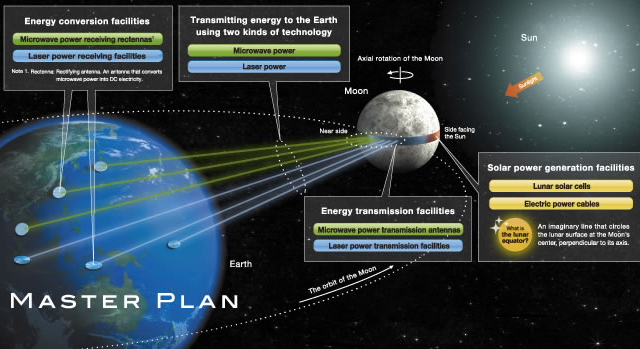
Electricity collected by the Luna Ring's enormous "solar belt" is relayed to power conversion facilities located on the near side of the Moon. There, the electricity is converted into powerful microwaves and lasers, which are beamed at Earth. Terrestrial power stations receive the energy beams and convert them back to electricity.
Luna Ring feeds power to energy-hungry Earth
The solar power plant is built mainly using lunar resources. Moon rocks and dust are used to manufacture building materials such as cement, bricks and glass fibers. Water is produced through a chemical process involving lunar soil and hydrogen.
Large machinery and equipment from Earth is assembled in space and landed on the lunar surface for installation. Much of the construction is performed by robots controlled by people on Earth, and a team of human astronauts is stationed on the Moon to supervise the robot operations. [More]
* * * * *
- Green Float
Shimizu's Green Float project seeks to build "botanical" cities that float like giant lily pads in the equatorial Pacific, where sunlight is plentiful and the impact of typhoons is minimal.
Lily pad-like cities at sea
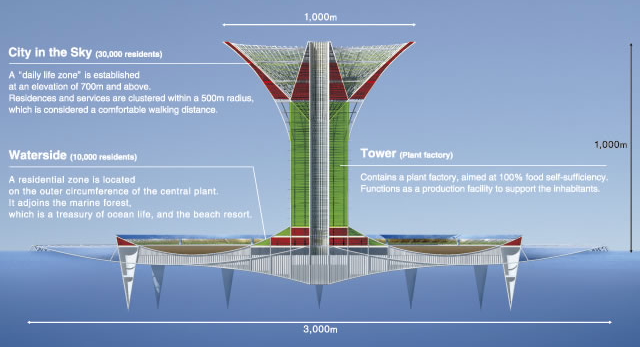
Each floating island features a 1,000-meter (3,300-ft) central tower. The lower section of the tower serves as an industrial area with offices and factories employing 10,000 workers, while the upper section functions as a residential area for 30,000 people. Another 10,000 residents live at ground level, in low-rise townhouses near the beach.
Green Float islands are 3 kilometers (1.9 mi) in diameter and support a population of 40,000
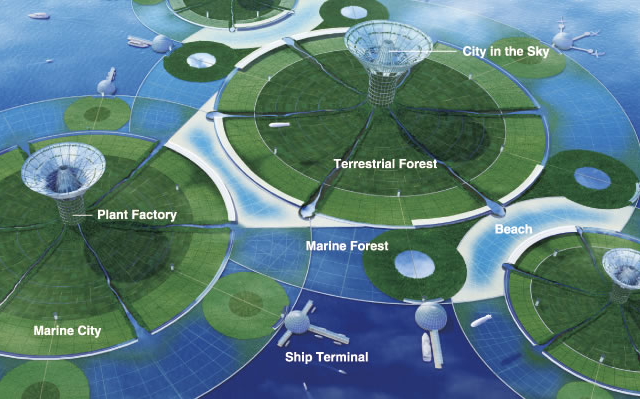
The typical Green Float island landscape consists of forests, grasslands, waterways and reservoirs. A portion of the land is set aside for agriculture and some of the shallow beaches are used for cultivating seafood, making the islands 100% food self-sufficient.
The eco-friendly Green Float cities rely on a variety of natural energy sources, including wave, wind and solar power, as well as ocean thermal energy conversion.
Green Float islands join to form a floating metropolis
Green Float islands are built upon a floating base of connected hexagonal tubes that each weigh 7,000 tons and measure 20 meters (65 ft) across and 50 meters (165 ft) deep. The primary structural material for the honeycomb-like base, as well as for the island's buildings, is magnesium alloy. Seawater -- which is composed of 0.13% magnesium by weight -- is an abundant source of magnesium. One ton of the material can be extracted from 770 tons of seawater. [More]
* * * * *
- Mega-City Pyramid
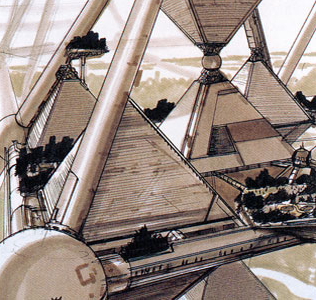
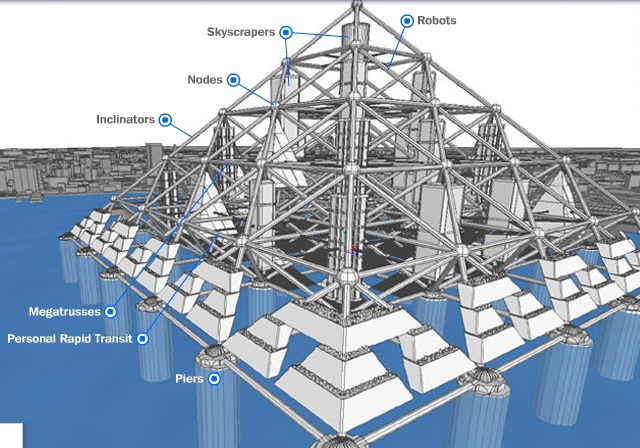
Shimizu's proposed Mega-City Pyramid is a self-contained city for one million people.
The Mega-City Pyramid stands 2,000 meters (1.25 miles) high
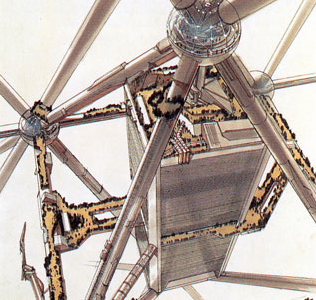
The pyramid-shaped hyperstructure is an assembly of skyscrapers suspended within a skeleton of 350-meter (1,150-ft) long shafts made from lightweight materials (such as carbon and glass fibers).
Residential buildings (left) and office complexes (right) inside Mega-City Pyramid
The skyscrapers within the Mega-City Pyramid are home to residences, offices, research institutions, shopping and entertainment centers, and other facilities. The connecting shafts, which measure from 10 to 16 meters (30 to 50 ft) in diameter, contain the city's plumbing, electrical and communication systems, as well as a network of trains, escalators and moving walkways.
The proposed hyperstructure has a footprint of approximately 8 square kilometers (3 sq mi), and it features an open-air construction that allows sunlight to reach the interior. A network of optical fibers transports sunlight into poorly-lit areas.
Construction of the massive Mega-City Pyramid is facilitated by robots and automated assembly systems, as well as by the use of standardized parts and materials. [More]
* * * * *
- Space Hotel
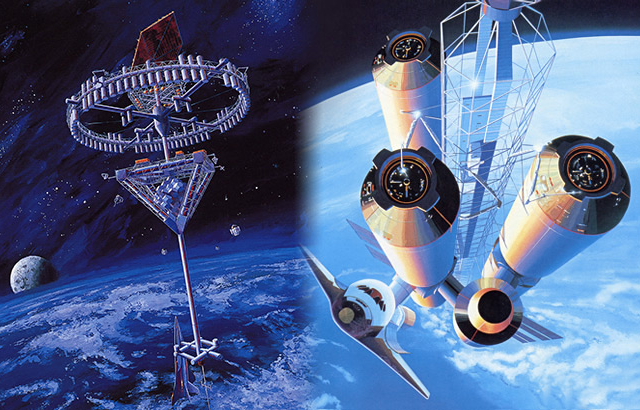
To capitalize on the coming boom in space tourism, Shimizu has developed plans for a space hotel in low-Earth orbit.
Shimizu Space Hotel, located 450 kilometers (280 mi) above Earth
The hotel -- which is powered entirely by solar energy -- features a microgravity recreational area where guests can enjoy sports, dining, and gazing at the Earth and stars. The 64 guest rooms and 40 staff rooms are situated in a ring measuring 140 meters (460 ft) in diameter. The ring rotates at a speed of 3 rpm to produce an artificial gravity of 0.7 g in the rooms. A 240-meter (790-ft) elevator shaft connects the hotel facilities with the docking port. [More]
* * * * *
- Lunar Bases
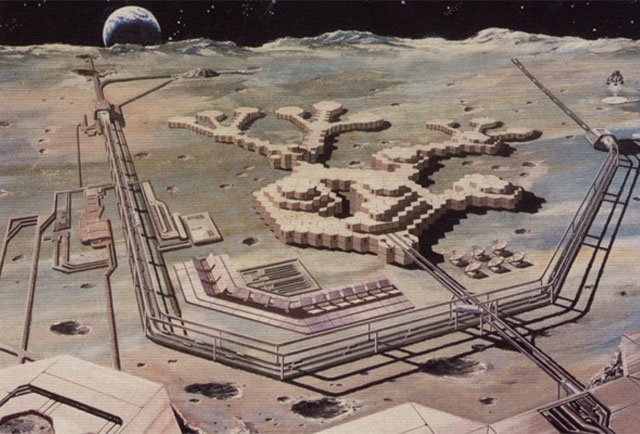
For the more adventurous offworld traveler, Shimizu has developed plans for lunar bases.
Lunar bases are the key to establishing a long-term human presence on the Moon
Shimizu's proposed bases feature a modular design of interlocking hexagonal units that can be arranged both horizontally and vertically. The modules are built using concrete made from lunar soil and rock. Tele-operated robots and automated assembly systems are used to construct the bases. [More]
* * * * *
- Urban Geo-Grid Plan
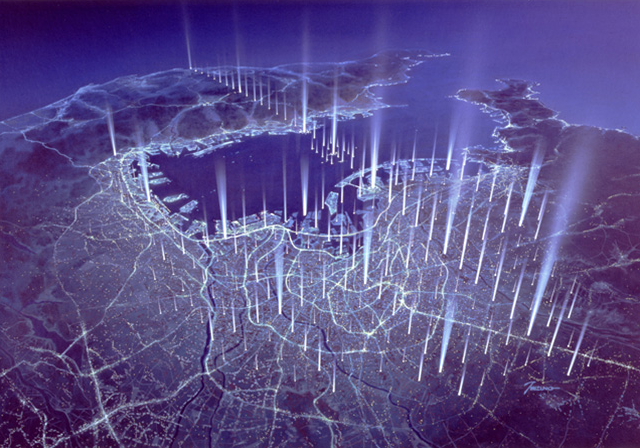
Back on Earth, Shimizu's Urban Geo-Grid Plan seeks to reduce urban congestion and improve the overall efficiency of Tokyo by placing a variety of city functions underground.
Urban Geo-Grid Plan puts much of Tokyo underground
The plan -- which covers an area extending from central Tokyo to the Boso Peninsula on the opposite side of Tokyo Bay -- consists of a vast underground network of so-called "grid points" and "grid stations." Grid points incorporate community facilities such as grocery stores, exhibition halls and public bathhouses, while the larger-scale grid stations incorporate office buildings, hotels, shopping centers, and train stations. An extensive underground transportation network connects the grid points and stations. Moving all these facilities underground frees up an enormous amount of street-level space that can be set aside for parks. [More]
* * * * *
- Desert Aqua-Net Plan
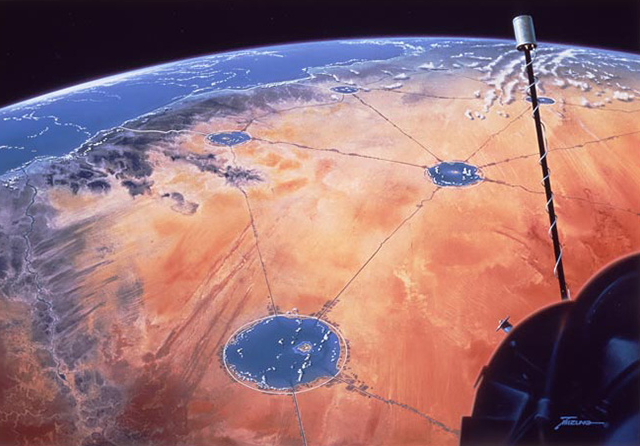
The Desert Aqua-Net Plan seeks to make the desert habitable by constructing a network of lakes and waterways.
Desert Aqua-Net Plan brings water to the desert
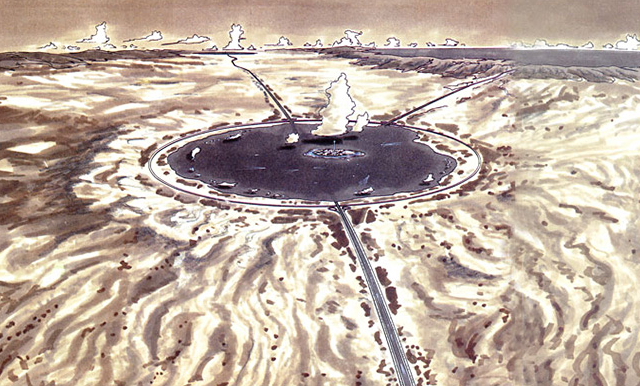
The plan involves creating artificial lakes in low-lying desert areas. Islands are constructed in the middle of the lakes, which are filled with seawater channeled inland through canals. The canals connect the lakes to form an extensive water network.
Located 150 kilometers (95 mi) apart, the artificial lakes measure 30 kilometers (20 mi) in diameter and 20 to 30 meters (65-100 ft) deep. The canals running between the lakes measure 50 meters (165 ft) wide and 10 meters (35 ft) deep
The lakes reduce temperatures and increase humidity in the surrounding areas, creating a comfortable and mild environment. Seafood and biomass resources (such as algae and seaweed) can be cultivated in the saltwater lakes, and the canals can be used to transport people and goods between the cities built on the artificial islands. [More]
Tales of "human pillars" (hitobashira) -- people who were deliberately buried alive inside large-scale construction projects -- have circulated in Japan since ancient times. Most often associated with castles, levees and bridges, these old legends are based on ancient beliefs that a more stable and durable structure could be achieved by sealing people inside the walls or foundation as an offering to the gods.
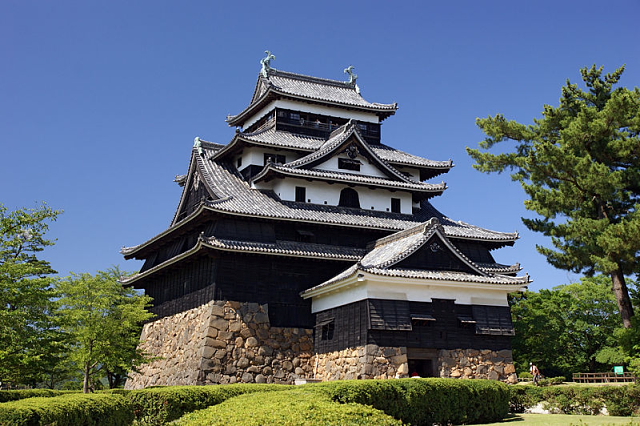
Was a young woman buried alive inside the wall of Matsue castle long ago?
One of the most famous tales of construction-related human sacrifice is associated with Matsue castle (Shimane prefecture), which was originally built in the 17th century. According to local legend, the stone wall of the central tower collapsed on multiple occasions during construction. Convinced that a human pillar would stabilize the structure, the builders decided to look for a suitable person at the local Bon festival. From the crowd, they selected a beautiful young maiden who demonstrated superb Bon dancing skills. After whisking her away from the festival and sealing her in the wall, the builders were able to complete the castle without incident.
However, the maiden's restless spirit came to haunt the castle after it was completed. According to folklorist Lafcadio Hearn, who described the castle's curse in his 1894 work "Glimpses of Unfamiliar Japan," the entire structure would shake anytime a girl danced in the streets of Matsue, so a law had to be passed to prohibit public dancing.
Although there is no conclusive evidence indicating that construction-related human sacrifice was actually practiced in Japan, it has been suggested that some laborers may, on occasion, have been terminated as a security measure after working on castles. Doing so would have prevented knowledge of a castle's secrets and weaknesses from falling into enemy hands.
Other notable structures rumored to make use of human pillars include:
Modern-day versions of these old legends can also be found on Japan's northern island of Hokkaido. Human bones have been found around several bridges and tunnels, lending an air of credibility to rumors that workers were sacrificed during construction.
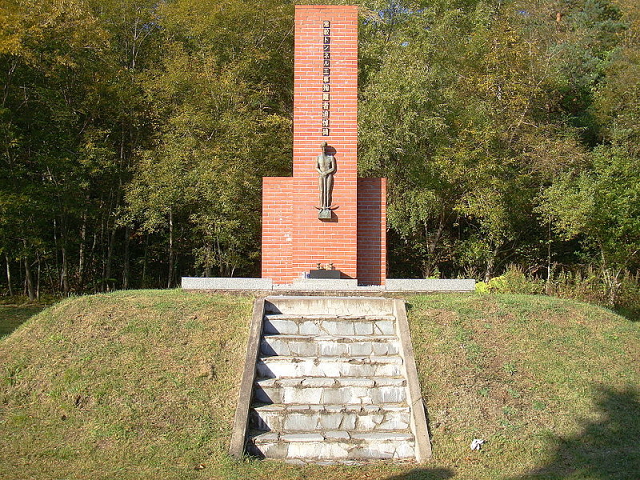
Monument erected after skeletons were found sealed in the walls of Jomon tunnel
Jomon tunnel, constructed on the Sekihoku Main Line (JR Hokkaido) in 1914, is notorious for rumors of human sacrifice. In 1968, the tunnel underwent repairs after a major earthquake damaged part of the wall inside. While doing the renovations, workers found a number of human skeletons, standing upright, sealed inside the walls. A large quantity of human bones were also unearthed near the tunnel. The discovery fueled beliefs that the tunnel was constructed with human pillars, and many people -- including train conductors -- came to fear that the tunnel was haunted by the ghosts of the victims.
Some theories suggest that brutal working conditions and poor nutrition led many workers -- mainly criminals and debtors working against their will -- to contract beri beri, a deadly nervous system ailment. With no access to medicine, these victims are believed to have been buried alive near the construction site. A monument honoring the fallen workers was erected in 1980.
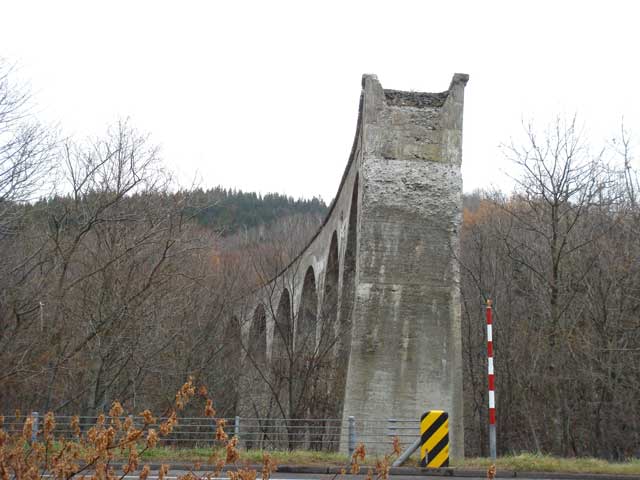
Were people sealed inside the concrete supports of Koshikawa bridge?
People are also rumored to have been sealed inside the concrete supports of Koshikawa bridge, on the now-defunct Konboku line (also in Hokkaido). While no actual human skeletons have been found, recent surveys have revealed the possible existence of hollow spaces in the structure that may contain human remains. Records indicate that at least 11 indentured workers may have died building the bridge, which was completed in 1939.
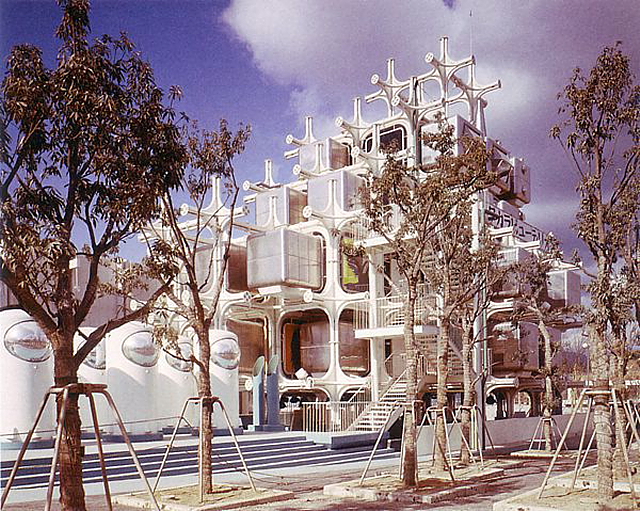
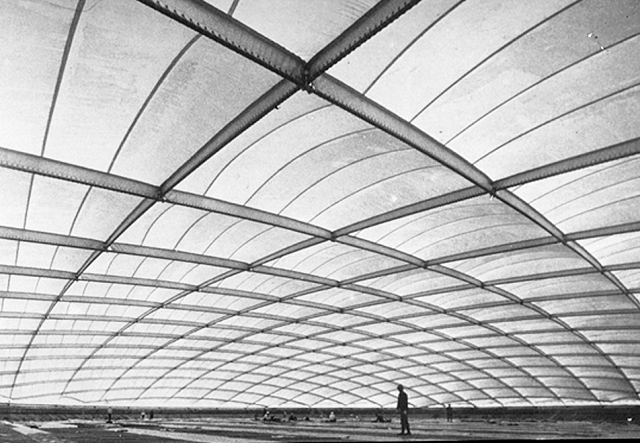
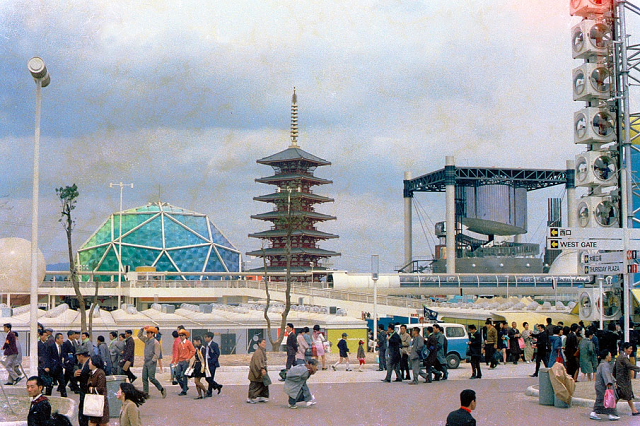
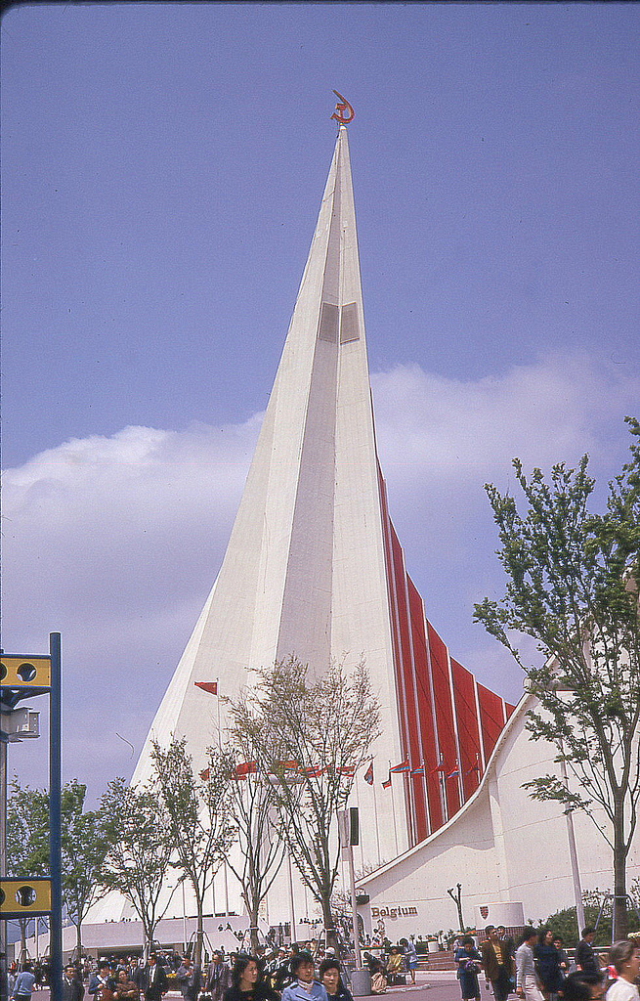
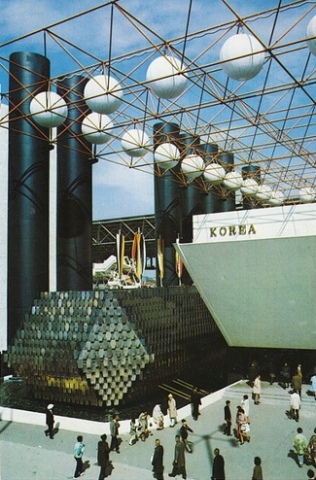
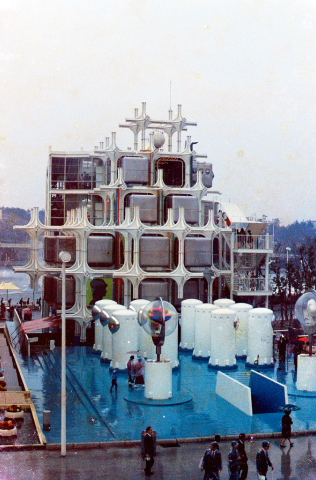
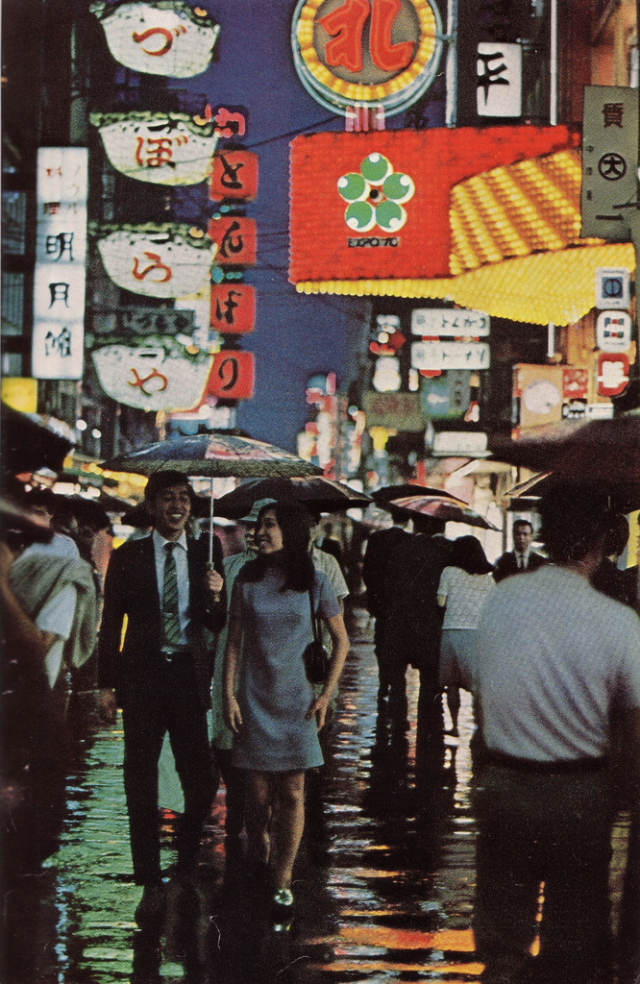
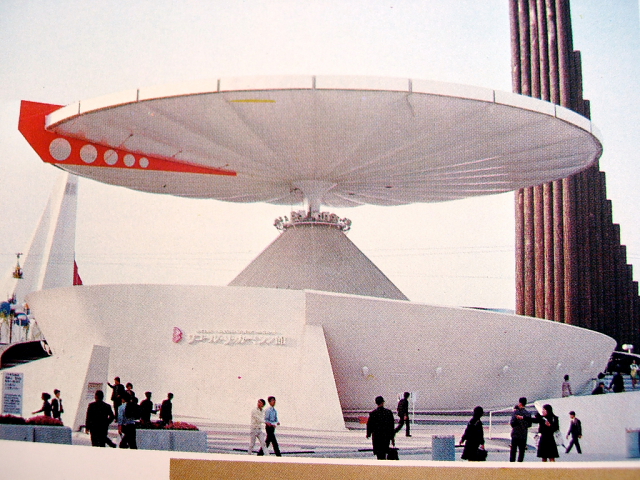
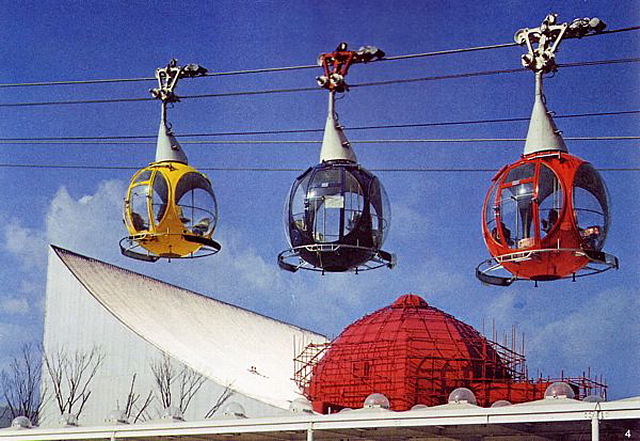
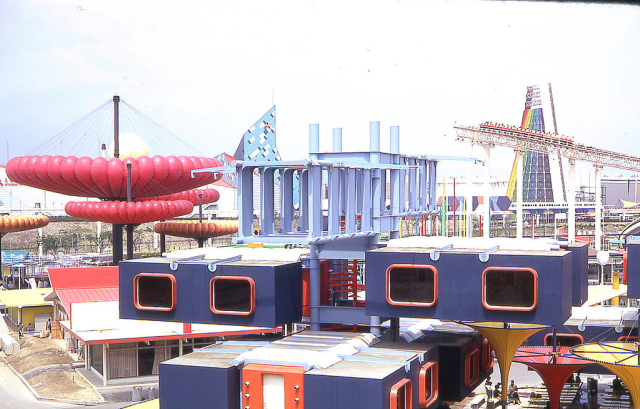
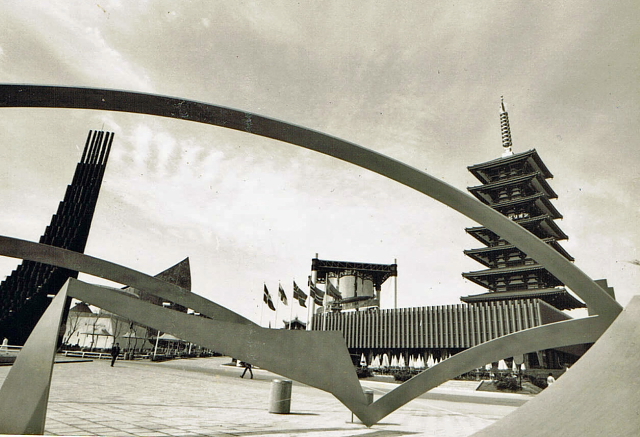
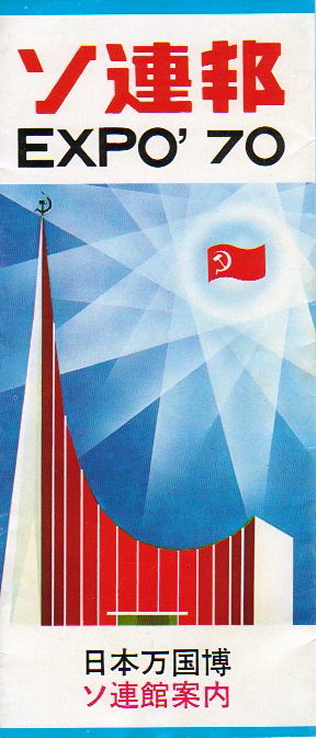
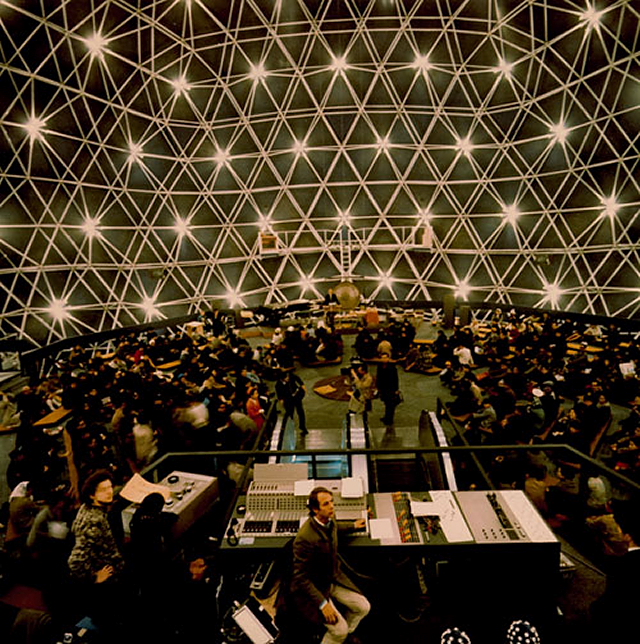
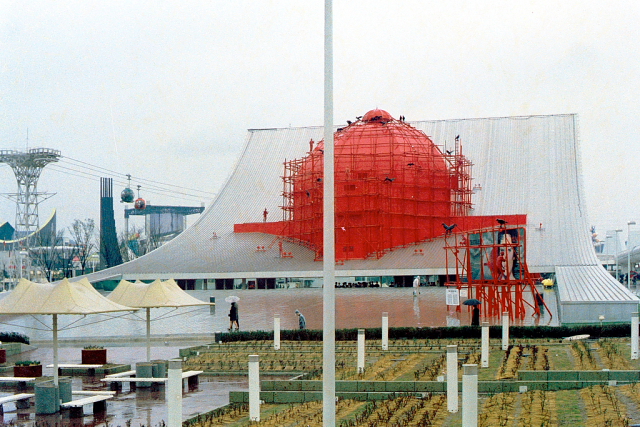
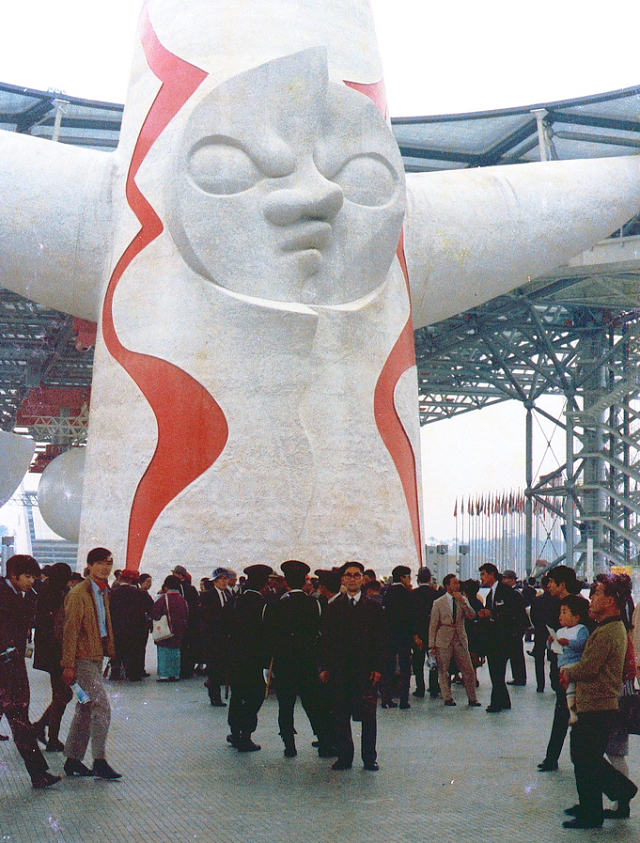
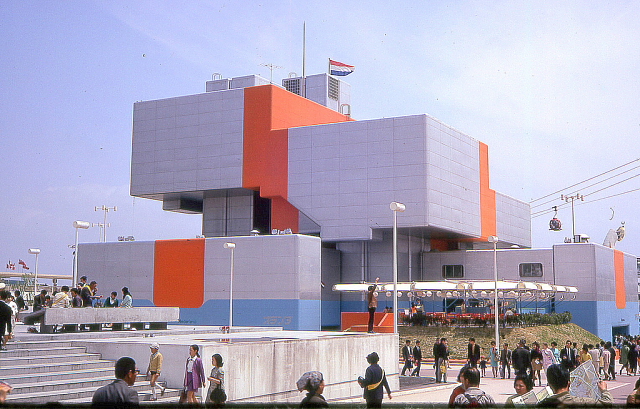
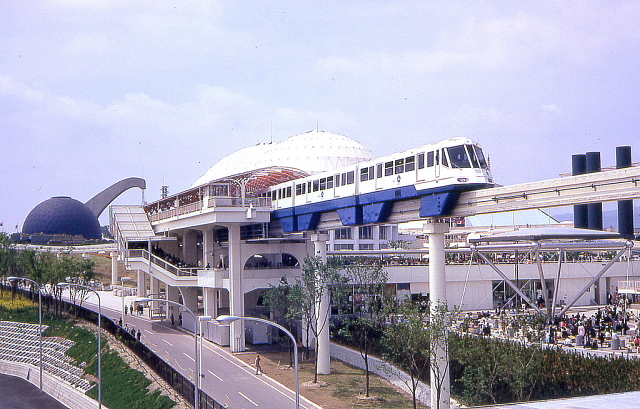
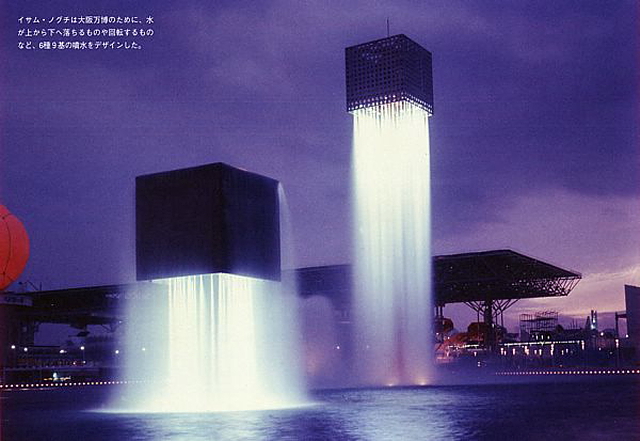
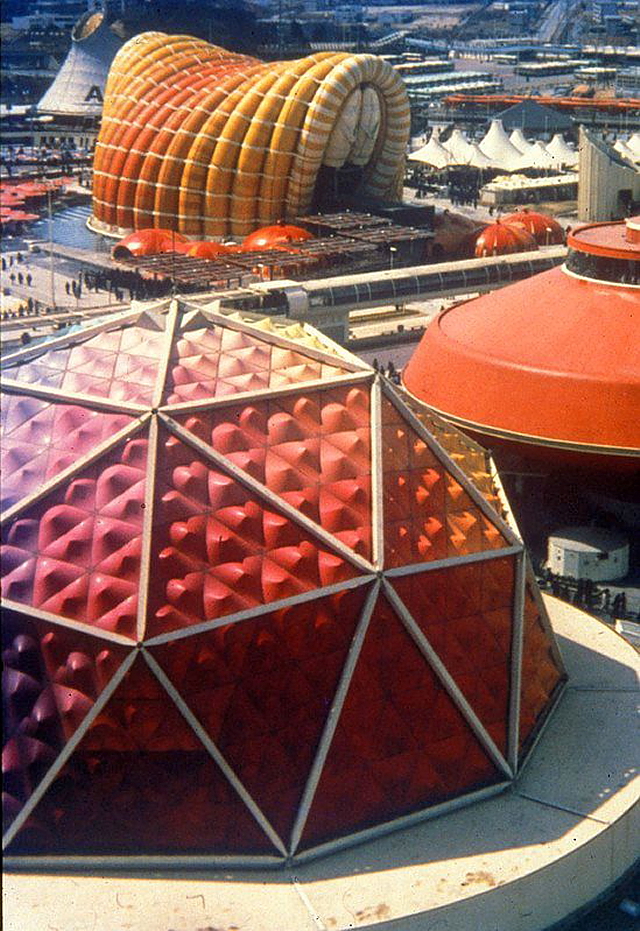
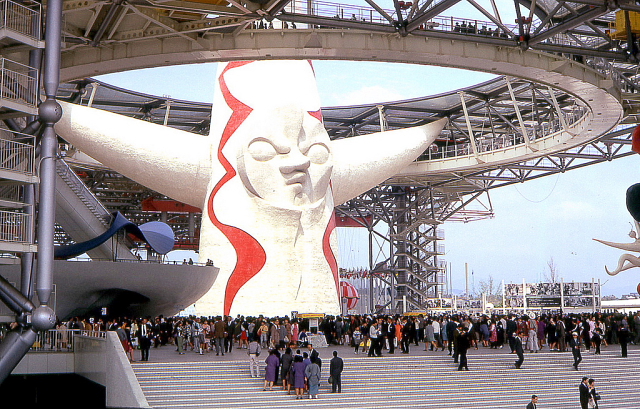
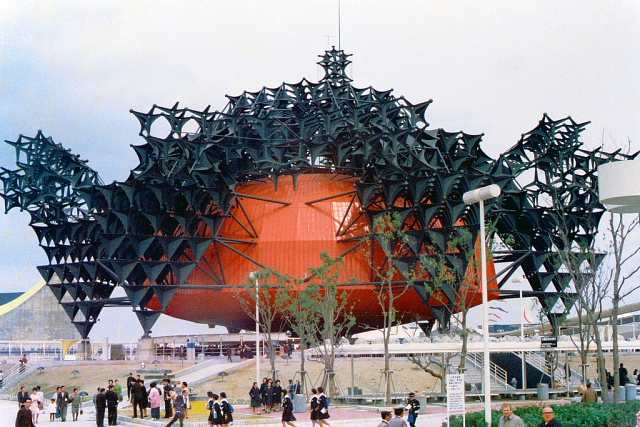
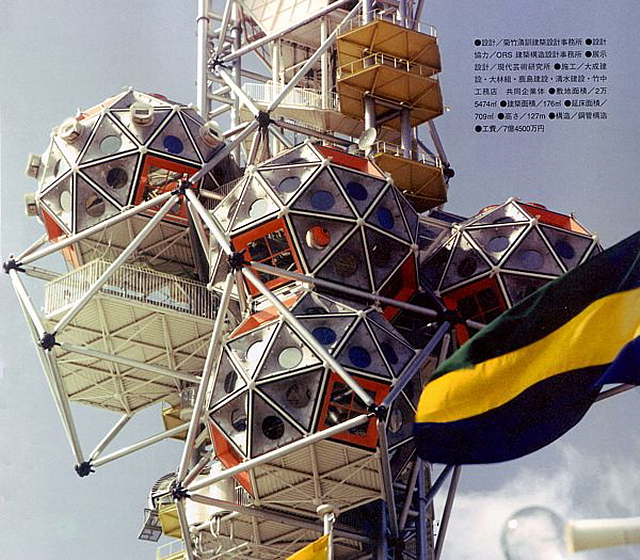
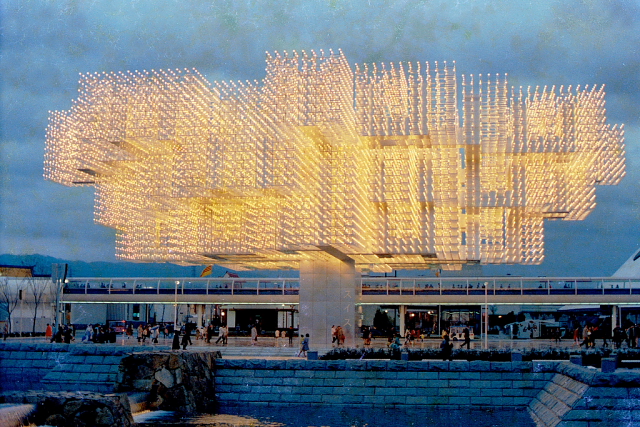
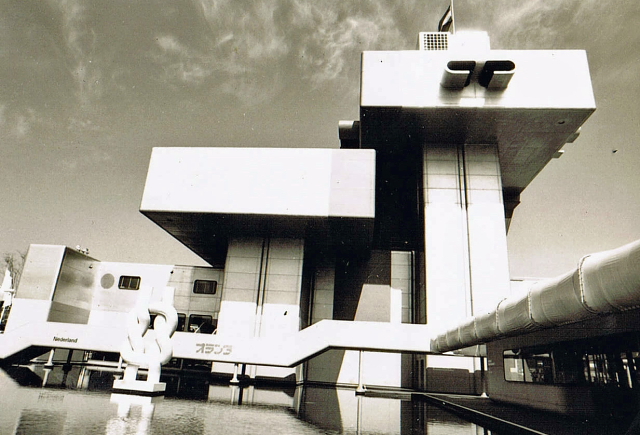
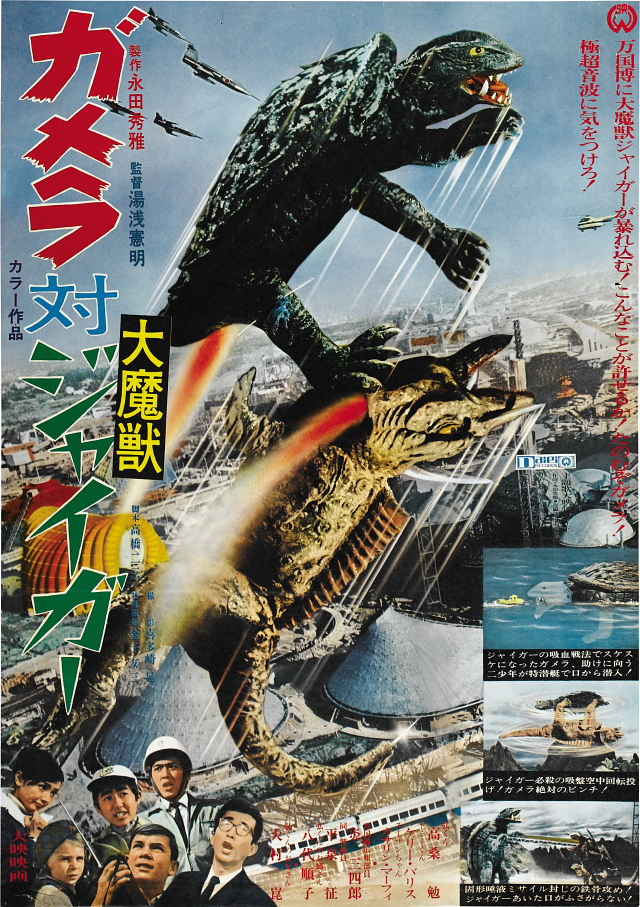
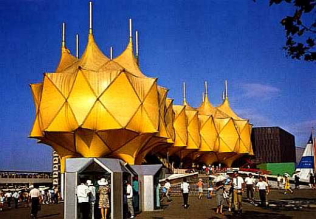
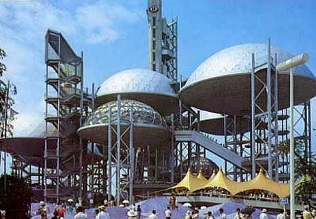
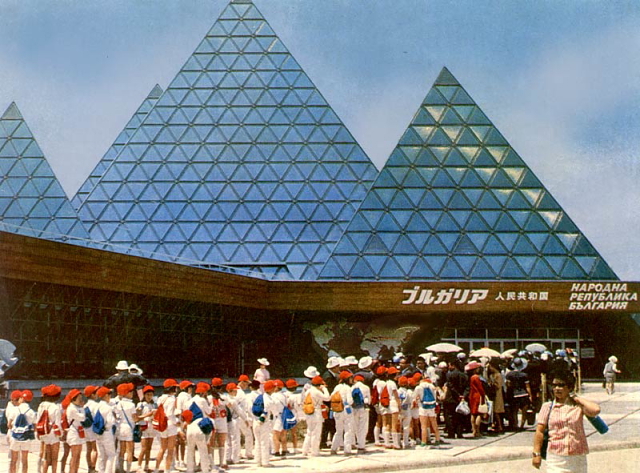
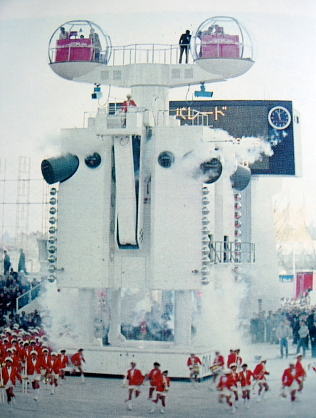
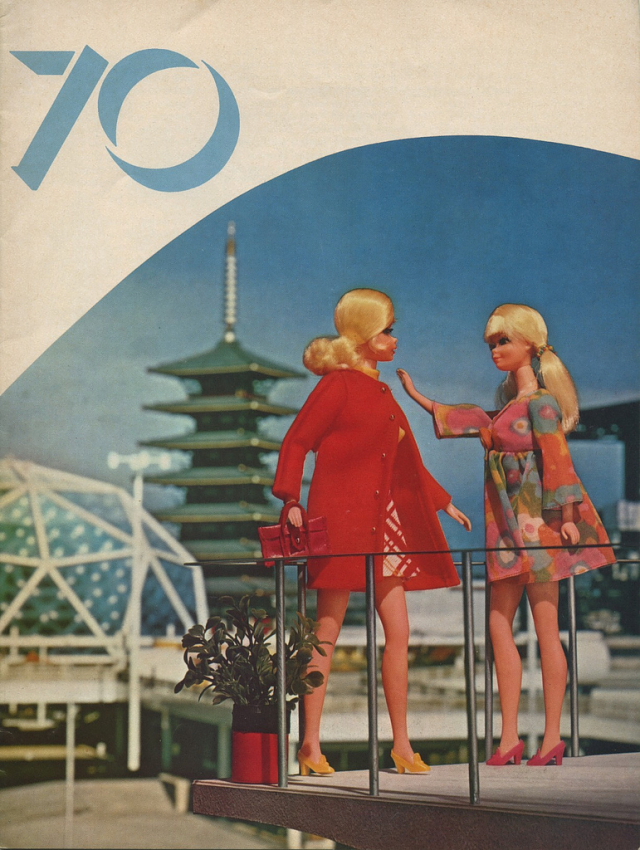
The 1970 World's Fair -- a.k.a. Expo '70 -- opened in Osaka 40 years ago this week. A total of 77 countries attended the event and the number of visitors surpassed 64 million people, making it one of the largest and best attended expositions in history. This was the first World's Fair to be held in Japan, a nation that had experienced an extremely rapid period of development in the 1960s. The theme of the Expo was "Progress and Harmony for Mankind," and the aim was to showcase the possibilities of modern technology to create a foundation for a high quality of life and peace throughout the world. Here are some photos and videos from the event.
Here is a time-lapse video showing the past year of construction of the massive Tokyo Sky Tree broadcasting tower, which reached a height of 300 meters (984 ft) this month. When completed in December 2011, the tower will stand 634 meters (2,080 ft) tall, making it the tallest structure in Tokyo.
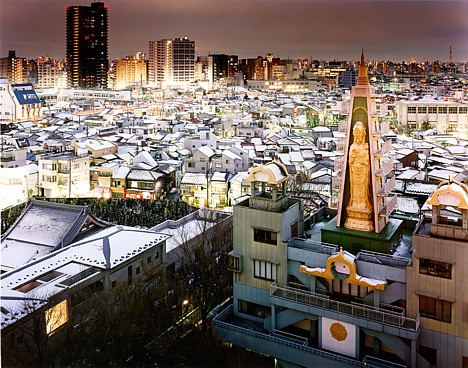
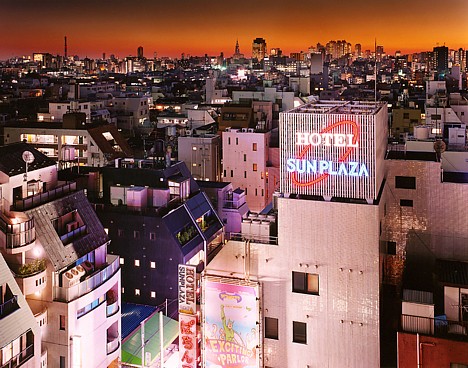
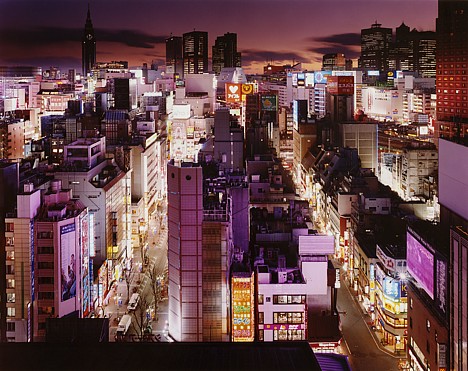
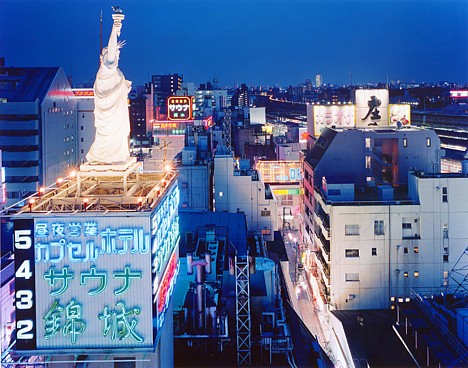
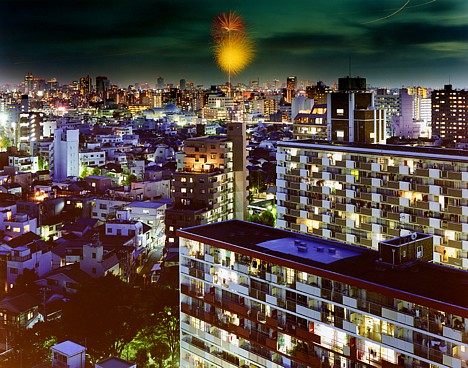
Photographer Shintaro Sato captures beauty in the chaotic Tokyo cityscape viewed from emergency staircases at dusk. Check his site for the full gallery of high-resolution images.
To NY-based architect-poets and "reversible destiny" philosophers Arakawa & Gins, comfort deserves only a limited role in the home. In their vision, a home that keeps its inhabitants young and healthy should provide perpetual challenges. A tentative relationship with your environment, they argue, is key to "reversing the downhill course of human life."
This video takes a peek inside their Reversible Destiny Lofts in the Mitaka area of western Tokyo. Designed to stimulate the senses and force inhabitants to use balance, physical strength and imagination, the lofts feature uneven floors, oddly positioned power switches and outlets, walls and surfaces painted a dizzying array of colors, a tiny exit to the balcony, a transparent shower room, irregularly shaped curtainless windows, and more.
For the adventurous, two rental units are now available for 220,000 and 250,000 yen ($2,000/$2,400) per month, which is a bit pricey for Tokyo, but not outrageous. Short-term stays can also be arranged.
Styrofoam dome houses at Aso Farm Land (Photo by: Erika Snyder)
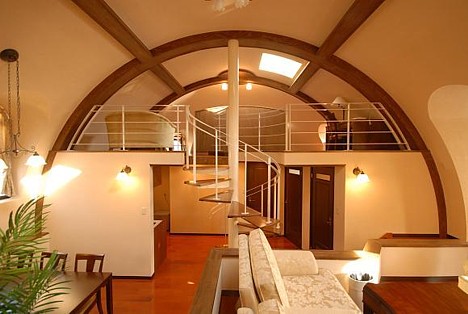
While styrofoam may be most commonly associated with disposable coffee cups, meat trays and packaging, prefab home manufacturer Japan Dome House Co., Ltd. uses it to construct easy-to-assemble modular kit homes.
Dubbed the "habitat for the 21st century," the Dome House is an igloo-shaped structure built from snap-together wall sections made of 100% expanded polystyrene foam (styrofoam). It might seem like an odd choice of material for a house, but the company lists a number of advantages that styrofoam has over traditional materials. Unlike wood and metal structures, for example, the styrofoam Dome House does not rust, rot or attract termites. It is also highly resistant to earthquakes and typhoons. In addition, the walls, which are treated with a flame retardant, emit no toxic fumes in a fire.
Dome House interior
The styrofoam used in the Dome House's 175-millimeter (7 in) thick walls is significantly denser and stronger than ordinary packing foam. The material has excellent thermal insulation properties, resulting in higher energy efficiency and lower heating and cooling costs.
Construction of the Dome House shell is quick and easy. The prefabricated pieces, which each weigh about 80 kilograms (175 lbs), can be carried by 2 or 3 people and assembled in a few hours. Once the shell is put together, coats of mortar and paint are applied for further protection from the elements. (Watch a short video of the assembly process.)
Measuring 7.7 meters (25 ft) wide and 3.85 meters (13 ft) tall, the basic Dome House has a floor space of 44.2 square meters (475 sq ft). It is possible to construct larger, elongated domes by adding more pieces, and joint units allow multiple domes to be connected into a single structure.
Dome Houses, which are approved by Japan's Land and Transport Ministry, can be erected anywhere in Japan with the proper permit. According to the manufacturer, the versatile structures are suitable for use as hotel rooms, restaurants, freezer rooms, or even as hog farms.
The Aso Farm Land resort village in Kyushu uses about 480 styrofoam domes as lodging, recreational facilities and retail shops.
Aso Farm Land
The Dome House can also be used as a bar, karaoke room, steam room, and more.
Styrofoam dome bar
Mushroom House karaoke room at Suijin-no-mori hot spring (Oita prefecture)
Styrofoam dome steam room
Whether or not this type of home is truly "perfect for the modern age" as the company suggests, the price is right. Dome House kits start at around 3 million yen (under $30,000), which does not include the cost of transport, assembly, interior construction, etc.
Japanese construction firm Kajima Corporation is using an innovative new skyscraper demolition method to dismantle a pair of old company buildings in Tokyo. (Watch a time-lapse video.)
Unlike conventional demolition that begins at the top of the building, Kajima's new method starts on the bottom floor, where the support columns are cut and replaced with giant computer-controlled jacks. Once the floor is demolished and the debris removed, the entire building is lowered and work begins on the next floor. The process is repeated for each floor until the entire building is gone.
Kajima informally calls this the daruma-otoshi method, after the old Japanese game consisting of a daruma doll made of stacked pieces that players knock out one by one without toppling the doll. (Watch a super slo-mo video.)
According to Kajima, the daruma-otoshi demolition method -- which is now being used to dismantle a 75 meter (246 ft) tall, 20-story building and a 65 meter (213 ft) tall, 17-story building -- is safer and creates less noise and dust pollution because the work is kept close to the ground. In addition, this method cuts demolition time by 20% and makes it easier to separate and recycle the building materials.










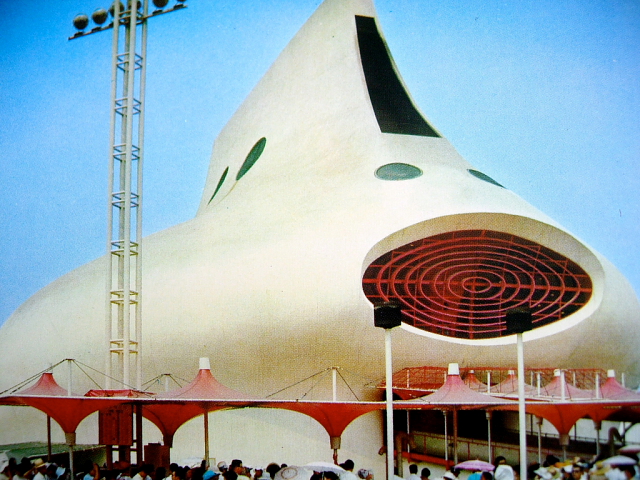
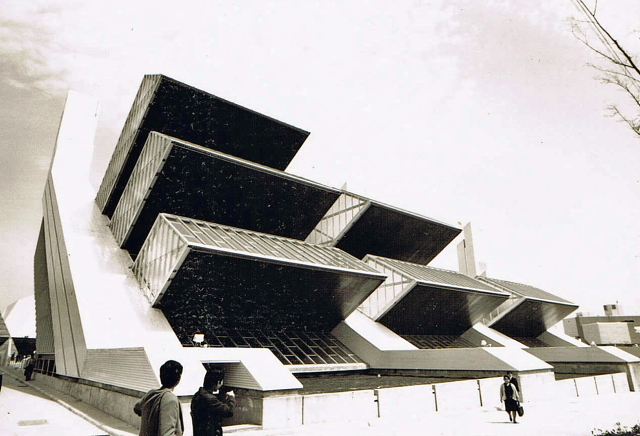 Italy Pavilion [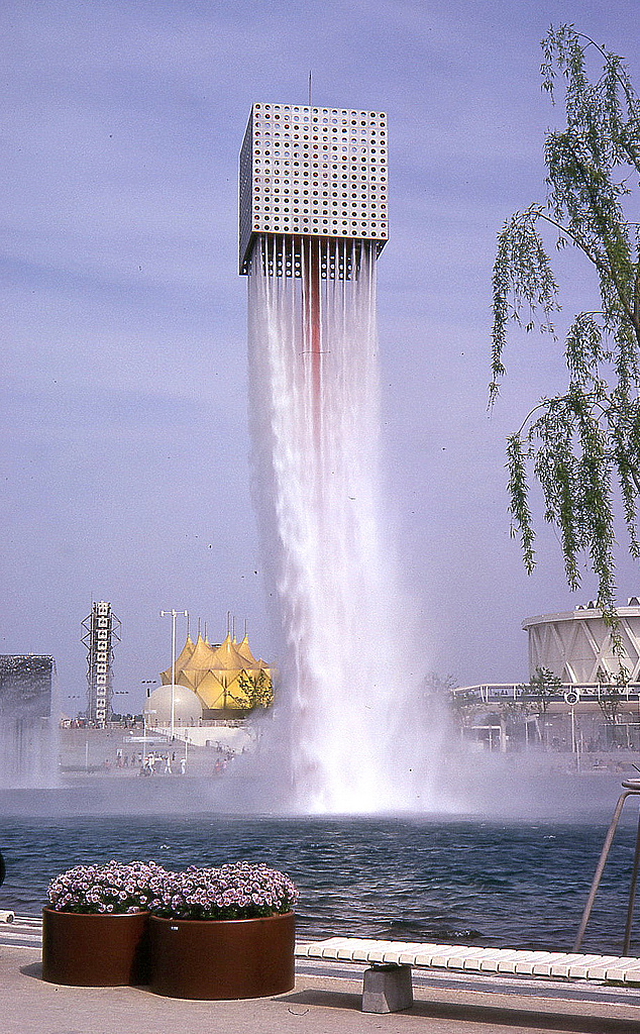
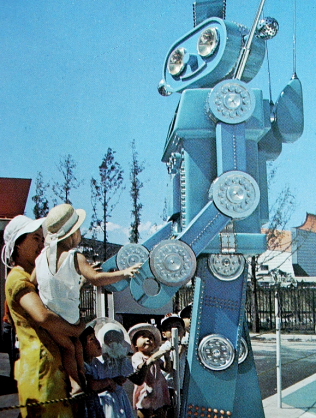
 Barbie goes to Expo '70 [