
+ Video
By fading back and forth between scenes of pre- and post-quake Tokyo, this time-lapse video by YouTube user darwinfish105 shows how the metropolitan nightscape has been affected by Japan's ongoing power shortages and conservation efforts.
+ Video
By fading back and forth between scenes of pre- and post-quake Tokyo, this time-lapse video by YouTube user darwinfish105 shows how the metropolitan nightscape has been affected by Japan's ongoing power shortages and conservation efforts.
Local gas companies occasionally add a touch of character to the giant spherical gas containers that dot the landscape of Japan. Here are a few examples.

Nicotan (mascot of Shibata Gas) -- Shibata, Niigata prefecture [via]

Watermelon -- Tomisato, Chiba prefecture [via]

Hikari-chan and Gatto-kun -- Niigata [via]

Zen monk-poet Ryōkan -- Tsubame, Niigata prefecture [via]

Soccer ball -- Kiryū, Gunma prefecture [via]

Tokkikki (Niigata prefectural mascots) -- Niigata [via]

Ōnyūdō -- Yokkaichi, Mie prefecture

Peach -- Akaiwa, Okayama prefecture [via]

Ouchi dolls -- Yamaguchi prefecture [via]

Welcome to Isesaki -- Gunma prefecture [via]

"Taisha" wheeled fish toy -- Niigata [via]

Morioka Gas character dancing the Sansa Odori -- Morioka, Iwate prefecture [via]


Bunbuku Chagama tanuki -- Gunma prefecture [via] // Origami cranes -- Mie prefecture [via]

Japanese irises -- Niigata [via]

Watermelon -- Takizawa, Iwate prefecture [via]

Godai-chan (tourism mascot for the city of Kashihara) -- Nara prefecture [via]

Kōfu, Yamanashi prefecture [via]

Kintarō -- Saitama [via]

Flowers and butterflies -- Niigata prefecture [via]

Artist's conception of Nintendo Kirby tanks [via]
Ghostly trees covered in snow and rime ice -- known as "snow monsters" or juhyou (frost-covered trees) in Japanese -- are a celebrated feature of the winter landscape in mountainous areas of northern Japan. Here are a few photos.

Hakkōda Mountains, Aomori prefecture [via]

Hakkōda Mountains, Aomori prefecture [via]

Mt. Moriyoshi, Akita prefecture [via]

Hakkōda Mountains, Aomori prefecture [via]

Mt. Zao, Yamagata prefecture [via]

Mt. Moriyoshi, Akita prefecture [via]
The Tamori Club late-night variety show recently took a boat cruise through a system of drainage tunnels beneath central Tokyo.
+ Video
Here are a few highlights of the trip.
1:00 - The boat approaches the tunnel entrance, located on the Kanda River next to Mansei-bashi Bridge near Akihabara. The drainage tunnel -- known as the Ochanomizu Diversion Channel -- runs 1.3 kilometers and rejoins the river upstream near JR Suidobashi station. The tunnel is not designed for boat traffic.
2:10 - Tamori tests the echo inside the tunnel.
2:25 - The painted numbers indicate the distance in meters from the entrance.
2:35 - The tunnel measures about 8 meters from floor to ceiling. The water level easily reaches the ceiling after a heavy rain.
3:00 - The boat approaches a round section of tunnel dug with a shield machine. This portion of the tunnel is 8.8 meters in diameter and 760 meters long.
3:50 - The passengers view the rails of a ceiling-mounted crane system used during construction. The crane was used to erect a water barrier to keep the construction area dry.
4:00 - The boat passes a floodgate tunnel on the left.
5:00 - The boat passes a sign reading "Eidan Ochanomizu Station." This type of sign was placed in the tunnel during construction to indicate the nearby infrastructure. Due to its proximity to the subway station, this part of the tunnel is built with extra reinforcements.
5:30 - The boat passes a similar sign for Ochanomizu-bashi Bridge.
5:55 - The boat passes a similar sign for Century Tower, a 19-floor office building.
6:00 - A smaller tunnel branches off to the right. The tunnel is too small for a boat, and the guide is not sure where it leads.
6:50 - The round section of tunnel opens up into a large chamber. During construction, this was a vertical shaft used to lower the shield machine underground. The rails of a ceiling-mounted crane system are visible overhead. A ladder leads up to a manhole on the street.
7:50 - The exit comes into view. Another tunnel continues past the exit for another 1.6 kilometers.
8:30 - The boat exits the tunnel and continues up the Kanda River.
9:30 - The boat passes a pipe pumping water out of the leaky Suidobashi subway station (Mita line).
11:00 - The boat enters another tunnel (Suidobashi Diversion Channel No.2), which runs for 500 meters.
Artist Shuichi Nakano's "Searching for Paradise" paintings depict Godzilla-sized animals towering over the urban sprawl of Japan.
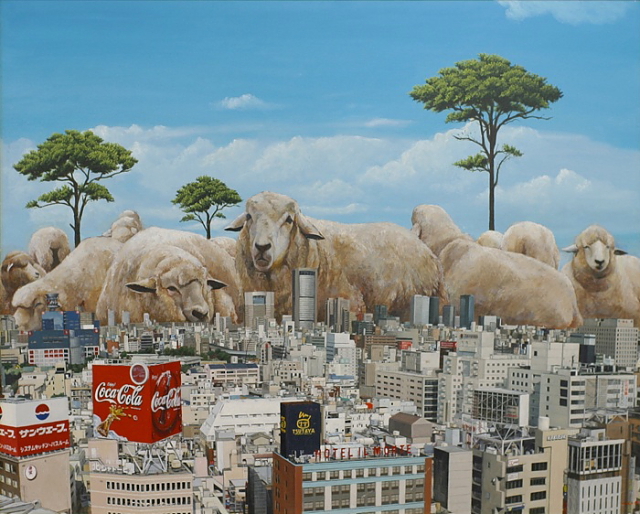
夢の途中 (In the midst of a dream)
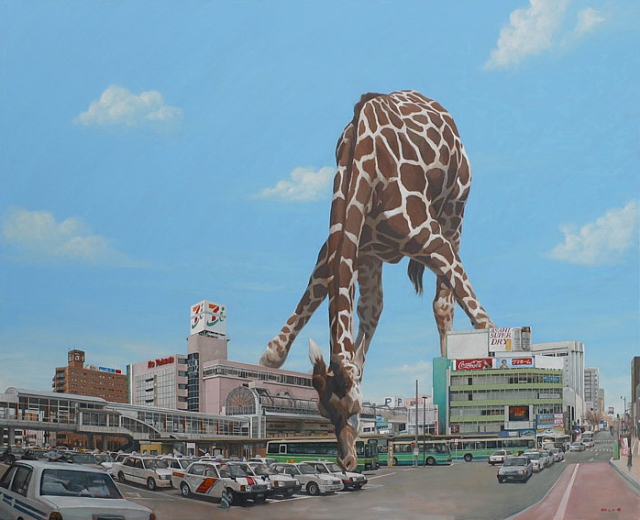
初秋の風、夏の余韻 (Early autumn wind, lingering memory of summer)
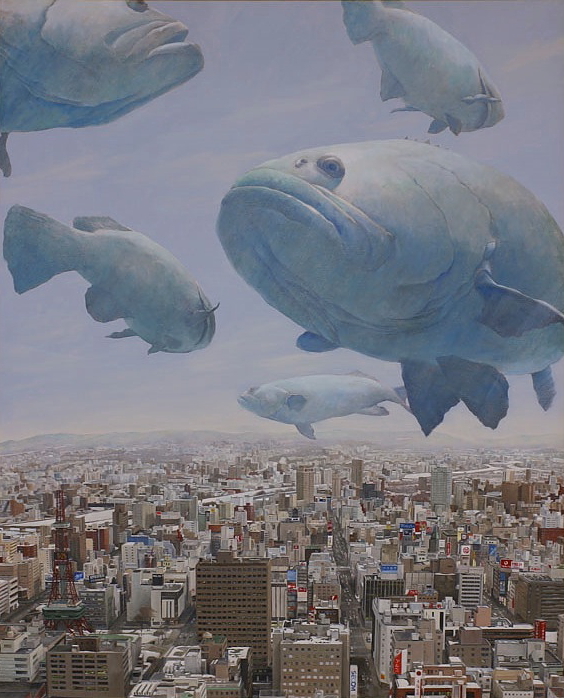
5時25分の寒気 (Chill at 5:25)
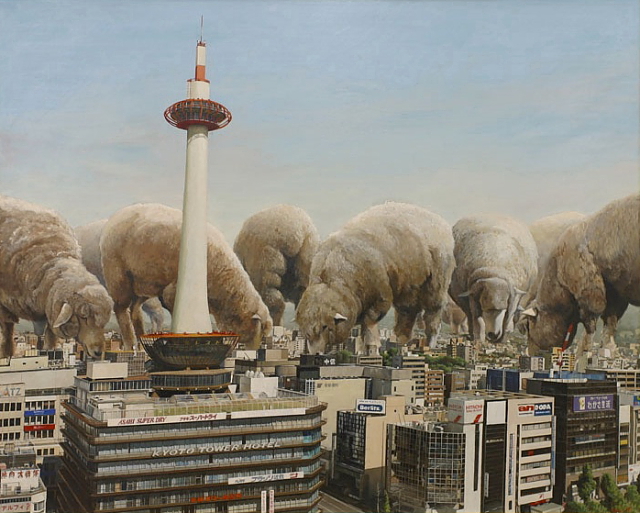
真昼の記憶 (Memory of noon)
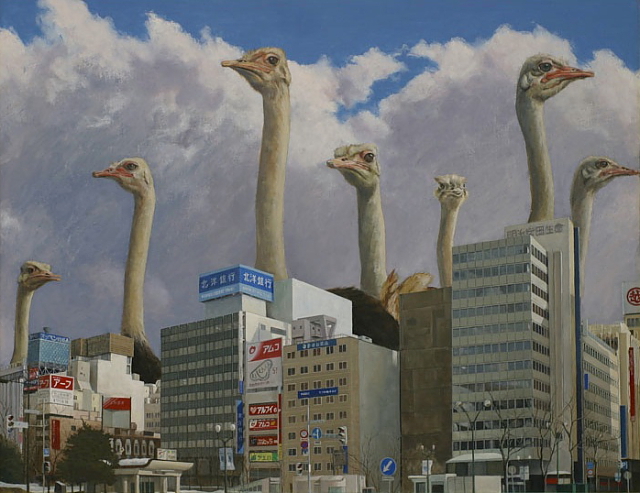
荒天の予感 (Premonition of storm)
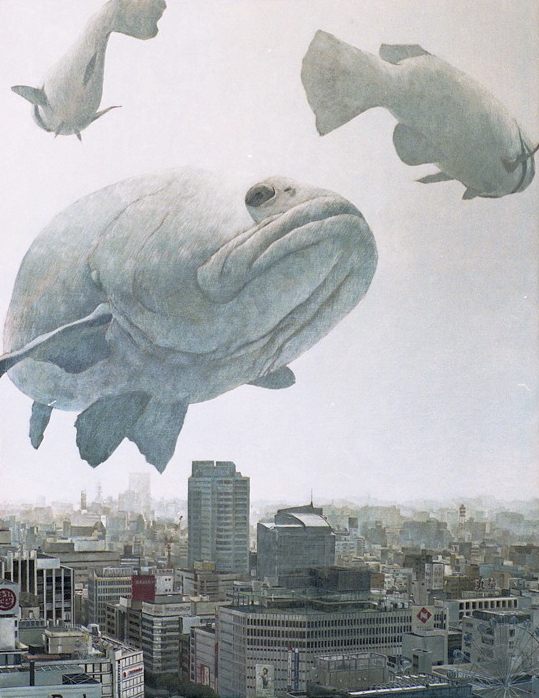
帰り道を忘れて (Forgetting the way home)
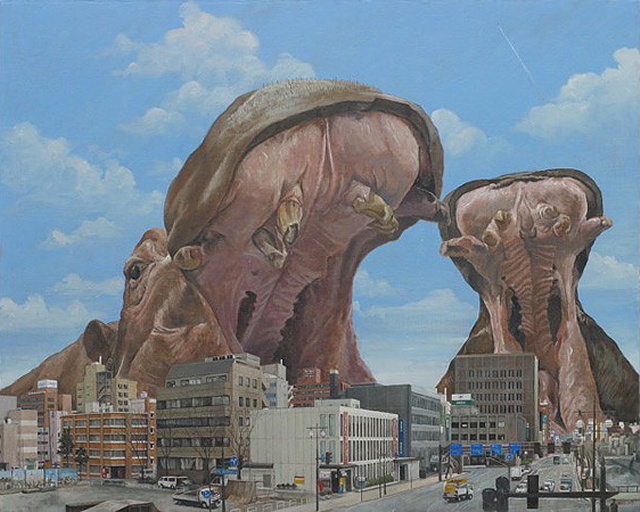
(Title unknown)
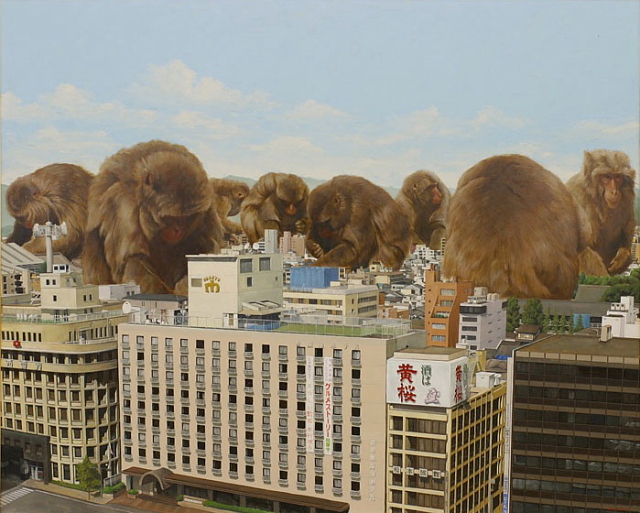
春の園 (Spring garden)
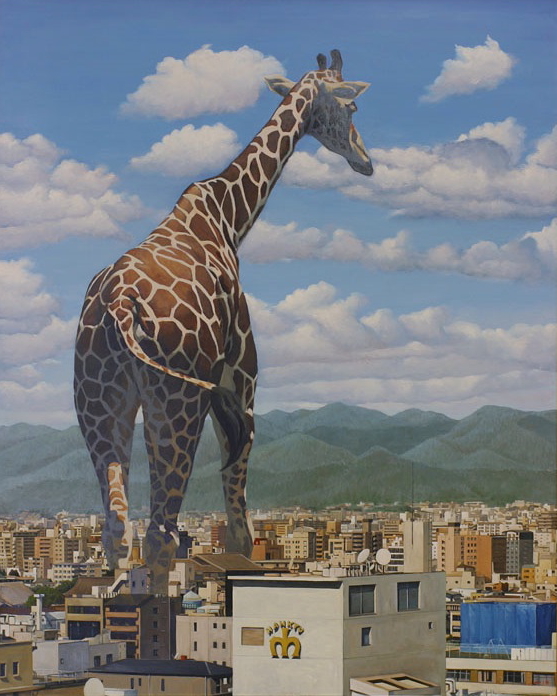
楽園を捜して (Searching for paradise)
Inter // States is the latest Tokyo time-lapse piece by photographer Samuel Cockedey. The soundtrack is "Paradigm Flux (Tokyo Cut)" by Woob, from the new "Paradigm Flux" EP (listen).
The illustrations of TokyoGenso (a.k.a. Tokyo Fantasy) depict a post-apocalyptic Tokyo devoid of people and overtaken by nature.
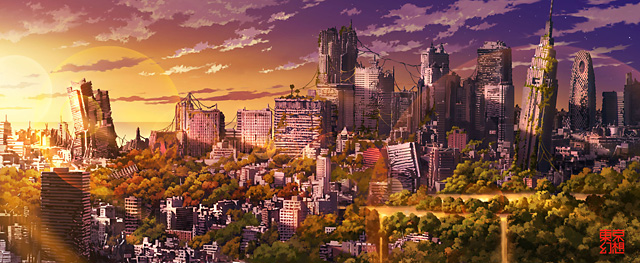
Shinjuku skyline [+]
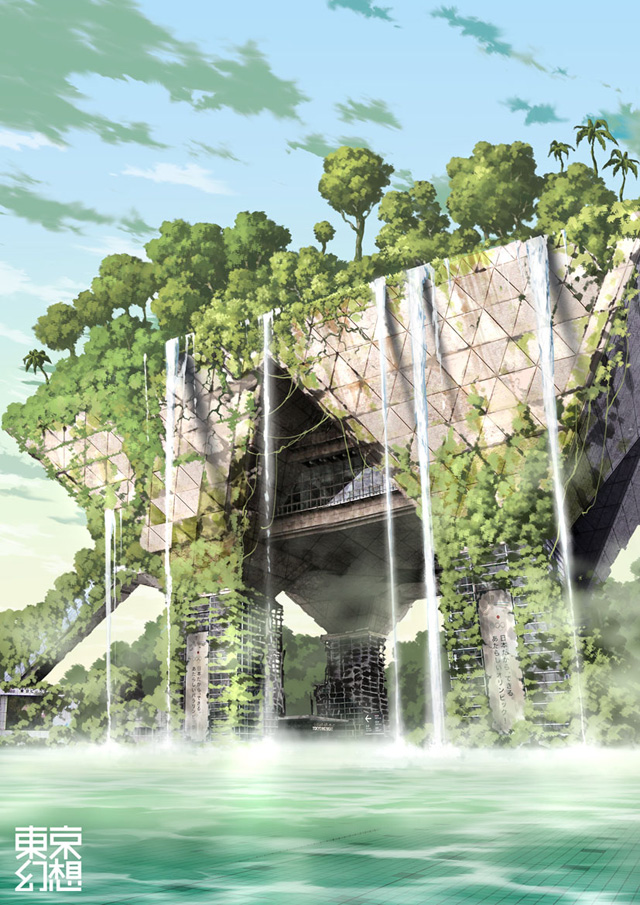
Tokyo Big Sight [+]

Rainbow Bridge [+]

Moai statue at Shibuya station [+]

Kabuki-za Theater, Ginza [+]

Mode HAL iKO Building, Shinjuku [+]

Poster for "The Book of Eli" (Japanese title: "The Walker") [+]


Gundam // Tokyogenso Robot

Tokyo Sky Tree [+]

Sofmap Akihabara [+]

Haneda Airport [+]

Cover of Liberal Time, September 2010

Akihabara [+]

Saigō Takamori statue, Ueno

Poster for "The Book of Eli" (a.k.a. "The Walker) - Osaka version [+]

Osaka street scene - Tsūtenkaku Tower [+]

Osaka street scene - Billiken [+]

Osaka street scene [+]
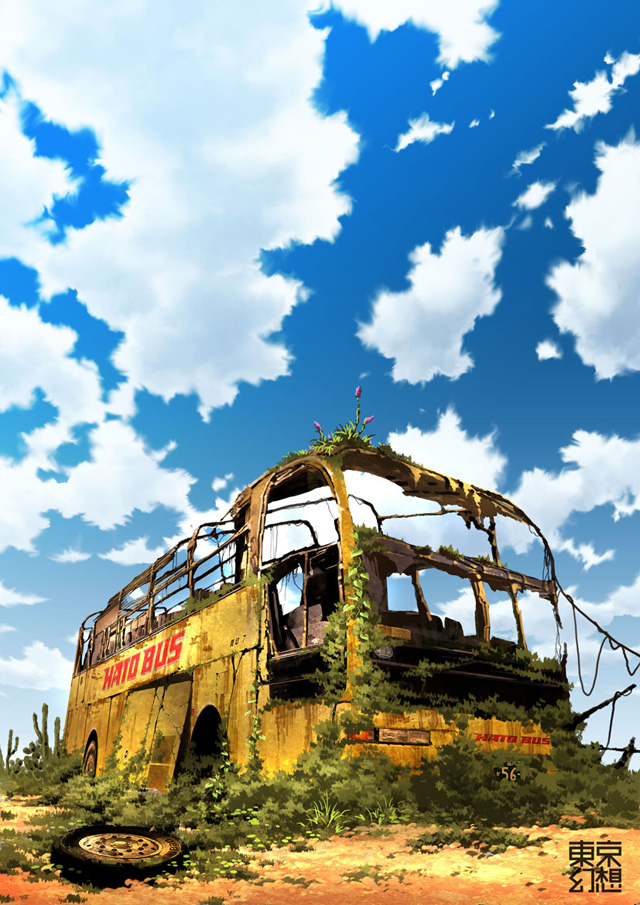
Hato Bus [+]

Tokyo Monorail [+]


Shibuya station (Fukutoshin Line) // Seibu Shibuya

"Manneken Pis" statue at Hamamatsuchō station

Ueno [+]

Tokyo Tower [+]

Shinjuku station [+]

Hanayashiki amusement park, Asakusa [+]

McDonald's [+]
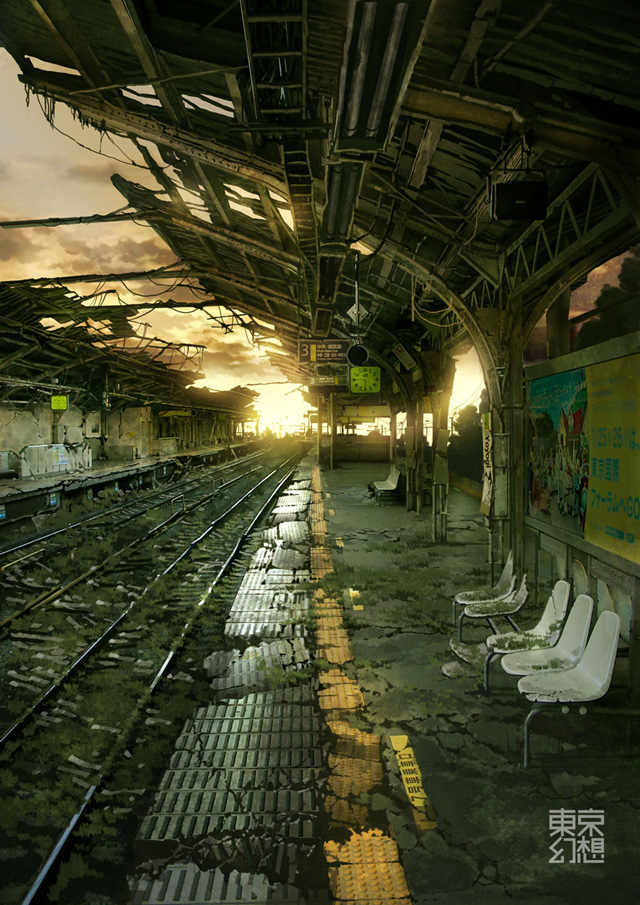
Yoyogi station [+]

Nakano station [+]

Akihabara [+]

Shibuya [+]

Wako Building, Ginza [+]
[Links: tokyogenso blog, pixiv, deviantART]
"Floating point," the latest Tokyo time-lapse video by photographer Samuel Cockedey, features views of Rainbow Bridge, Shinagawa station, Ikebukuro, Ochanomizu, and Tsukishima.
+ Video
This year's selection of rice paddy art has begun to crop up in fields across Japan.
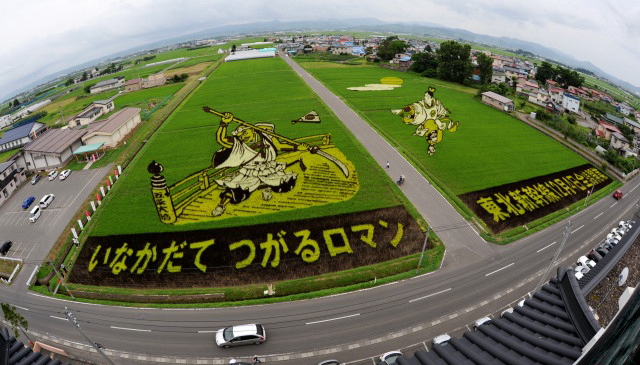
Rice paddy art in Inakadate (Aomori prefecture) [photo]
Two historical figures -- the legendary warrior-monk Benkei (left) and the warrior Ushiwakamaru, a.k.a. Minamoto no Yoshitsune (right) -- have emerged in a pair of fields in the Aomori prefecture town of Inakadate. For nearly 20 years, the town has prided itself as home to Japan's finest rice crop art, which is created by carefully arranging different colors of rice plants in the field.
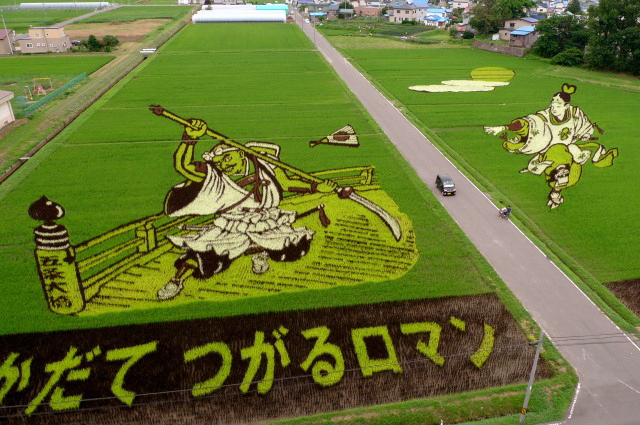
Benkei (left) and Ushiwakamaru (right) [photo]
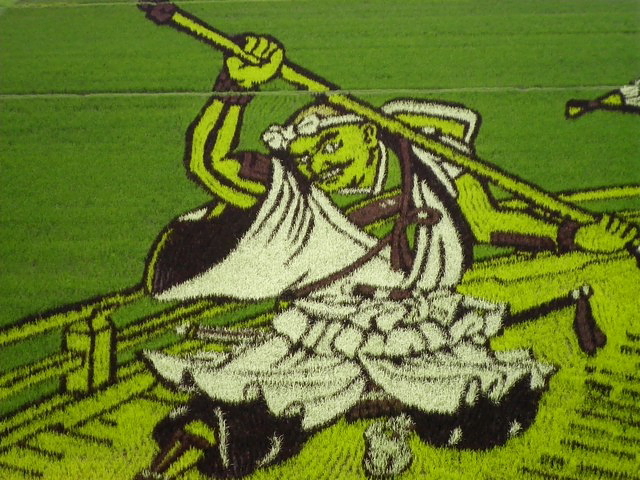
Benkei [photo]
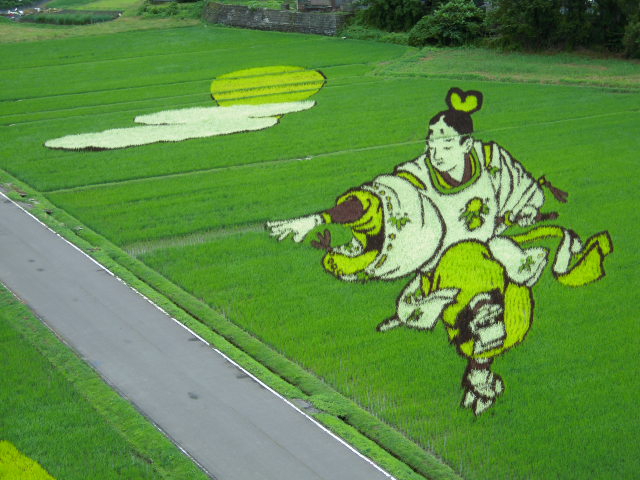
Ushiwakamaru [photo]
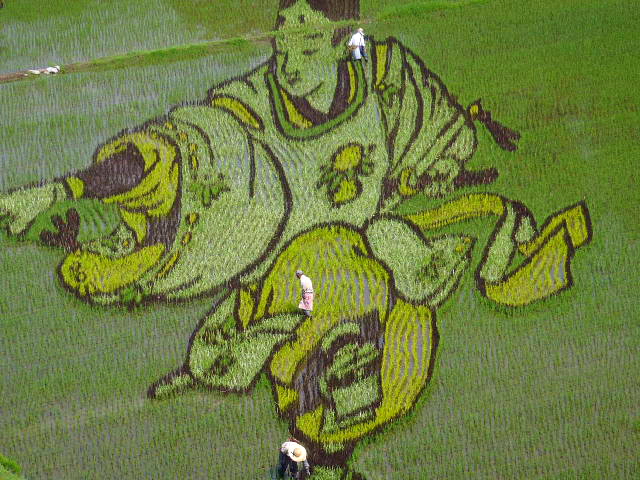
Ushiwakamaru in late June [photo]
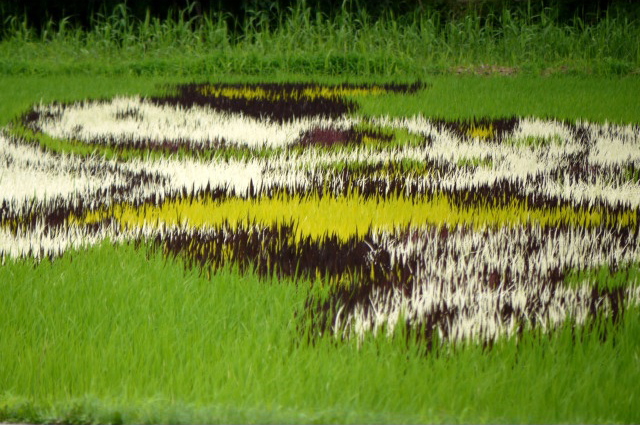
View of Ushiwakamaru at ground level [photo]
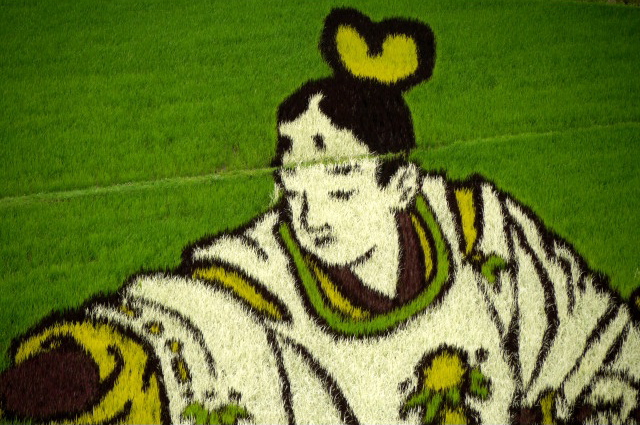
Ushiwakamaru [photo]
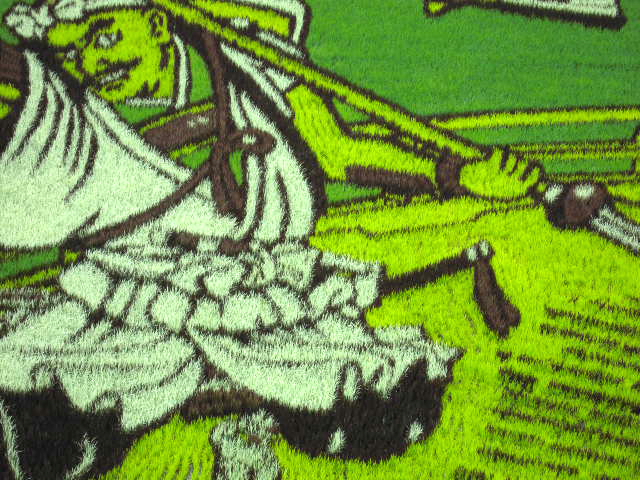
Benkei [photo]
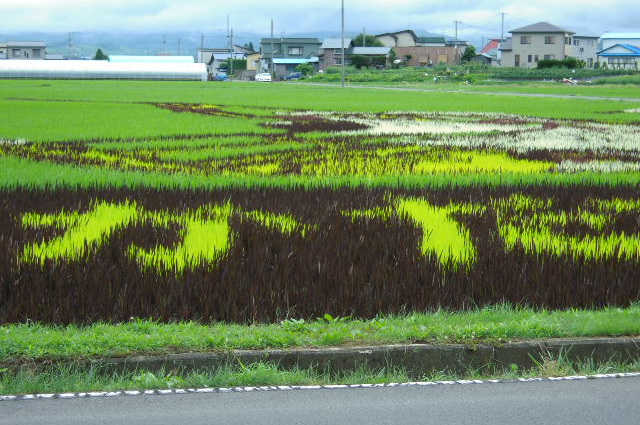
View of Benkei at ground level
+ Video of Inakadate rice paddy art (filmed in late June)
* * * * *
Here are a few more works of rice paddy art from other parts of Japan.
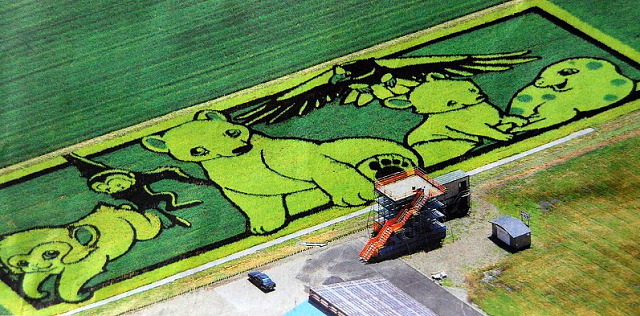
Animals in Asahikawa (Hokkaido) [photo]
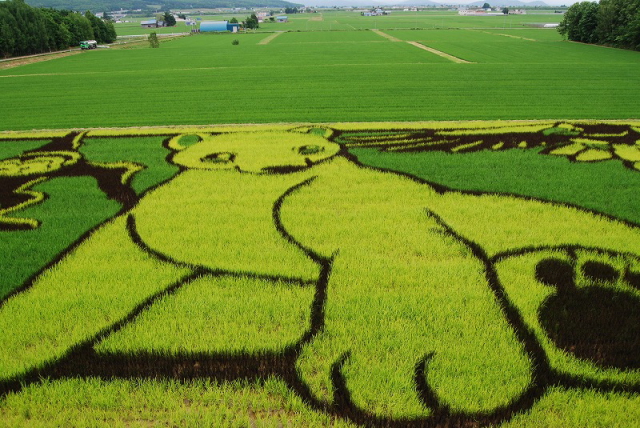
Animals in Asahikawa (Hokkaido) [photo]
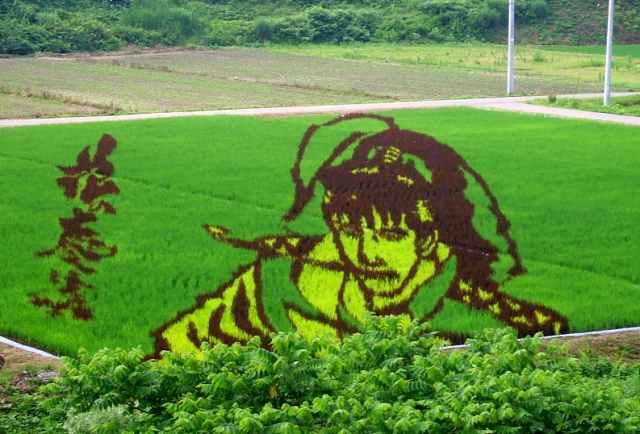
Samurai Keiji Maeda in Yonezawa (Yamagata prefecture) [photo]
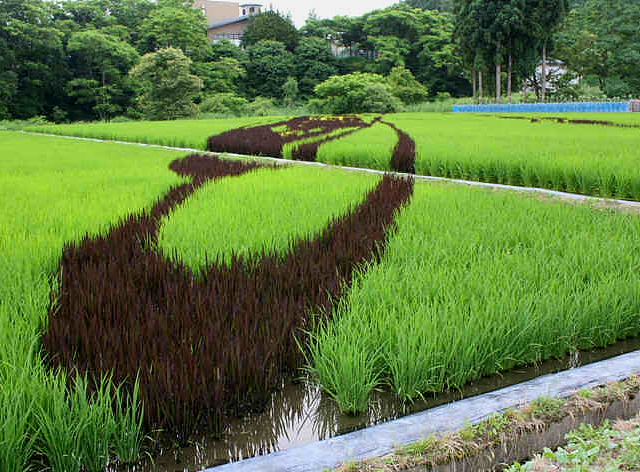
View from top of Keiji Maeda's head [photo]
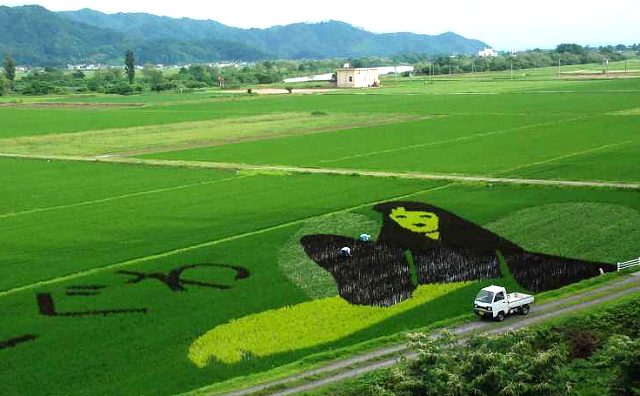
Princess Okaiko, a local folklore figure, in the town of Shirataka (Yamagata prefecture) [photo]
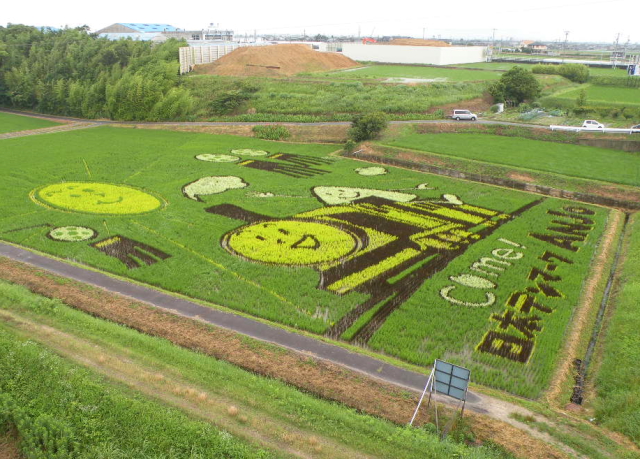
Rice paddy art at Denpark in Anjo (Aichi prefecture) [via]
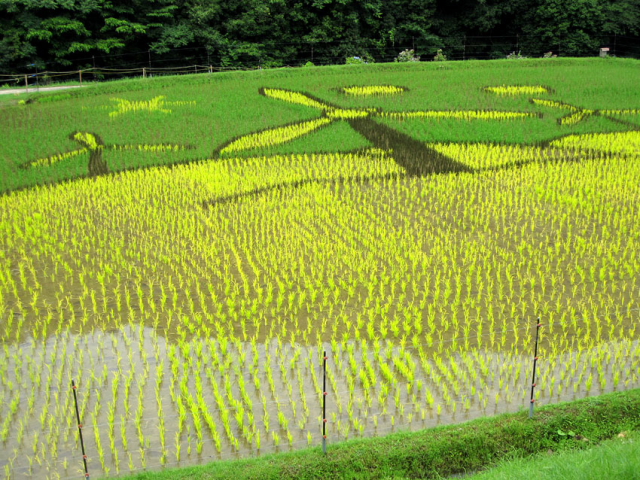
Rice paddy art at Sakakibara onsen (Mie prefecture) [photo]
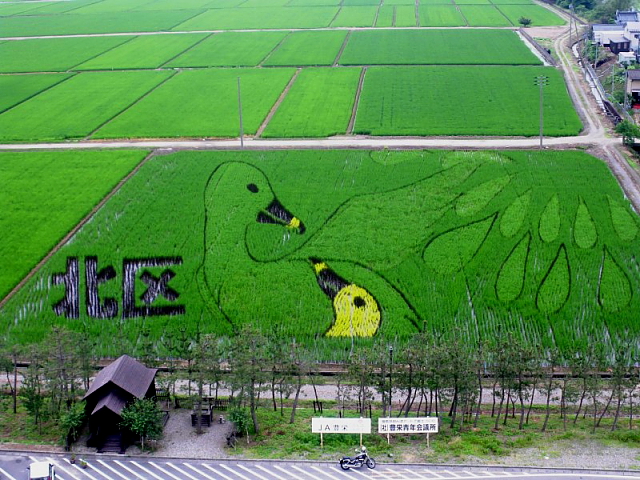
Ducks near Fukushimagata Lagoon Water Park (Niigata prefecture) [via]
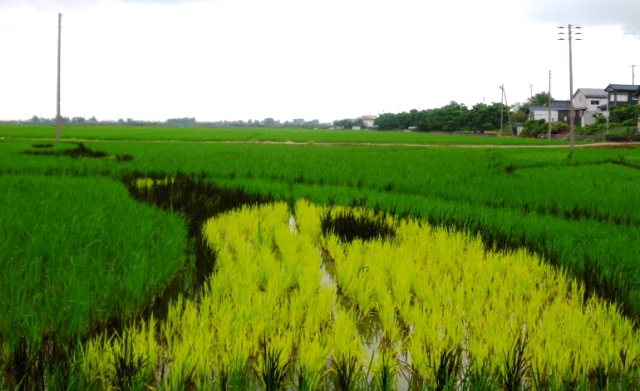
Ground level view of ducks near Fukushimagata Lagoon Water Park (Niigata prefecture) [photo]
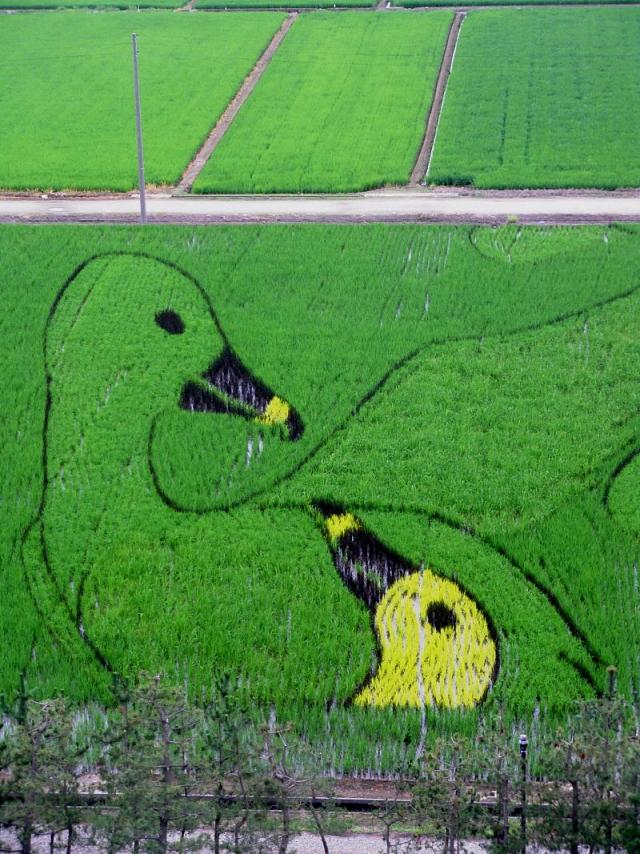
Ducks near Fukushimagata Lagoon Water Park (Niigata prefecture) [via]

Buddhist sword dancer and Anpanman in the Mizusawa area (Iwate prefecture) [photo]
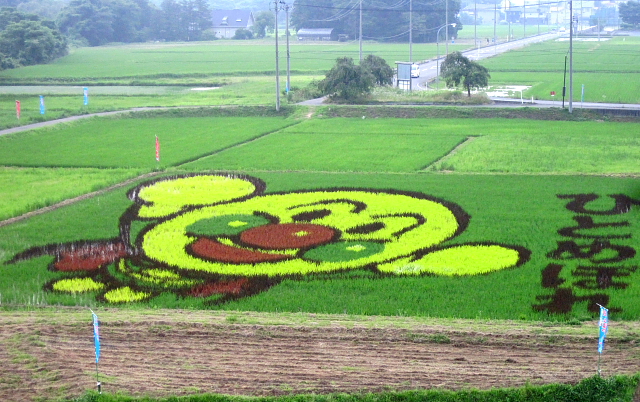
Anpanman in the Mizusawa area (Iwate prefecture) [photo]
More:
- Rice paddy art, 2009
- Time-lapse video of rice paddy art, 2008
- Rice paddy art harvest, 2007
- Rice paddy art, 2007


