
Publishing company Jiyu Kokuminsha has released its annual list of the 60 most popular Japanese words and phrases of the year. This diverse collection of expressions highlights many of the events, trends and people that caught the attention of the Japanese mass media in 2008.
From this list, a panel of judges will select the 10 trendiest Japanese words of 2008 and announce the results on December 1. The expressions are listed below in no particular order.
* * * * * * * * * *
UPDATE (Dec 1, 2008): Jiyu Kokuminsha's top 10 words/phrases of the year:
1. "gu~!" (#25 below)
2. Arafo (#14 below)
3. Ueno's 413 pitches (#58 below)
4. Izakaya taxi (#34 below)
5. Manager in name only (#41 below)
6. Buried treasure (#35 below)
7. The Crab Cannery Ship (#17 below)
8. Guerrilla rainstorm (#1 below)
9. Late-stage elderly (#43 below)
10. "I'm different from you" (#54 below)
* * * * * * * * * *
1. Guerrilla rainstorm (gōu - ゲリラ豪雨): Sudden, unpredictable rainstorms struck Japan with alarming frequency and intensity this year. Although the expression "guerrilla rainstorm" has been in use for about 30 years, this summer's abnormally unstable weather really hammered home the meaning.
2. Dumb characters (obaka-kyara - おバカキャラ): "Dumb characters," a.k.a. "dumb idols" (obaka-aidoru - おバカアイドル), are entertainers loved for their lack of brains. Nobody better embodies this phenomenon than clueless TV talents Mai Satoda, Suzanne and Yukina Kinoshita, who, as regular guests on Fuji TV's "Quiz! Hexagon" trivia show, made a name for themselves by consistently displaying a stunning lack of basic knowledge.

Pabo
The trio recently formed a musical group called "Pabo" (which means "idiot" in Korean) and released their first CD in September.
3. Subprime (sabupuraimu - サブプライム): The word "subprime" began seeping into the public consciousness last year, but it was relatively easy to ignore because the problem remained confined to the other side of the Pacific. The word took on greater significance this year as the mess washed up on Japan's shores.
4. Morning banana (asa banana - 朝バナナ): Years of online discussion between weight-conscious Mixi users resulted in the creation of the "Morning Banana Diet," a simple diet program which, among other things, involves eating bananas for breakfast. The diet program took the nation and mainstream media by storm after it was featured on a popular TV show. Sporadic banana shortages occurred at some supermarkets as suppliers struggled to keep up with demand. [More]
5. Change (チェンジ): While Obama brought a message of "change" to the United States, Fuji TV delivered a hit drama, entitled "Change," starring SMAP idol Kimutaku (Takuya Kimura) as a school teacher who reluctantly becomes prime minister.
6. Crystal jelly (owan kurage - オワンクラゲ): The crystal jelly, a.k.a. Aequorea victoria, is a bioluminescent jellyfish found off the west coast of North America.

The creature was thrust into the spotlight this year after marine biologist and organic chemist Osamu Shimomura, along with Martin Chalfie and Roger Y. Tsien, were awarded the 2008 Nobel Prize in Chemistry for discovering green fluorescent protein (GFP) in the jellyfish and developing it as an important biological research tool. [More]
7. Rozen Aso (ローゼン麻生): "Rozen Aso" is the nickname of current prime minister Taro Aso, a manga fan who was once reportedly seen reading "Rozen Maiden" at Haneda Airport. In 2007, as foreign affairs minister, Aso established the International Manga Award for non-Japanese manga artists. When he announced his candidacy for prime minister after the resignation of Shinzo Abe in 2007, the stock prices of some manga publishers and manga-related companies rose sharply.
8. Akiba-kei (アキバ系): "Akiba-kei" (lit. "Akihabara style") refers to the geek culture of Tokyo's Akihabara district, the otaku capital of the world. Synonymous with "otaku," the expression generally applies to young men who frequent Akihabara and harbor a deep interest in idols, erotic PC games, model figurines and manga, although it can refer to geeky women as well.
9. Hime-den (姫電): This abbreviation of hime-denwa (lit. "princess phone") describes a garish style of mobile phone decoration popular with junior high and high school girls.

Hime-den
Hime-den are typically decorated with glitter, fake jewels, ribbons, lace, and little teddy bears.
10. Marriage hunting (konkatsu - 婚活): "Konkatsu-Jidai'' ("The Times of Marriage-Hunting"), a recent best-selling book by Toko Shirakawa, looks at Japan's declining marriage rate and the growing difficulty that people in their 30s and 40s face when seeking marriage partners. Recent statistics indicate that 47 percent of men and 32 percent of women in their early 30s are unmarried. These figures appear to be on the rise as people focus more on career than on family, and as more and more people view marriage as a personal preference, not an essential part of life. [More]
11. Air performance (ea-gei - エア芸): This refers to a recent twist on the Japanese art of monomane (impersonation). Unlike conventional monomane artists who do voice impressions, air performers lip sync their imitations to recordings while incorporating well-timed dance moves, gestures and facial expressions. Transsexual entertainer Ai Haruna is well known for her "Air Ayaya" performance, an imitation of idol Aya Matsūra (a.k.a. Ayaya).
12. "You say?" (Iu yo ne? - 言うよね?): Transsexual entertainer Ai Haruna frequently uses this pet expression as a retort when berated. "I U YO NE-" is also the title of her upcoming single.
13. Onee-mans - (onee-manzu - オネエマンズ): Onee-mans ("sister man") is a popular prime-time NTV variety show featuring a cast of effeminate gay men and transgenders who get together to discuss topics ranging from fashion to cooking.
14. Arafo (アラフォー): "Arafo" -- a word coined to refer to females between the ages of 35 to 45 -- is an abbreviation of "Around 40," which also happens to be the title of a popular TV drama that depicts the worries and conflicts of the Arafo generation, particularly with respect to career, love, marriage, childbirth and child rearing.

Incidentally, the word "arasa" ("around 30"), which is used in the fashion industry to refer to females around 30, was derived from this word. [More]
15. "Lost Generation" (rosu jene (sengen) - ロスジェネ(宣言)): In June, Kamogawa Publishing Co. started a new biannual magazine entitled "Lost Generation," a self-proclaimed ultra-leftist journal focusing on the themes of "anguish, unease and the absurdities the young people of today face in everyday life." The magazine takes its name from the so-called Lost Generation of people now in their late 20s and early 30s who came of age during Japan's lost decade, a period of economic stagnation that followed the collapse of the bubble economy in the early 1990s. [More]
16. Taste for middle-aged men (karesen - カレセン): An abbreviation of "kareta ojisan senmon" (lit. "specialty in withered old men"), "karesen" refers to the particular preference some young women have for middle-aged or older men who are calm, unassuming, and lack sex appeal. This type of man is the subject of a photo-heavy book entitled "Karesen," which profiles a host of dandy gents and extols their virtues.
17. The Crab Cannery Ship (Kanikōsen - 蟹工船): This year saw the surprise revival of "Kanikōsen," a 1929 novel by Takiji Kobayashi that follows the proletarian struggle of exploited workers on a crab cannery ship. The book sold over 600,000 copies this year, and a contemporary film adaptation (scheduled for release in 2009) is reportedly in the works. [More]
18. Millennial anniversary of the Tale of Genji (genji monogatari sen-nen-ki - 源氏物語千年紀): In 2008, special events were held across Japan to mark the 1,000th anniversary of the Tale of Genji, the world's oldest novel.
19. "The Homeless Junior High School Student" (hōmuresu chūgakusei/kaisan - ホームレス中学生/解散!): "The Homeless Junior High School Student" is a best-selling memoir by comedian Hiroshi Tamura, who became homeless as a 10-year-old after the death of his mother and the break-up of his family. Some of the hardships Tamura recounts include spending nights in public parks and eating cardboard and grass to survive. The book sold over 1 million copies within two months of its release, making it the fastest selling non-fiction book on record in Japan. The story was adapted to the screen this year as "Homeless Chugakusei" ("The Homeless Student").
20. "Ponyo, ponyo ponyo, the fish kid" (ponyo, ponyo ponyo, sakana no ko - ポ~ニョ、ポニョポニョ、さかなの子~): This is a line from the theme song for anime filmmaker Hayao Miyazaki's "Ponyo on the Cliff by the Sea." Performed by Fujioka-Fujimaki (famous duo Takaaki Fujioka and Naoya Fujimaki) and eight-year-old Nozomi Ohashi, the song reached No.3 on the Oricon Weekly Charts in August.
21. Michelin (mishuran - ミシュラン): The first Tokyo edition of the Michelin Restaurant Guide was published in 2008, and the city's eateries received a record number of coveted stars.

Despite some criticism, the guide sold over 300,000 copies the first year. The 2009 edition is due out shortly.
22. "I am one of your works" (watashi wa anata no sakuhin no hitotsu desu - 私もあなたの作品の一つです): Following the death of legendary manga artist Fujio Akatsuka on August 2, comedian and TV personality Tamori (a.k.a. Kazuyoshi Morita) delivered a eulogy, in which he said, "I am one of your multitude of works." Akatsuka was instrumental in helping Tamori during his early years in show business.
23. "It's all good." (kore de ii no da - これでいいのだ): In the eulogy, Tamori also borrowed a phrase used frequently by a character in Akatsuka's Tensai Bakabon manga series, when he said: "Your liberating ideas helped us accept and affirm the way things really are. That is, you taught us, 'It's all good.'"
24. Sekai no Nabeatsu (世界のナベアツ): Sekai no Nabeatsu is the nickname of comedian Atsumu Watanabe, whose inane number-counting gag involves having a conniption fit every time he comes to a multiple of three or a number that has a three in it.
25. "gu~!" (グ~!): "Guu" -- a bastardization of the English word "good" -- is the signature line of comedienne Edo Harumi, which she usually delivers while giving an exaggerated thumbs-up gesture. She often incorporates the gag into everyday conversation by over-emphasizing the "guu" sound at the end of words. Edo Harumi also received a lot attention as the celebrity marathon runner at this year's NTV 24-hour charity telethon, which aims to bring-guu in donations from viewers tuning-guu in to enjoy the spectacle of a celebrity in pain.
26. Kitaaa! (キターー!!): Comedian Takahiro Yamamoto repopularized the expression "kitaaa!" ("relief!") after imitating the way actor Yuji Oda used to scream it in eyedrop commercials years ago.
27. "A woman's life is like walking on a long one-way path." (Onago no michi wa ippon-michi ni gozaimasu. - おなごの道は一本道にございます。): This is a famous line from episode 6 of "Atsuhime" (lit. "Princess Atsu"), a 50-part NHK drama that chronicles the life of Tensho-in, the wife of 13th Edo shogun Tokugawa Iesada. [More]
28. Kuidaore Taro (くいだおれ太郎): For 60 years, the bespectacled clown mannequin known as Kuidaore Taro played drums and served as mascot outside the famous Kuidaore restaurant in Osaka's Dotonbori district. Unfortunately, the local icon lost his job when the restaurant shut down this year.

Kuidaore Taro
Instead of putting the clown mascot up for sale, the owner has decided to rent him out as a celebrity for promotional purposes. Expect to see Taro in commercials, festivals and other events in the future. [More]
29. Kimotiiiii (キモティー): Seibu Lions outfielder G.G. Sato is known for driving fans wild with antics like the "Kimotiii!" ("Feels good!") he belted out on countless occasions this year.
30. Make Legend (meiku rejendo - メーク・レジェンド): This is the slogan of the 2008 Yomiuri Giants baseball team under manager Tatsunori Hara, who beat the odds to win the 2008 Central League Championship. The slogan is reminiscent of the team's 1996 slogan of "Make Drama" (which, in hybridized Japanese-English, means to achieve success after a dramatic turnaround). That season, the Giants under manager Nagashima captured the Central League pennant and "Make Drama" was recognized as the trendiest expression of 1996.
31. "It was nothing" (he no tsuppari demo nai desu kara - 屁の突っ張りでもないですから): After judo star Satoshi Ishii won gold at the Beijing Olympics, reporters asked him to describe the pressure he felt. Notorious for making bold statements to the press, Ishii said, "It was nothing [compared to what his coach felt]." The champ later shocked the judo world at a garden party hosted by the Emperor, where he announced his intent to quit judo for a career in the burgeoning field of mixed martial arts.
32. Recurrence Prevention Committee (saihatsu bōshi kentō iinkai - 再発防止検討委員会): The sumo world found itself embroiled in scandal again this year after Tokyo police arrested Russian wrestler Wakanoho for marijuana possession. In response, the Japan Sumo Association's Recurrence Prevention Committee, which was established last year to investigate questionable training practices after the hazing death of a teenage wrestler, conducted a series of random urine tests. Two more Russian sumo wrestlers, Roho and Hakurozan, tested positive for cannabis. To make matters worse, after Wakanoho was permanently banned from the sport in August, he went public with details (and names) that appear to substantiate the allegations of bout rigging that have haunted the Sumo Association for years. [More]
33. Sento-kun/ Manto-kun (せんとくん/まんとくん): Sento-kun, the official mascot character for the Commemorative Events of the 1,300th Anniversary of the Nara-Heijokyo Capital, garnered widespread criticism from the media, religious groups and the blogosphere after he was unveiled in February. A Buddhist child monk with a rack of deer antlers sprouting from his head, Sento-kun is supposed to evoke the image of Nara's rich Buddhist history and the wild deer that roam freely around town. But some citizens were angry at officials for shutting them out of the decision-making process and wasting 5 million yen (about $50,000) of taxpayer money on what they saw as an ugly mascot.

Sento-kun (left) and Manto-kun (right)
A group of Nara-area designers took matters into their own hands and came up with their own mascot that more closely represents the will of the people and the true spirit of Nara. That mascot is Manto-kun. [More]
34. Izakaya taxi (居酒屋タクシー): In June, about 450 Japanese government bureaucrats admitted to receiving beer, snacks and cash from taxi drivers hired for official journeys at taxpayer expense. Taxi fare from central Tokyo to outlying areas can easily cost 10,000 to 20,000 yen ($100 to $200) per trip, which is good money for the driver. To ensure repeat business and get the leg up on the competition, some drivers started keeping coolers stocked with goodies for their big-spending bureaucrat passengers. When the scandal broke, these taxis came to be referred to as izakaya ("pub") taxis. [More]
35. Kasumigaseki's buried treasure (kasumigaseki maizōkin - 霞ヶ関埋蔵金): The "treasure" buried in Tokyo's Kasumigaseki district (home to Japanese government buildings and institutions) is not the legendary trove of riches the Tokugawa shogunate government is rumored to have hidden during the closing days of the Edo period (1603-1867) as they faced defeat by Meiji government forces. Instead, it consists of reserve funds and surpluses in the central government's special accounts. With an estimated value of 187 trillion yen ($1.9 trillion), some politicians believe that this "treasure" could be used to fund economic stimulus measures and social welfare plans. Arguments over how (and whether) to use this money and whether or not it can effectively bail out the Japanese government are intensifying as Japan's economic situation worsens. [More]
36. Twisted Diet (nejire kokkai - ねじれ国会): "Twisted Diet" refers to the parliamentary gridlock resulting from the Democratic Party's majority in the Upper House and the Liberal Democratic Party's overwhelming majority in the Lower House.
37. Gasoline Diet (gasorin kokkai - ガソリン国会): Political wrangling over gasoline taxes took center stage in the 150-day Diet session that convened in January, earning it the nickname of the "Gasoline Diet." While the ruling Liberal Democratic Party wanted to extend the "temporary" (30-year-old) gasoline tax hike to maintain funding for road and highway projects, the opposition Democratic Party of Japan wanted to let it expire to provide consumers relief at the pump.
38. Temporary tax (zantei zeiritsu - 暫定税率): The so-called "temporary" gasoline tax hike -- which is actually over 30 years old -- expired at the end of March after the parties failed to reach a compromise. However, it was reinstated one month later after a revote, and prices at the pump returned to their previous levels, jumping about 25 yen per liter ($1 per gallon) overnight.
39. Fuel surcharge (nenryō saachaaji - 燃料サーチャージ): This refers to the de facto surcharge tacked on to various goods and services as a result of skyrocketing oil prices.
40. Fishermen strikes (issei kyūryō - 一斉休漁): Fishing unions held a pair of token nationwide strikes this summer to protest rising fuel prices. Squid fishermen held a two-day strike in June. And in July, the nation's fishermen held a massive one-day strike involving about 200,000 boats from all of Japan's major fishing unions.
41. Manager in name only (nabakari kanrishoku - 名ばかり管理職): "Managers in name only" are company employees who put in lots of overtime but do not get paid for their extra work because they are called "managers," even though in fact they have no administrative authority. One of these "managers in name only" at the McDonald's fast-food chain filed a lawsuit against the company for unfair labor practices. In January, the Tokyo District Court ruled in his favor, ordering McDonald's to pay its outlet "managers" for overtime because they are given no administrative authority. (The law is designed so that companies in Japan do not have to pay overtime to real managers with actual administrative authority.) [More]
42. Choriiissu (チョリ~ッス): Shibuya slang for "hello."
43. Late-stage elderly (kōki kōreisha - 後期高齢者): "Late-stage elderly" -- those aged 75 or older -- now account for nearly 10% of the Japanese population, according to an annual survey by the Cabinet Office. The same report, which warned of an imminent pension crisis as the number of retirees reached a record 27 million (21.5% of the population), added that Japan has become a "full-fledged aged society." In April, the government rolled out the Late-stage Elderly Health Insurance System to better cover people aged 75 and older. While the scheme has been criticized for various administrative shortcomings, the name itself also came under fire. Many found the phrase "late-stage elderly" offensive, so the government renamed the scheme as the more palatable "Long-Life Medical Health Insurance System." [More]
44. Yuru-kyara (ゆるキャラ): With the buzz generated by Sento-kun (see #33 above), the mainstream media began to bandy about the term "yuru-kyara." The expression was coined years ago by artist Jun Miura to describe the amateurish mascots frequently employed by local governments and others in grassroots PR campaigns. "Yuru" means "loose" or "weak," while "kyara" means "character."

Yuru-kyara in Shiga prefecture
The fact that yuru-kyara are poorly designed is a key element of their charm. [More]
45. Saiban Inko (サイバンインコ): To help promote the citizen jury system that starts in Japan next year, the justice ministry encouraged local prosecutors to come up with original ideas for yuru-kyara. One suggestion was a green parakeet named "Saiban Inko," which is a play on the words saibanin (juror) and inko (parakeet).

Former justice minister Kunio Hatoyama helped spread the word about the jury system by parading around in a Saiban Inko costume for the press.
46. Free Tibet (フリーチベット): The "Free Tibet" rallying cry echoed across the world ahead of the Beijing Olympics.
47. Tainted rice (osen-mai/ jiko-mai - 汚染米/事故米): In September, it was revealed that tons of moldy, pesticide-tainted rice had been served up at more than 100 hospitals, homes for the elderly, and dozens of schools, and had been used as an ingredient in sake, shochu and rice crackers. Osaka-based wholesaler Mikasa Foods, which had originally purchased the contaminated rice for use in industrial products such as glue, ended up selling it to hundreds of companies across Japan to boost profits. The scandal forced the resignation of gaffe-prone farm minister Seiichi Ota, who had come under fire only weeks earlier for saying the government was forced to pay close attention to food safety because Japanese consumers are "fussy" (yakamashii - やかましい). [More]
48. Poison gyoza (doku-iri gyōza - 毒入りギョーザ): In January, 10 people in Japan fell seriously ill after eating frozen gyoza dumplings produced in China. Tests revealed extremely high levels of the pesticide methamidophos (see #49 below), prompting a full-blown food scare. Investigators suspect the poison was intentionally mixed into the food at the company's factory in Hubei, China. The poisonings deepened consumer distrust toward Chinese food products and aggravated public sentiment toward China. [More]
49. Methamidophos (メタミドホス): Methamidophos, an organophosphate insecticide, became a household name in the wake of the the poison gyoza dumpling scare. Unhealthy amounts of the toxic pesticide were also discovered in the tainted rice that came to light in September. Methamidophos is not to be confused with melamine, a toxic substance that turned up in a host of other products imported from China this year, including powdered milk, chocolate, frozen dough, pastries and pizza.
50. Whispering matron (sasayaki okami - ささやき女将): The "whispering matron" is 70-year-old Sachiko Yuki, former president of upscale restaurant chain Senba Kitcho K.K., which closed down in May after a series of labeling scandals and revelations that it served expired and leftover food to customers. At a press conference held last December to apologize for wrongdoing, Yuki answered questions alongside her son Kikuo Yuki, also a Senba Kitcho executive. Each time reporters directed questions to him, Ms. Yuki could be heard muttering under her breath, telling him what to say and how to act. [Video]
51. Zero carbohydrates (toshitsu zero - 糖質ゼロ): As a result of the zero-carb trend that took off last year, the "zero" label is a common sight on drink shelves in Japan. The major breweries now offer a range of zero-carb alternatives.

Kirin Zero
Incidentally, anything less than 0.5 gram per 100 milliliters qualifies as zero.
52. Relaxed generation/ Unrelaxed education (yutori sedai/ datsu-yutori kyōiku - ゆとり世代/脱ゆとり教育): Japan's yutori ("relaxed") education policy is designed to reduce the amount of class time and content of the national primary education curriculum. In recent years, the mass media and others in Japan have blamed this policy of pressure-free education for the drops in scholastic ability. In a sign that attitudes are changing, new teaching guidelines released in March of this year advocated a policy of "unrelaxed" education. [More]
53. Pension Coverage Special Notice (nenkin tokubetsu bin - ねんきん特別便): Japan's Social Insurance Agency unleashed a massive headache on pensioners this year in the form of the Pension Coverage Special Notice -- a personalized statement outlining the details of each pensioner's coverage history. Pensioners were instructed to carefully review their statements for errors and call the Social Insurance Agency if they found any discrepancies. In addition to finding the statement difficult to decipher, people complained of busy phone lines, having to wait their turn for hours, and operators that were unable to provide straight answers to questions.
54. "I'm different from you" (anata to wa chigau n desu - あなたとは違うんです): At a press conference following former prime minister Yasuo Fukuda's sudden resignation in September, a reporter confronted Fukuda about his seeming detachment from the problems facing Japan and his resignation. Agitated, Fukuda fired back: "You said I sounded detached, but I am able to see myself objectively. I'm different from you."

Fukuda-inspired ASCII art
Japan's online community mocked Fukuda's uncharacteristically blunt outburst for weeks. [More]
55. Filtering (フィルタリング): Major political parties within the Japanese government cooperated to draft legislation to regulate access to Internet content deemed "harmful" to minors. The bill requires mobile phone companies and Internet providers to offer filtering services that restrict access to websites on mobile phones and computers used by minors, but also ensures that parents have the option to refuse such services. The bill also calls for the government to provide financial support to private organizations that develop or promote the use of filtering software. [More]
56. Age-age (あげあげ): Shibuya slang for "exciting" or "fun."
57. "I've got nothing to say" (nani mo ienee - 何も言えねー): When a TV reporter asked Olympic swimmer Kosuke Kitajima for a comment immediately after winning the 100-meter breaststroke gold, he buried his face in a towel and said, "Sorry, I've got nothing to say."
58. Ueno's 413 pitches (ueno no 413-kyū - 上野の413球): Women's softball pitcher Yukiko Ueno led Japan to a gold medal victory by throwing an astounding 413 pitches in three games over two days.
59. Kami-sama, Hotoke-sama, Ueno-sama (神様 仏様 上野様): Yukiko Ueno is from Fukuoka, the hometown of legendary 1950s-1960s Nishitetsu Lions pitcher Kazuhisa Inao, who long ago was praised as "Kami-sama, Hotoke-sama, Inao-sama" (lit. "God, Buddha, Inao"). Fukuoka fans recycled and updated the old expression following Ueno's stellar Olympic performance.
60. "Yes, YES, YEEESSSS!" (yoshi, yoshi, yoooshi! - よし、よし、よーし!): Olympic TV commentator Taeko Utsugi (a former Olympic softball coach) lost her bearings while covering the women's softball final. The moment Japan secured the gold medal, she burst out screaming, "Yes, YES, YEEESSSS!" before becoming completely unintelligible and breaking down in tears of joy. Later, after watching a tape of the broadcast, she admitted feeling a little embarrassed with herself.

 Of the countless new electronic products to be unveiled in Japan this year, few are likely to generate the amount of buzz that will accompany the Japanese launch of the yet-to-be-announced 3G iPhone. For the time being, would-be iPhone fans are holding their collective breath for all the gory details and specs, which may or may not come out at MacWorld 2008 (January 14-18).
 This year will also see the rise of a new type of business in which medical institutions team up with fitness gyms to help customers fight metabolic syndrome. One such example is the Medical Fitness OreoS facility that opened in Okutama (Tokyo) in September 2007. Established through a partnership between the Seijo drug store chain and a medical corporation, the fitness center provides individual customers with health advice and exercise programs based on the results of thorough medical examinations. The company is looking to open new facilities in 2008.
  Smokers under the legal age of 20 will also feel the pinch as electronic age verification systems come to Japan's vast network of cigarette vending machines. In February, the Tobacco Institute of Japan will begin issuing age verification smart cards, called "

 Robots can get away with things that humans cannot. In the Minami area of Osaka, for example, a humanoid robot dressed in a "sailor suit" high school uniform now works the street as a tout for an adult information center that navigates potential customers to local sex clubs. Humans in Osaka are prohibited by law from engaging in such nefarious activity.
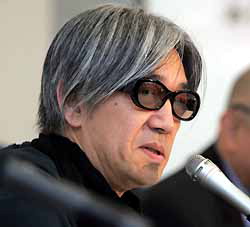 At a press conference held in Tokyo on March 23, composer Ryuichi Sakamoto made a public appeal to the government to exempt all secondhand electrical goods from the Electrical Appliance and Material Safety Law (a.k.a. PSE Law, or DENAN). The law, which is set to take effect April 1, will prohibit businesses from selling electrical goods that do not bear the PSE mark (that signifies compliance with the law?s safety standards). In other words, before putting products up for sale, dealers will be forced to file paperwork and perform tests (such as 1,000 volts for one minute) on each and every pre-2002 electrical product in order to obtain a PSE mark. Though the government recently revised the law so that it does not apply to certain "vintage" electric instruments with high scarcity value, Sakamoto called upon the government to expand the exemption to all secondhand electrical goods.