Vote for your favorite Nara mascot

Sentokun --
Sento-kun

Ever since his unveiling in February, Sento-kun, the official mascot character for the Commemorative Events of the 1,300th Anniversary of the Nara-Heijokyo Capital, has garnered widespread criticism from the media, religious groups and the blogosphere. A Buddhist child monk with a rack of deer antlers sprouting from his head, Sento-kun is supposed to evoke the image of Nara’s rich Buddhist history and the wild (but tame) deer that roam freely around town. But some citizens have expressed anger at officials for shutting them out of the decision-making process and wasting 5 million yen (about $50,000) of taxpayer money on an ugly mascot, and some Buddhist groups are reportedly upset with the inappropriate use of a religious image.

In response to the fiasco, a group of Nara-area designers called the “Creators Forum Yamato” have voluntarily organized an independent design contest to come up with a mascot that more closely represents the will of the people and the true spirit of Nara. After receiving 619 submissions from the general public (some from as far away as New York and Paris), organizers have narrowed the pool to 30 candidates and are encouraging the public to vote online.

Here are the candidates on the ballot…

Nara character ballot --

To vote, go to the online ballot, select the button under your favorite character, and hit the confirmation button at the bottom of the screen. Then hit the confirmation button on the next screen. The polls are open until May 25. As of this writing, nearly 15,000 ballots have been cast.

As a representative of the citizens of Nara prefecture, the winning mascot will work side-by-side with Sento-kun to make the anniversary event a success.

The Commemorative Events of the 1,300th Anniversary of Nara Heijokyo Capital will be held in Nara prefecture in 2010 to commemorate the 1,300th anniversary of the founding of Heijokyo (now known as Nara), the capital of Japan from 710 to 784 A.D. The large-scale, year-long international project is expected to attract 15 million visitors.

[Vote here]

UPDATE: The votes are in and the winner is Manto-kun (#8).

IKEA decks out Kobe train

IKEA decorates Kobe Port Liner --

Swedish furniture giant IKEA has converted the Kobe Portliner Monorail into a moving showroom before the April 14 opening of a new retail outlet at Port Island. The redecorated train, which features a colorful exterior, bright upholstery and fancy curtains, will carry passengers in style until May 6.

IKEA decorates Kobe Port Liner --

IKEA decorates Kobe Port Liner --

IKEA decorates Kobe Port Liner --

IKEA decorates Kobe Port Liner --

[More photos here: 1, 2, 3, 4]

Kirichimpo: Phallic promotional mascot

Kirichimpo --

Fresh on the Akita prefecture promotional gimmick scene is a unique and decidedly male mascot modeled after the region’s famed kiritampo grilled rice cake skewers. “Kirichimpo” (kiri means “cut” and chimpo is slang for the male organ), a lovey-eyed kiritampo stick with a conspicuous protuberance dangling from its lower end, is the brainchild of Fruru Co., Ltd., an Akita-based souvenir designer and wholesaler.

Mamemokkori and Marimokkori -- The company came up with the idea for Kirichimpo last year after witnessing the far-reaching success of Marimokkori, a happy, well-endowed green monster mascot from Hokkaido, whose name is a play on the words marimo (a type of giant algae ball found in Lake Akan) and mokkori (”erection”). Marimokkori’s popularity extends far beyond Hokkaido’s shores, to as far away as Chiba, the home of his younger peanut-headed cousin named Mamemokkori (mame means “bean”), and Tokyo, where mounds of the popular Marimokkori can be found inside UFO Catcher claw vending machines at game centers.

While Kirichimpo has yet to rise to Marimokkori status, it appears to be enjoying a measure of success. Last year’s initial shipment of 6,000 Kirichimpo keychains sold out in a matter of months. And with demand still strong, the company is rolling out a Kirichimpo ear pick and other new gimmicks, which are soon to appear at souvenir shops and train stations throughout Akita prefecture at a price of 350 yen ($3) each.

[Source: Akita Keizai Shimbun]

High School Girl® meat products?

High School Girl (R) --

Meat product manufacturer Ito Ham has taken the Japanese schoolgirl obsession to the next level by applying for the trademark rights to the word “High School Girl” (女子高生/Joshi-Kosei).

A pair of trademark applications (via the INPIT database) indicate that Ito Ham is planning a line of High School Girl® meat products, including meat pies, gyoza dumplings, pizza, curry and more. Either that, or someone in the office is just having fun.

Given that “high school girl” is a commonly used phrase, it seems unlikely — though not impossible — that the Japan Patent Office would grant a trademark registration. One thing’s for sure, though: if the company could manage to remove the word from the public domain, license it and charge royalties for its use, they will be sitting on a gold mine worth more than any meat product out there.

[Source: CNET Japan via Slashdot Japan]

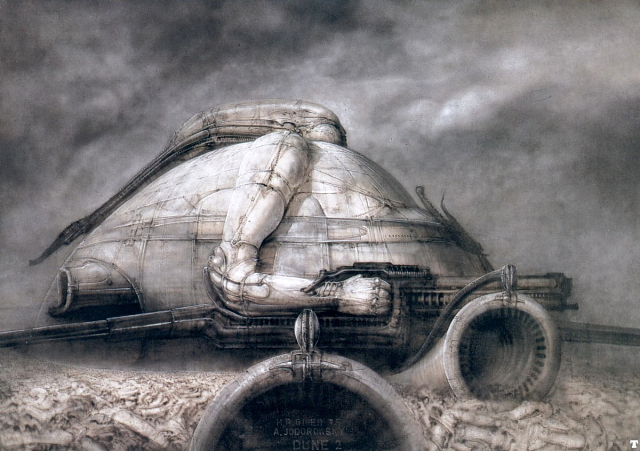
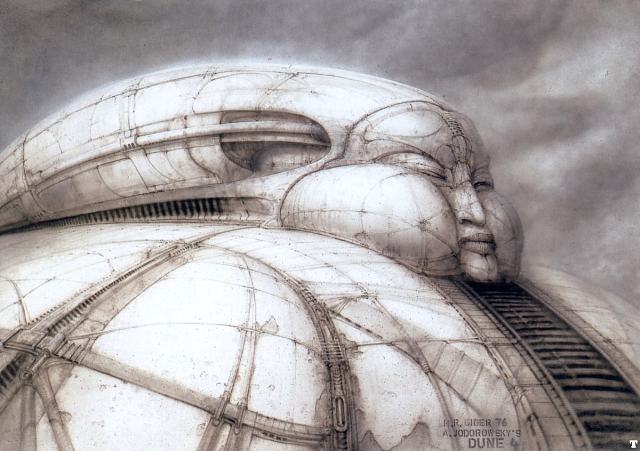
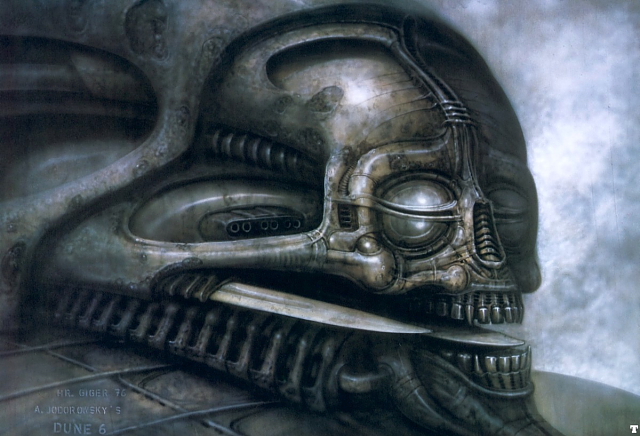
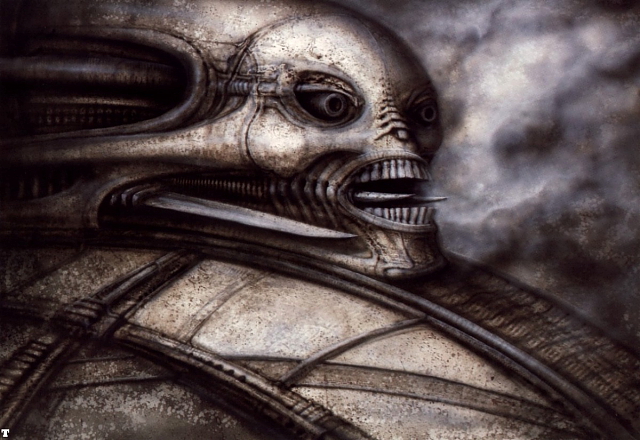
H.R. Giger’s creatures in ’80s Pioneer ads

In 1984-1985, Pioneer featured the visions of H.R. Giger in a series of Japanese magazine ads for their Zone audio-visual component system.

H.R. Giger Pioneer ad --
[Enlarge]

H.R. Giger Pioneer ad --
[Enlarge]

Shokotan’s Sukashikashipan

Shokotan's Sukashikashipan --

Otaku idol Shokotan (Shoko Nakagawa)’s obsession with sand dollars has resulted in a new type of sweet bun, called Sukashikashipan, which is scheduled to hit Lawson convenience store shelves nationwide at the end of January.

Since Shokotan began drawing attention to sand dollars (known as sukashikashipan in Japanese) on her popular blog last April, she has often remarked how they look like a type of kashipan (sweet bun). A Lawson product development team apparently agreed (they also picked up on the fact that sukashikashipan sounds like kashipan), and they contacted Shokotan about helping them design a new product. The result is a sugary treat that looks like a palm-sized sand dollar, complete with five radially symmetric holes. Sukashikashipan will sell for 125 yen (a little more than $1) at Lawson stores nationwide beginning January 29.

As an added bonus, the package will feature a QR code that, when scanned, takes you to a mobile site that provides a variety of Sukashikashipan-Man anime content. Sukashikashipan-Man is a fictional hero conceived by Shokotan.

Giza-kawayusu!

[Source: Gigazine]

NTT to test digital aromatic signs

Digital aroma-emitting sign by NTT -- NTT Communications (NTT Com) has announced plans to begin testing its latest aroma-emitting digital sign technology, called “Kaoru Digital Signage,” in Tokyo. The tests, which will take place outside the Kirin City Beer Hall in the underground Yaesu Shopping Mall (JR Tokyo station) from October 21 to the end of December, will involve internet-controlled signs that display electronic imagery of beer while emitting aromas such as lemon and orange. The researchers aim to study the sign’s effectiveness in drawing passersby into the restaurant.

Billed as the world’s first advertising sign system capable of emitting multiple aromas while displaying electronic images, the signs combine NTT’s Spot Media digital signage service (currently used in marketing and customer service applications at banks, hospitals, public offices and retail stores) with its Kaori Tsushin online fragrance communication service. Kaori Tsushin, which gives users web-based control over aroma-emitting devices, is already in use at retail stores and cafes, where it is reportedly helping to improve on-site customer satisfaction.

NTT’s new sign system consists of a 30 x 50 x 15 centimeter (12 x 20 x 6 inch) aroma diffuser, a 19-inch display and an NTT Spot Media content receiver, which are used to deliver aroma and display images of beer (and live shots from inside the restaurant) based on instructions received via a web connection. In the tests, the sign’s smell will change according to the time of day, dispersing appetizing orange and lemon aromas at lunchtime, and releasing a more relaxing “woody” aroma at night.

The aroma diffuser contains three 450-milliliter bottles of aroma oil. When the “recipe” — which determines the type and strength of smell — is received via the web, the device releases a vapor created by blasting the oil with a series of ultrasonic waves. With the ability to deliver fragrances across a 500 square meter (5,400 square feet) area, the new aroma diffuser is a great deal more powerful than NTT’s Aromageur, which was developed for personal use in spaces the size of a small bedroom.

The scheduled testing follows a spate of aroma-related experiments conducted by NTT earlier this year. On Valentine’s Day, NTT researchers conducted an experiment with vanilla fragrance in an office lobby. When vanilla fragrance was periodically released near free chocolate (labeled with a “Please Take One” sign) placed on a reception counter, the researchers found that passersby were nearly twice as likely to take a chocolate. In other experiments conducted at Tokyo-area bookstores from May to September, relaxing orange and lavender aromas were found to boost monthly sales by nearly 5%.

[Sources: NTT press release, IT Media]

Interactive supermodel hologram ad

Anne's Fitting Show, interactive holographic ad --

Anne’s Fitting Show, an interactive ad display that allows shoppers to dress up a holographic incarnation of Japanese supermodel Anne Watanabe in World’s “Untitled” brand clothing, has been set up on the first floor of the Takashimaya department store in Shinjuku. Anne, who is the daughter of actor Ken Watanabe, is shown in the flesh on the right (her holograms are on the left).

The 3D ad system features an external touch-screen control panel that allows aspiring fashion coordinators to select from 4 situations — “Date,” “Work,” “Party” and “Holiday” — and arrange 12 different fall/winter outfits for Anne’s hologram, who walks around in the glass-enclosed booth showing off the selected clothes. The interactive 3D ad, said to be the world’s first of its kind in the fashion industry, relies on Danish advertising media company viZoo’s Free Format holographic film technology.

Anne’s Fitting Show will be on display until September 24.

[Sources: Sankei Web, Shinjuku Keizai Shimbun]

Motion Portrait: Instant 3D animation from photos

Motion Portrait --

Motion Portrait is a killer little piece of digital animation technology that easily transforms an ordinary digital photograph of a face into a living 3D animation that can blink and move its eyes, turn its gaze to follow the movement of the mouse cursor, express a range of emotions, sneeze and more — all in a matter of seconds. In addition to being fast and easy to use, Motion Portrait is much lighter than conventional 3D animation engines, making it ideal for use in cellphones, handheld games and other portable devices.

Originally developed at the Sony Kihara Research Center two years ago, Motion Portrait now belongs to Motion Portrait Inc., which was founded this July after the research center closed its doors last year. As the company continues to develop Motion Portrait, it is on the lookout for new ways to put the technology to use.

While the technical details are being kept secret, the company says Motion Portrait works by automatically recognizing the eyes, nose, mouth and other facial features in ordinary digital photographs to create an instant three-dimensional map of the head. The data is then run through Motion Portrait’s Expression Engine to create a range of facial expressions. Here are a few examples of Motion Portrait at work: 1, 2, 3.

In addition to photographs of human faces, Motion Portrait can also breathe life into pictures of pets, with a little manual input. Check out this fun yet sinister-looking dog (pictured above). Grrrr!

The technology can also be used to create anime from illustrations, and it is already being used in a PSP game — the Promise of Suzumiya Haruhi (Suzumiya Haruhi No Yakusoku) by Bandai Namco Games — due out in early August. With the ability to create a wide range of facial animations from a single image, Motion Portrait promises to reduce game development costs and improve quality. In addition, when used in conjunction with the company’s voice recognition technology, Motion Portrait automatically syncs the animated lips with voice data to create realistic-looking talking mouths. Here are two anime examples: 1, 2.

The company also sees potential uses for Motion Portrait in advertising and in creating avatars used on social networking sites. Further, as a simulation tool, beauty salons can use Motion Portrait to show customers how they might look with different hairstyles and makeup, and eyeglass shops can use it to help customers choose their next pair of eyeglasses.

No word yet on when Motion Portrait will be made available to the general user.

[Source: Motion Portrait via IT Media]

Heat-sensitive urinal stickers as bug spray marketing gimmick

Heat-sensitive urinal stickers as marketing tool -- The marketing minds at Fumakilla, a pesticide manufacturer, have launched a gimmicky bug spray promotional campaign that makes use of heat-sensitive, color-changing stickers placed in urinals at public restrooms around Shinjuku station. Under ordinary, dry conditions, the special urinal stickers show a housefly in the crosshairs of a rifle scope, but as men take aim and relieve themselves on the stickers, the fly transforms into an advertising message.

The stickers are printed with a layer of special, heat-sensitive ink developed by Pilot Ink. When the sticker is exposed to a certain amount of heat, this layer of ink becomes transparent, revealing an advertisement printed underneath. Dai Nippon Printing, who manufactured the stickers for Fumakilla, designed them to withstand the rigors of being placed in a public urinal for extended periods of time. Fumakilla says that in addition to serving as a form of advertising, the stickers provide men with a convenient target to aim for when using urinals, which leads to a cleaner restroom environment.

The company has also launched a website featuring a simple Flash game called “Ippatsu Meichu,” which allows players to test their fly-shooting skills in a virtual lavatory. Make sure not to make a mess, though, or you’ll get a visit from the angry toilet lady.

[Source: IT Media]