Video: Mononoke Dance

Mononoke Dance --

Denki Groove’s video for “Mononoke Dance” is yet another masterpiece by manga artist Masakazu Amahisa. Using stick-puppet animation, the video tells the story of a couple who crash their car on a dark forest road and encounter a Konaki-jiji (monster baby with the face of an old man) that leads them deep into the woods to a wild party for yokai, or traditional Japanese monsters. (Watch it.)

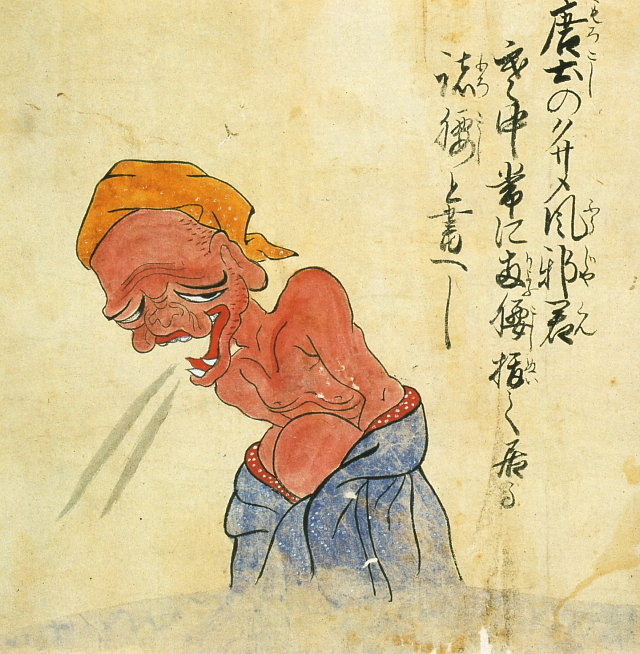
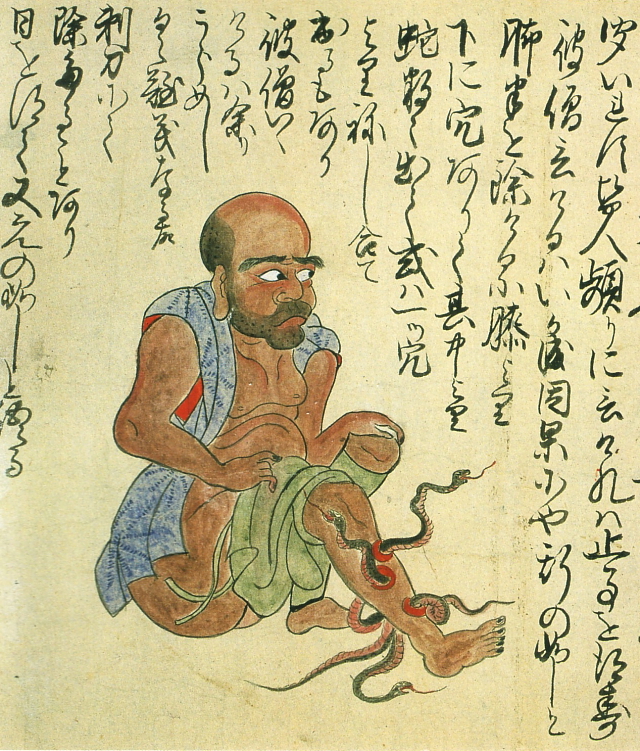
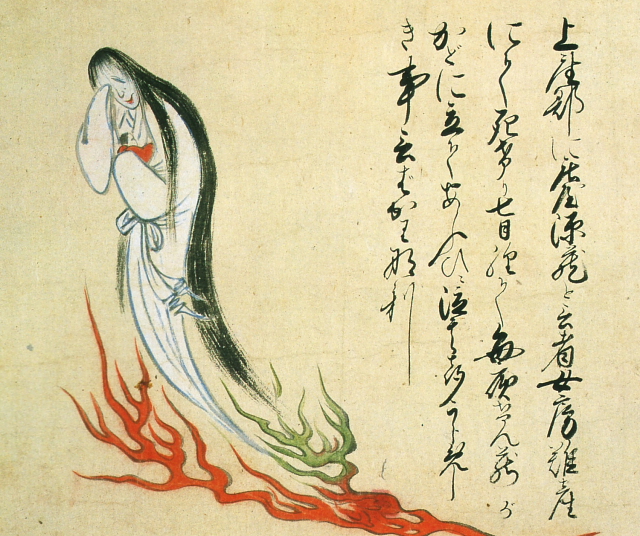
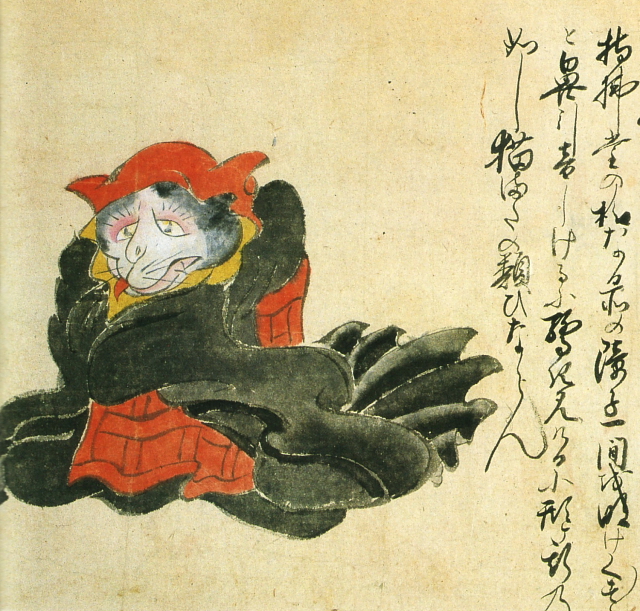
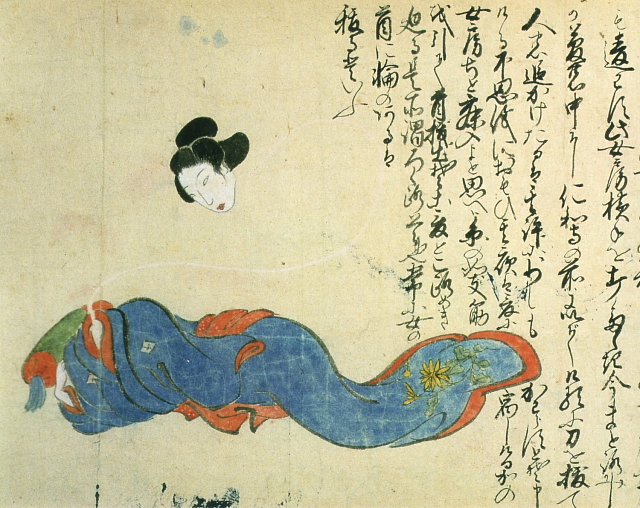
Guests at the party include Hitodama (fireballs), Kyonshi (Chinese vampire), Onyudo (shapeshifting monk), Jizo (guardian deity of children), Noppera-bo (faceless ghost), Rokurokubi (long-necked monster), Kappa (water imp), Hoichi the Earless, someone who dances like Yoshio Kojima, and many others.

Incidentally, the song “Mononoke Dance” is used as the opening theme for the “Hakaba Kitaro” anime series now airing on Fuji TV (the video here is completely unrelated to the TV show).

Edo-period monster paintings by Sawaki Suushi

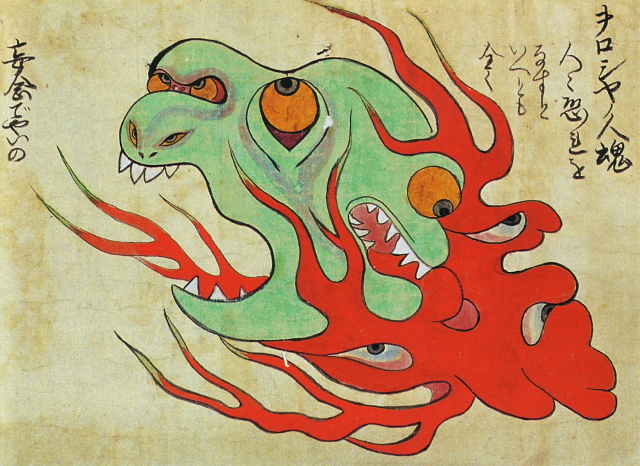
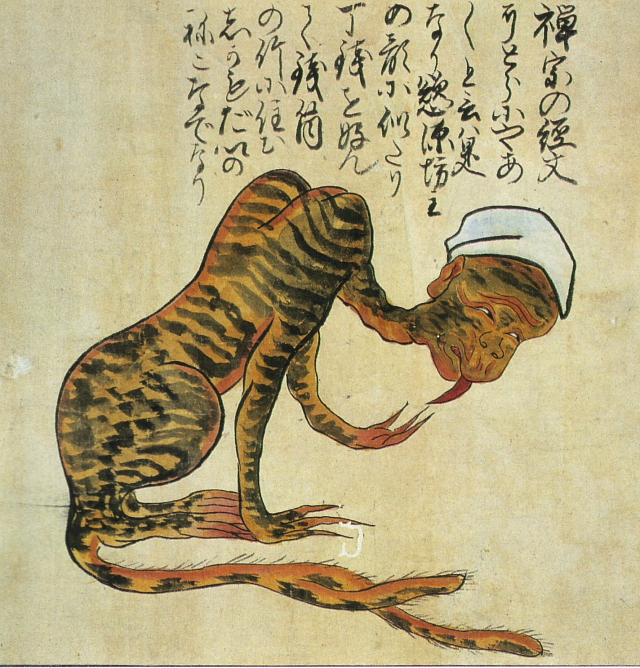
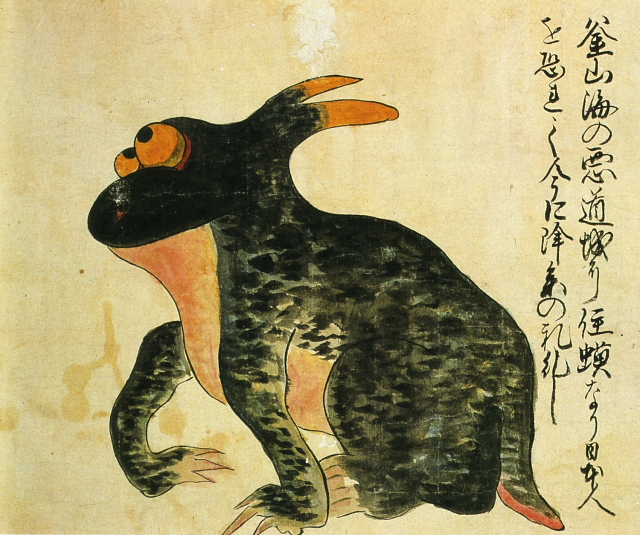
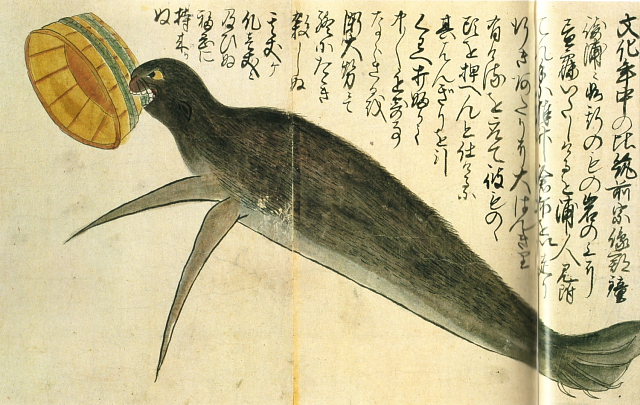
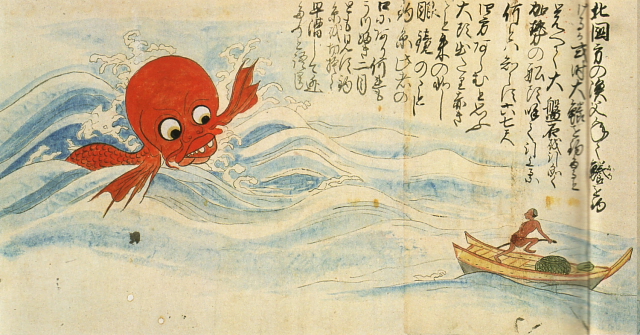
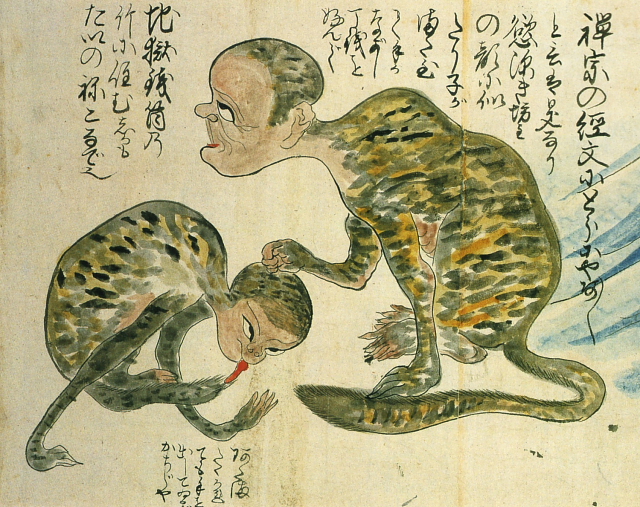
In the sophisticated popular culture of the Edo period (1603-1868), much attention was devoted to Japan’s rich pantheon of traditional monsters and apparitions, known as youkai. Sometimes frightening, sometimes humorous, these compelling Japanese folk creatures were the subject of numerous artistic and literary works. One such work was Hyakkai Zukkan, a collection of picture scrolls completed in 1737 by Sawaki Suushi, a relatively unknown artist who studied under master painter Hanabusa Itchou (1702-1772). Hyakkai Zukkan’s colorful depictions of Japan’s most notorious creatures inspired (and were copied by) youkai artists for generations. Here is a peek inside.

Yōkai: Ushioni --
Ushi-oni [Enlarge]

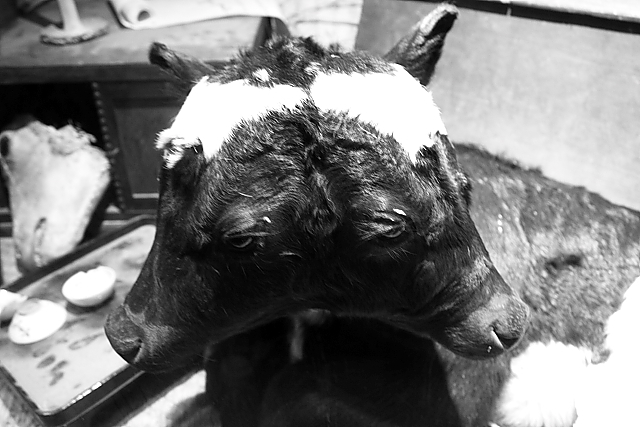
Ushi-oni (lit. “cow devil”) is a malevolent sea monster with the head of a bull and the body of a giant spider or crab. It is most often encountered in the coastal waters of western Japan, particularly in Shimane prefecture, where it is feared for its vicious attacks on fishermen. [More]
Ushi-oni is usually seen in connection with a related monster, called Nure-onna.

Yokai: Nureonna --
Nure-onna

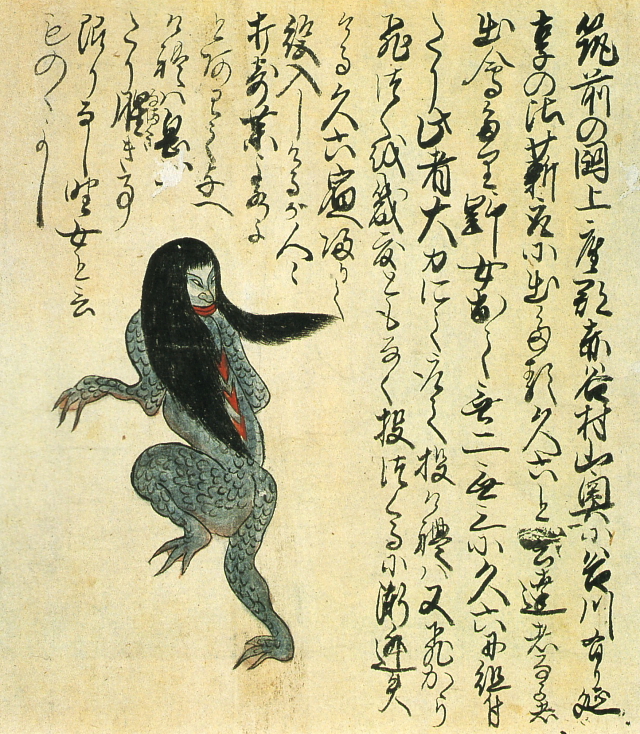
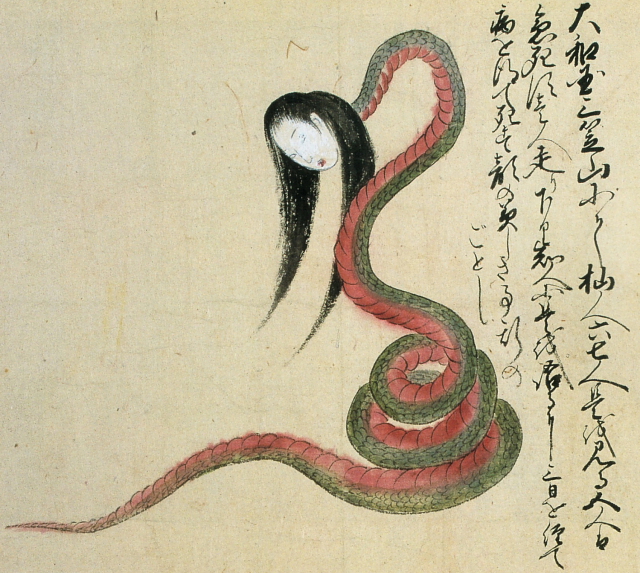
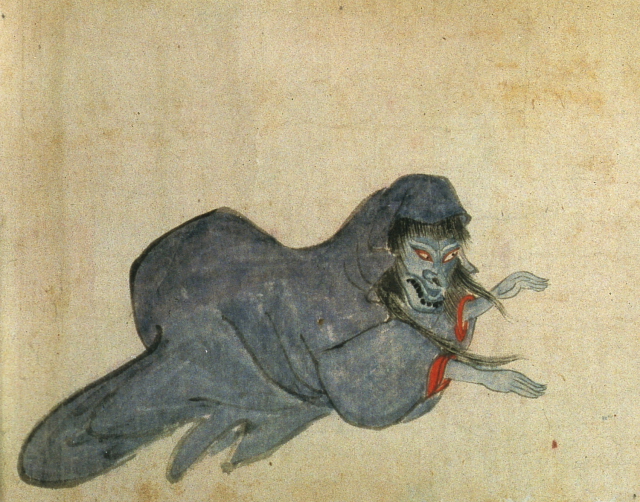
Nure-onna (lit. “wet woman”) is a fast-swimming amphibious creature with the head of a human female and the body of a gigantic snake. Her appearance varies slightly from story to story, but she is usually described as having beady, snake-like eyes and long, sharp claws and fangs. Nure-onna is typically seen at the water’s edge, washing her long, flowing hair. In some stories, she carries a small child, which she uses to attract potential victims. When a well-intentioned person offers to hold the baby for Nure-onna, the child attaches itself to the victim’s hands and grows heavy, making it nearly impossible to flee. In some stories, Nure-onna uses her long, powerful tongue to suck all the blood from her victim’s body. [More]

Yōkai: Uwan--
Uwan

In ancient Aomori prefecture legends, Uwan is a disembodied voice that inhabits old, abandoned temples and homes. When a person enters a haunted building, the formless spirit belts out an ear-piercing “Uwan!” (hence the name). The voice is only audible to people inside the building — those standing outside hear nothing. Uwan consists only of sound and poses no physical danger.

Ancient Japanese legends are rife with examples of formless youkai like Uwan, which consist of nothing but sound, light or other natural phenomena. In the Edo period, however, these youkai assumed physical bodies as artists incorporated them into their work.

Yōkai: Nurarihyon, Mehitotsubou --
Nurarihyon (left), Mehitotsubou (right)

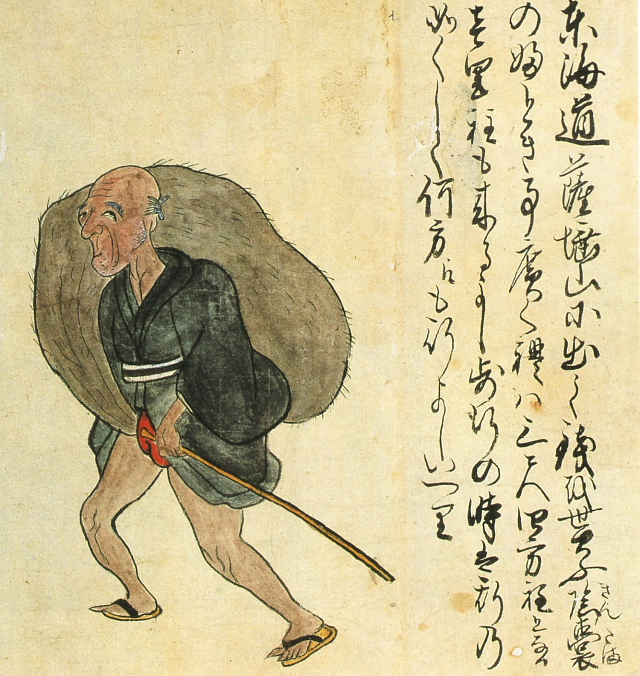
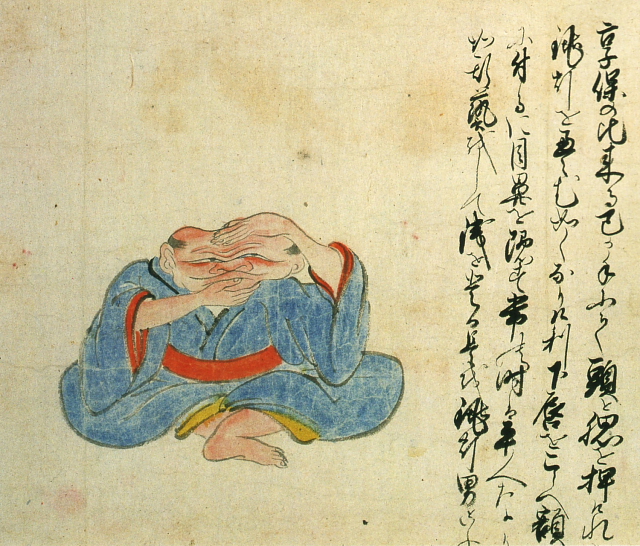
Another youkai that got a facelift in the Edo period is Nurarihyon, pictured here as as a well-dressed old man with an elongated bald head. Ancient Okayama prefecture legends describe Nurarihyon (lit. “slippery strange”) as a marine creature found in the Seto Inland Sea, often seen bobbing around on the surface of the water like some sort of giant jellyfish or octopus. Nurarihyon eludes capture by diving underwater when people approach to investigate.

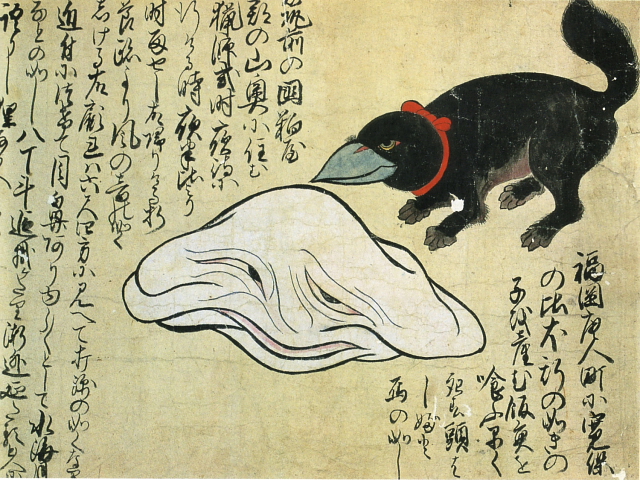
In the Edo period, Nurarihyon came to be known as a mysterious old man with the uncanny ability to sneak into homes and “take over.” When the residents of a home encounter him sitting around drinking tea, they are unable throw him out and cannot help but treat him as the head of the household. Nurarihyon is said to be a highly respected figure in the world of youkai.

Mehitotsubou (above right), a large monk with a cyclopean eye, is a variant of the large shape-shifting monks commonly found in Japanese folk tales.

Yokai: Mikoshi-nyudo --
Mikoshi-nyuudou

Another monster monk is Mikoshi-nyuudou (a.k.a. Miage-nyuudou), a large, cross-eyed mendicant encountered on mountain passes or on lonely roads at night. Mikoshi-nyuudou grows taller when you look up at him — and the higher you look, the taller he grows. Look up for too long and you will die, goes the legend, but say “mikoshita” (”I see higher”) and he disappears. Mikoshi-nyuudou’s true identity is unknown, but in some areas he is believed to be a shape-shifting weasel, fox or tanuki.

Yokai: Yama-warau --
Yama-warau

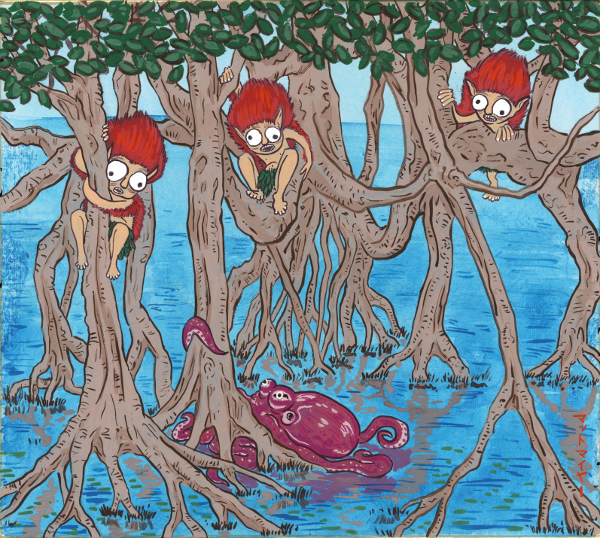
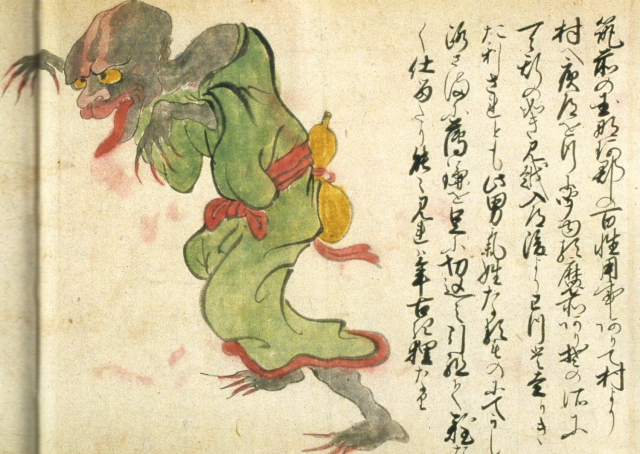
Yama-warau (a.k.a. Yama-waro) are hairy, one-eyed Garappa (a variety of Kappa found in Kumamoto prefecture) who have gone into the mountains for the winter. These child-sized creatures are known to provide assistance to lumberjacks in the mountains, and they eagerly return again and again to help, as long as they are rewarded with liquor and rice balls.

Like other varieties of Kappa, Yama-warau are fond of playing tricks on people, and they enjoy sumo wrestling. They sometimes break into people’s homes to take a bath, and they have a sixth sense for danger, which allows them to escape from people with evil intentions.

At the spring equinox, Yama-warau return to the rivers to live as Garappa. They travel in groups, jumping from one rooftop to the next, all the way down to the water. If, along the way, they come across a new home under construction, they get angry and poke holes in the walls. Legend has it that anyone who goes to the river to catch a glimpse of a returning Yama-warau will become sick.

Yokai: Inugami --
Inugami

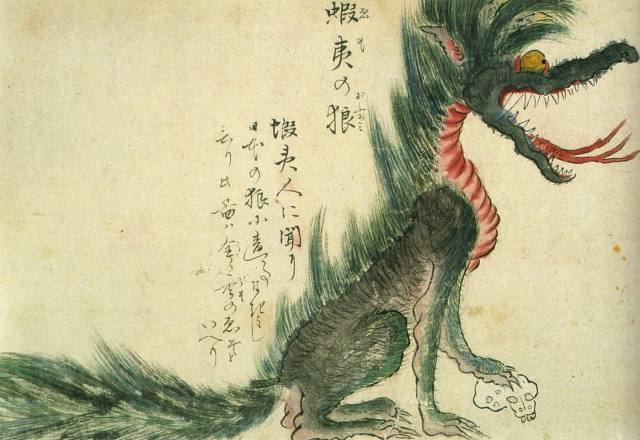
An Inugami (lit. “dog god”) is a familiar spirit that looks like a dog and acts as a protective guardian. Inugami are extremely powerful and loyal, and they are known to carry out acts of revenge on behalf of their “owners.” They can also exist independently, and under some circumstances they may turn against their owners. Inugami also have the ability to possess humans. [More]

Yokai: Ouni --
Ouni

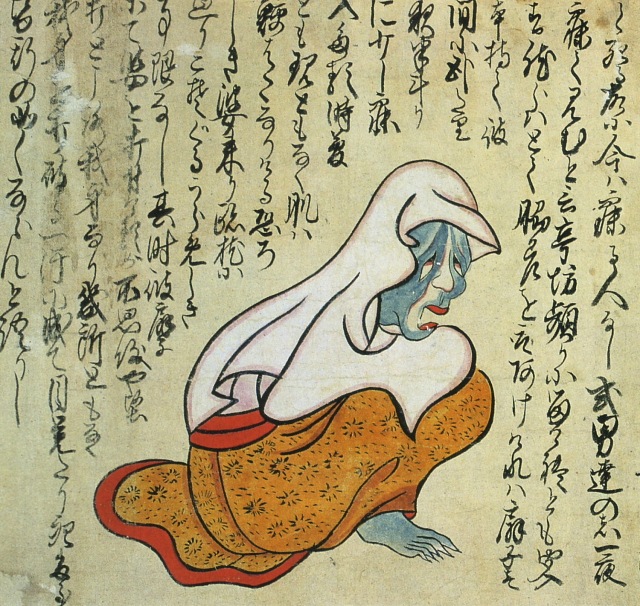
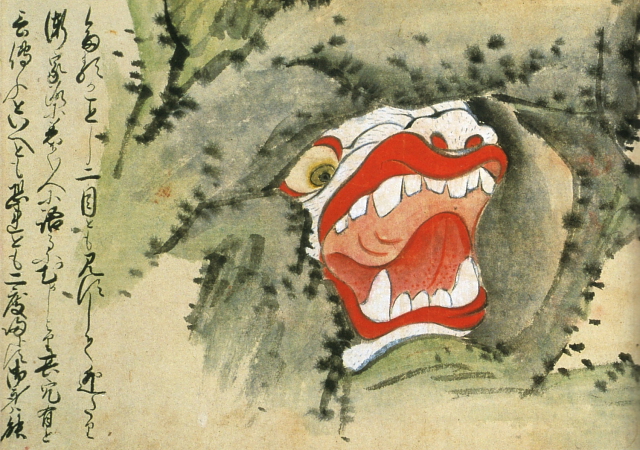
Ouni is a mountain hag with a mouth stretching from ear to ear and a thick coat of long, black hair covering her entire body. According to an old Niigata prefecture legend, Ouni appeared one day to a group of women as they were spinning hemp into yarn. After accepting the hairy hag’s offer to help, the women watched in surprise as she repeatedly placed raw hemp fiber into her mouth and pulled out finished yarn. After quickly producing a large quantity in this way, Ouni stepped outside and suddenly disappeared. Legend has it that she left footprints in the nearby rocks, which can still be seen to this day.

Yokai: Kamikiri --
Kami-kiri [Enlarge]

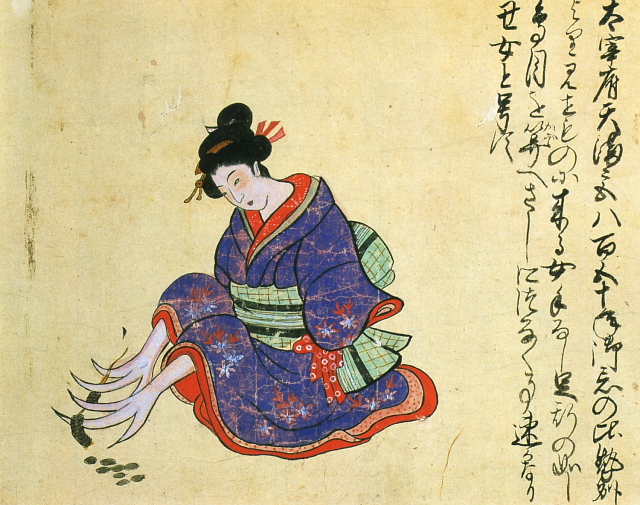
Kami-kiri (lit. “hair-cutter”) are ghostly spirits known for sneaking up on people and cutting all their hair off, particularly when they are unknowingly engaged to marry a youkai, spirit or other supernatural creature posing as a human. These hair-cutting attacks are intended to delay or prevent weddings between humans and otherworldly beings, which are typically doomed to failure. [More]

For more images from Hyakkai Zukkan, see the Sawaki Suushi collection at Wikipedia Commons.

Who to notify when aliens call?

Alien -- This past weekend, a group of 66 Japanese astronomers gathered to discuss the proper course of action to take in the event a signal from an extraterrestrial intelligence is discovered. The astronomers, who met specifically to determine which national authorities to notify after receiving an alien signal, failed to reach a decision before the meeting was adjourned.

According to the Declaration of Principles Concerning Activities Following the Detection of Extraterrestrial Intelligence — a set of guidelines adopted by the International Astronomical Union (IAU) and other international astronomy organizations — the discoverer of an alien signal is strictly prohibited from informing the general public until after he/she verifies that the signal is extraterrestrial in origin, informs other observers or research organizations involved so that they can independently observe and monitor the signal, and notifies the “relevant national authorities.”

While these guidelines have existed for nearly 20 years, the Japanese SETI community has never formally discussed who exactly Japan’s “relevant national authority” is until this weekend’s conference. The meeting was held at the Nishi-Harima Astronomical Observatory (NHAO) in Hyogo prefecture, which for the past several years has been using its 2-meter NAYUTA telescope (Japan’s largest) to search the heavens for high-intensity laser pulses sent our way by an extraterrestrial civilization attempting to communicate.

At the meeting, the National Astronomical Observatory of Japan (NAOJ) and the Ministry of Internal Affairs and Communications were named as possible “relevant national authorities,” but some participants rejected these nominations and called the IAU’s adopted guidelines into question by repeatedly warning that government authorities might cover up the truth if given a monopoly over the information.

In the end, the astronomers agreed to form a working group to study the issue, and they plan to announce their decision in 2009, which has been named the International Year of Astronomy. Should aliens establish contact in Japan before then, it will be up to the discoverer to decide who to notify.

[Source: Yomiuri]

Giant mechanical O-nyudo doll

Oonyuudou, Japan's largest mechanical doll --

Each August in the city of Yokkaichi in Mie prefecture, a giant mechanical effigy of O-nyudo, a legendary Japanese monster, is paraded through the streets during the Grand Yokkaichi Festival. The mechanized puppet, said to be the largest karakuri ningyo in Japan, stands between 6.3 and 9 meters (20 to 30 feet) tall depending on how far its neck is extended. The giant O-nyudo wows spectators by swinging its arms, bobbing its head around on its long neck, moving its eyes and mouth, and sticking out its tongue as it is wheeled through the streets to the accompaniment of taiko drums.

Here’s a short video.

O-nyudo, whose name literally means “large monk,” appears in a number of folk tales across Japan. While his physical appearance and characteristics vary from story to story, he is always large, ranging anywhere from 2 meters (6 ft. 6 in.) tall to as large as a mountain. O-nyudo usually appears as a giant person or an indistinct shadow, though he is known to have the ability to shape-shift.

In most cases, O-nyudo is a malevolent figure that can cause people to fall ill simply by looking at them. Some stories identify him as being a fox or tanuki (raccoon dog) that has shape-shifted (a common ability for these animals in Japanese folklore), but in most stories, his true identity remains a mystery.

Onyudo --

The Japanese Wikipedia entry for O-nyudo (大入道) includes a nice selection of stories from different areas and time periods. Here are a few.

In Hokkaido during the Kaei period (c. 1850), native Ainu communities reported seeing O-nyudo near Lake Shikotsu and Mt. Fuppushidake. It is said that he could drive people to madness and cause them to lose consciousness just by looking at them with his large eyeballs.

In Toyama prefecture, people with medical conditions staying at the Kanetsuri hot springs to cure their diseases claim to have seen a 15- to 18-meter (50 to 60 feet) tall O-nyudo, who was described as being surrounded by a beautiful rainbow-colored halo.

In 1937 near Akabane station in Tokyo, a military officer delivering an akagami (draft card) had a frightening encounter with O-nyudo at a railroad crossing near Akabane-Hachiman Shrine. Here, O-nyudo appeared as a soldier. Four days later, the officer was hit by a train at the same railroad crossing. While stories rarely identify O-nyudo as a human spirit, this story suggests the O-nyudo was the vengeful ghost of either a new recruit that had committed suicide or a soldier that had been accused of failure and bludgeoned to death by a superior officer.

In some cases, O-nyudo is helpful. For instance, according to an old story in the town of Ishii in the Myozai district of Tokushima prefecture, an 8.5-meter (28 feet) tall O-nyudo would show up to help mill the rice whenever it accumulated at the local water mill. However, the O-nyudo only worked alone, and if anyone tried to observe him while he worked, he would turn angry and frighten them away.

Onyudo -- Yokkaichi’s O-nyudo also appears to have been rather friendly, according to this website. One day long ago when Yokkaichi was a little merchant town, a large young man appeared at a small local shop and asked the owner to hire him. The shop owner, named Kyuroku, politely refused to employ the large man because the shop was too cramped to accommodate him. But the young man insisted, explaining to Kyuroku that he had just arrived from the countryside in search of work. Kyuroku eventually decided to hire him and gave him a room in his house behind the shop.

Mysteriously, the business began to thrive. Things went so well that after three years, Kyuroku asked the young man to marry his daughter so that he could one day inherit the shop. The young man refused the offer, saying he only wished to continue working as he had been.

Late one night the next summer, Kyuroku woke from his sleep and decided to step outside for some cool air. As he walked past the young man’s room, he noticed the glow of an oil lantern inside, visible through the shoji screen. The light cast a large shadow on the shoji that stopped Kyuroku dead in his tracks. He saw the ghastly, dark shape of a head attached to a long sinuous neck, slowly twisting and turning back and forth. Kyuroku watched in horror as the shadow snaked its head to the lantern and began to lick the oil. The head at the end of that horrible neck clearly belonged to the young man.

Kyuroku passed out from fear and fell to the floor. After waking the next morning, he cautiously went to the young man’s room and peeked inside. The room was empty except for the man’s striped kimono, which lay neatly folded on the floor. He had disappeared without a trace.

Nobody knows what happened to the large mysterious man, but the town of Yokkaichi built the mechanical O-nyudo effigy to pay him their respects and wish for his safety.

[Photos/video: 1, 2, 3, 4, 5]

Video: Severed Mouth Woman

Kuchisake-onna -- One of the cooler things about summer in Japan is the centuries-old tradition of swapping ghost stories. Some argue that the fear induced by a spine-chilling story can actually lower one’s body temperature, making it a great way to deal with the summer heat. With this in mind as the summer heat sets in, here is “Severed Mouth Woman,” a video produced by Buildup as part of their Bizarre Creatures of Japan series.

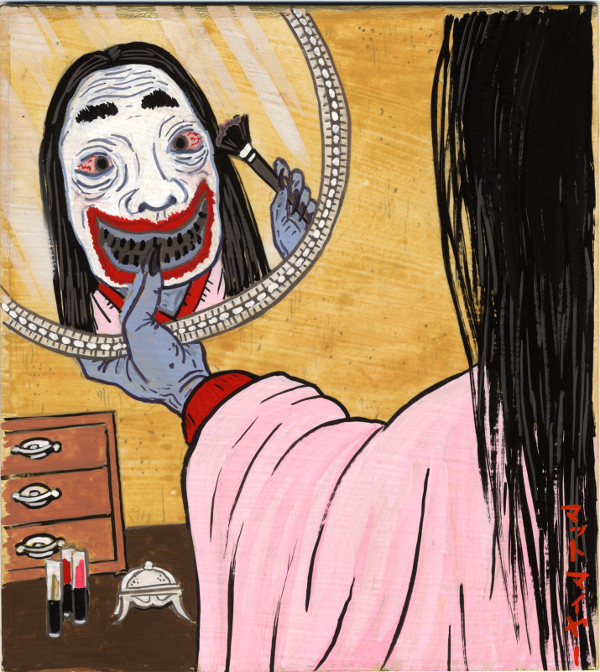
The video recounts the well-known story of the severed-mouth woman (kuchisake-onna), a malicious blade-wielding lady with a slit mouth (which she keeps hidden behind a surgical mask) who is bent on cutting open the mouths of strangers. Apparently a modern interpretation of an old Heian period legend, this tale sparked a mass panic in Japan in the late ’70s and early ’80s, as news reports circulated about a slit-mouthed woman terrorizing neighborhoods across the country. In this video, produced more than two decades after the hysteria passed, a former coroner comes forward with details about the severed-mouth woman’s identity. Using old skeletal records, her head is reconstructed here.

Enjoy, stay cool and… Brylcreem, Brylcreem, Brylcreem!

Related story: Ghost scroll collection at Zenshoan temple

Edo-period kappa sketches

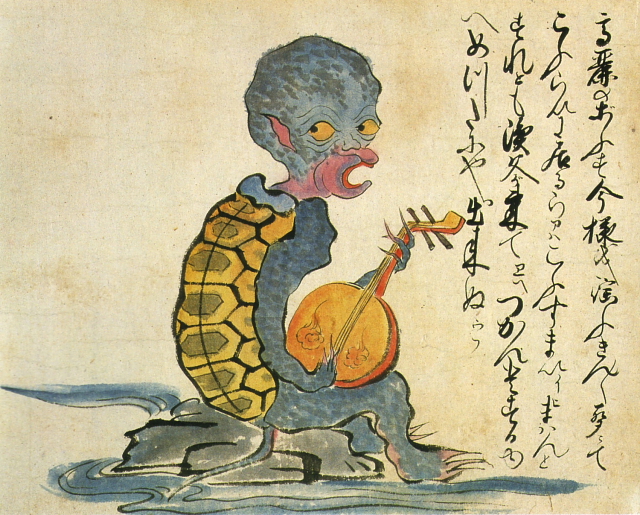
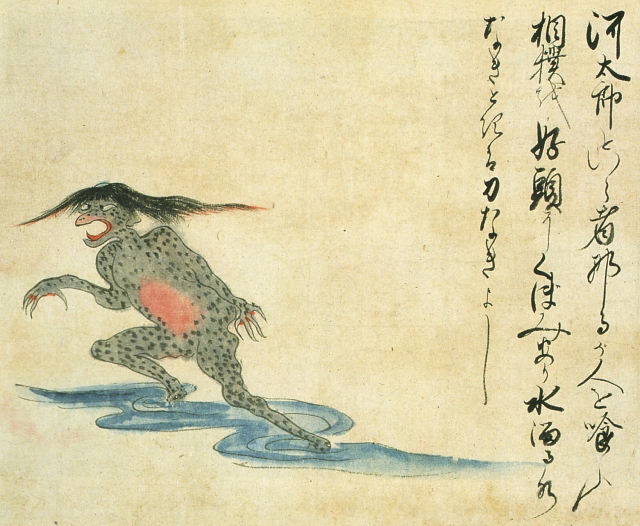
Kappa --- Kappa, arguably Japan’s most well-known creature of legend, are mischievous river imps notorious for luring people — particularly children — into the water to drown and eat them. They smell like fish, enjoy cucumbers and sumo, and are said to be very courteous despite their malicious tendencies.

Although kappa are typically about the size of a child and greenish in color, they can vary widely in appearance. They frequently have a turtle-like shell and scaly skin, but sometimes their skin is moist and slick, or coated in fur. Most walk upright on their hind legs, but they are occasionally seen on all fours. Regardless of body type, the top of the kappa’s head usually features a bowl-shaped depression containing water. The water inside this bowl is the source of the kappa’s power.

The Edo period (1603 to 1867) saw some serious scientific literature devoted to the study of these creatures. Suikokouryaku (1820), for example, is a compendium of kappa-related information gathered from a variety of sources from Japan and China. The book, which is housed in the Iwase Bunko Library, includes kappa sketches by artist Kurimoto Tanshu. Here are a few.

Kappa ---

The kappa on the left, sketched by Ito Chobei, was captured during the Meiwa period (1764 to 1772) in Edo, somewhere in present-day Tokyo’s Edogawa ward. When the creature was shown to Ota Chogen, a noted herbalist of the time, he identified it as a kappa — he happened to have a kappa sketch with him that showed a creature with strikingly similar features. According to the text in the book, this kappa measured 60 cm (2 ft) tall and had slippery skin like that of a catfish.

The middle picture above shows a type of kappa with no shell, and the picture on the right shows a kappa that was caught in a net in Mito, Japan in 1801. This kappa had a prominent chest, a crooked back and three anuses.

Kappa ---

Later in the Edo period, an illustrated guide to 12 types of kappa (Suiko juni-hin no zu) was produced based on information taken from Suikokouryaku. A portion of this document is shown above. Check out the complete, high-resolution version here.

Kappa --- Kappa --- Kappa ---

Ito Keisuke, a well-known man of medicine and prolific natural history artist in the Edo period, sometimes included depictions of mysterious creatures with his animal drawings — like the kappa on the left above, for example. The middle picture shows a kappa that was observed in one of the moats around Edo castle in the late 18th century. The picture on the right shows a kappa observed in the early 17th century in what is now the city of Hita in Oita prefecture (Kyushu). This kappa looked sort of like a turtle standing on its hind legs, and it had a depression on its head, webbed fingers, and splotches on its chest and abdomen.

Kappa --- Kappa ---

The neneko (or neko) kappa, shown on the left above, was sketched by Akamatsu Sotan in his 1855 work entitled Tonegawa zushi (”Illustrated History of the Tone River”). This kappa was known to move to a new location along the river each year, causing trouble wherever it went.

The image on the right shows a kappa scroll and kappa hand belonging to Sougenji (a.k.a. Kappa-dera, or “kappa temple”) located in the Ueno-Asakusa area of Tokyo. The temple is one of countless places in Japan that has stories and legends of kappa associated with it. According to this temple’s legend, the surrounding area was once a basin with poor drainage, making it prone to flooding. A local raincoat maker (the Japanese word for “raincoat” is “kappa”) took it upon himself to construct a series of drainage ditches, which he was able to complete with the help of a kappa living in the Sumida River. It is said that people fortunate enough to lay eyes on this kappa were blessed with success in business.

For lots more background information and kappa links, check here.

Edo-period illustrations by Kurimoto Tanshuu

Octopus/jellyfish/squid --

Vermin --

Fantastic fish --

Kurimoto Tanshuu (1756 - 1834) sketched wildlife during the Edo period. Check out the National Diet Library links below for more of his fantastic illustrations.

- Senchuufu: 275 pages of creepy crawlies (3 volumes)
- Tako-kurage-ika rui zumaki: 16 images of octopi, jellyfish and squid
- Igyozusan: 10 images of unusual fish (folding scroll)
- Gyofu: 51 images of stingrays and unusual fish
- Gyofu: 60 pages of fish (2 scrolls)
- Mamboukou: 18 images from a book on mambou (sunfish)
- Igyozusan/Seikaihyakurin: 60 images of fish (2 volumes)
- Hyakucho fuzanketsu: 5 images from a scroll of birds
- Karei zui: 38 images of flatfish (scroll)
- Choujuugyo shaseizu: 5 images of various animals (scrolls)

[Via: armchair aquarium]

Video: How to catch a skyfish

Skyfish --

The skyfish (also known as “rod” or “flying rod”) is a type of cryptid that flies through the air at speeds faster than the human eye can see. Here are two promotional videos (with English subtitles) for a set of Japanese DVDs documenting how to catch skyfish.


Video 1: How To Catch A Skyfish (Japan)


Video 2: How To Catch A Skyfish (International)

About halfway through the second video, one of the skyfish hunters shows off his spoodle, a special tool used for catching skyfish. According to this spoodle website, there are 100 ways to use the tool — including a number of practical uses not related to catching skyfish. A set of two spoodles and a skyfish decoy sells for 57,454 yen (US$499).

Spoodle --

Visit the Skyfish Maniax website for details on how to purchase the DVDs (which do not yet appear to have been subtitled in English).

Monsters gather in Tokyo, get X-rayed

Monsters invade Tokyo --

This October, Japan’s National Science Museum (Ueno, Tokyo) will host an exhibit of monster-related cultural artifacts, including the mummies of a mermaid and tengu (long-nosed goblin), as well as a selection of items documenting other traditional Japanese monsters like the kappa.

Scheduled to run from October 17 to November 12, the exhibit will feature about 100 historical items concerning legendary beasts and apparitions (yokai) from the Edo period to the present day. The exhibit is organized by the National Science Museum and the Ikimono Bunkashi Gakkai, whose members include Imperial Prince Akishinomiya.

On September 19, experts armed with state-of-the-art equipment began taking X-rays of the mummified tengu and mermaid, which belong to the Hachinohe City Museum in Aomori prefecture. The specimens, both of which are about 30 centimeters long, are commonly believed to be artistic creations made sometime during the first half of the 19th century. The tengu is believed to be an elaborate sculpture whose materials include paper, the head of a monkey and the body of a bird. The mermaid, also regarded as a sculptural work, is believed to consist of a wooden upper body attached to the tail of an actual fish.

The exhibit will feature the X-rays of both creatures.

[Source: Kyodo via Weekly Teinou Bee Woman]

Edo-period UFO

The Iwase Bunko Library has in its possession a document entitled Hyouryuukishuu (”Tales of Castaways”), which was printed during the late Edo period (1603-1868).

Edo-period UFO scroll

The document recounts the stories of Japanese sailors who find themselves in foreign lands after becoming lost at sea, as well as castaway foreigners washed ashore on the beaches of Japan. To the Japanese people, who at the time had been living in a prolonged period of national isolation, these exotic tales must have seemed very fantastic.

Among these stories is the account of a wrecked ship with a very mysterious appearance.

Edo-period UFO scroll

According to the document, this vessel washed ashore at Harashagahama in Hitachi-no-kuni (present-day Ibaraki prefecture). The body of the ship, described as 3.3 meters tall and 5.4 meters wide, had been built from red sandalwood and iron and was fitted with windows of glass or crystal. The mysterious characters of an unknown alphabet were found inscribed inside the vessel.

Edo-period UFO scrollAboard the drifting vessel was a finely dressed young woman with a pale face and red eyebrows and hair. She was estimated to be between 18 and 20 years old. Because she spoke an unfamiliar tongue, those that encountered her were unable to determine from whence she came. In her arms she clutched a plain wooden box that appeared to be of great value to her, as she would allow nobody to approach it.

The document shows a portion of the text found inside the ship (see left).

Other Edo-period documents describe variations of this mysterious encounter. Toen Shousetsu (1825), a book by Kyokutei Bakin (who is most famous for his 106-volume samurai epic Nansou Satomi Hakkenden) tells the story of the same encounter, referring to the strange vessel as the utsuro-fune (”hollow ship”). Another variation of this tale appears in Ume no Chiri (1844), penned by a relatively unknown author named Nagahashi Matajirou. A thorough analysis of these two variations of the story can be found in a translated article by Kazuo Tanaka titled “Did a Close Encounter of the Third Kind Occur on a Japanese Beach in 1803?

Contemporary fans of the paranormal know this ship as the Edo-period UFO.

[Link: Hyouryuukishuu in the Iwase Bunko Collection]