Scientists teach rodents to use rake

Degu learns to use rake --

Rodents can learn how to wield tools with the proper training, according to new research from Japan’s Institute of Physical and Chemical Research (RIKEN). In a series of experiments conducted over a 60-day period, researchers taught six degus (small rat-like rodents) to use a miniature rake to obtain food. Each degu was placed on one side of a fence with gaps large enough for its front legs to fit through, and sunflower seeds were placed out of reach on the opposite side. The rake was placed nearby, and after 60 days of practice, all six degus learned to use it to pull the sunflower seeds to within reach. This is the first known case in which rodents have been taught to use tools.
Watch a short video news report.

[Source: FNN/Yahoo!]

RIKEN creates insulated nanowires

Insulated nanowire -- In a development that brings superdense memory devices and molecule-sized machines a step closer to reality, scientists at Japan’s Institute of Physical and Chemical Research (RIKEN) have succeeded in creating 1-nanometer-thick electric wires with a layer of insulation. According to a January 2 RIKEN press release, the researchers grew the insulated nanowire crystals through a process involving a mixture of conductive and non-conductive organic molecules that organized themselves into the desired configuration.

For perspective, 10 hydrogen atoms laid side by side measure about 1 nanometer across, and a human hair is around 70,000 to 80,000 nanometers thick.

While scientists in the past have succeeded in creating nanowires from carbon nanotubes, metals and other materials, a great challenge has been to provide insulation to these microscopic wires so that they can be put to use in integrated circuits without short-circuiting. Another challenge has been to develop technology that enables nanowires to be arranged into regular arrays.

RIKEN researchers have overcome these challenges by developing a nanowire growth process that uses a tetrathiafulvalene (TTF) derivative — an organic molecule that conducts electricity — and non-conductive iodine-containing neutral molecules (HFTIEB), which together self-assemble into crystals that function as insulated nanowires. The researchers, who indicated success in organizing the nanowires into regular patterns, also demonstrated a certain degree of control over the crystal structure, creating two-conductor nanowires and insulation coatings of various thicknesses. The results suggest it may soon be possible to engineer these insulated nanowires for use in practical applications.

RIKEN’s insulated nanowires have the potential to be used as a basic component in superdense 3D storage media that rely on molecular memory arrays, say the researchers, who indicate that memory devices built on this technology would be able to store up to 100 petabytes (100 million gigabytes) of data per cubic centimeter, or about 400,000 times more than today’s typical desktop PC hard drive (250 GB) in a device the size of a sugar cube. If used in logic circuits, this type of wiring technology would revolutionize the electronics industry as we know it, the researchers add.

[Source: RIKEN]

Toyota studies brain to develop future cars, robots

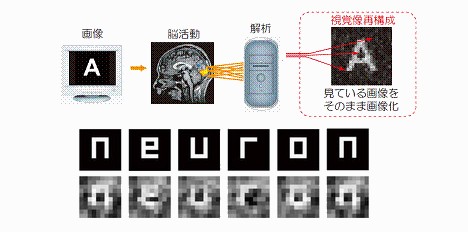
Brain -- In an effort to accelerate the development of next-generation automobiles and robots, Toyota is turning to some of Japan’s top neuroscientists. According to a December 14 announcement, the automaker has teamed up with the Institute of Physical and Chemical Research (RIKEN) in a 20-year project aimed at researching the human brain and developing neurotechnology-based auto safety systems, sophisticated robots, and machinery that users can operate with their minds.

Toyota and RIKEN will conduct the brain research at the recently established RIKEN BSI-Toyota Collaboration Center, which will initially be staffed by 30 researchers, 5 of whom are from Toyota. The research will fall into three broad categories: (1) neuro-driving research, which focuses on the mental processes at work as drivers perceive, judge and react to the external environment, (2) neuro-robotics research, which focuses on how the brain processes information, and (3) mind-health research, which focuses on the physiology of the brain and nervous system and the relationship between the brain and physical health.

Through the neuro-driving research, which is expected to shed new light on how the brain works as drivers perceive obstacles and operate their vehicles, Toyota ultimately hopes to develop auto safety technology that can completely prevent all traffic accidents.

In addition, the automaker explains that the purpose behind the neuro-robotics research is to develop advanced robots that can interact more effectively with humans. Toyota, which sees robotics as one of its core businesses in the future, has been stepping up efforts in recent years to develop “lifestyle support” androids for use in nursing and health care. The company also believes the research will lead to the development of brain-machine interfaces that allow users to operate equipment by thought.

Toyota explains that the decision to pursue brain research is driven by an ever-increasing demand for more sophisticated automotive and robot technology. With a better understanding of the cognitive mechanisms underlying human feelings, thoughts and actions, the company reckons it can get a head start in the race to develop the cars and robots of the future.

[Sources: Sankei, Nikkei]

Giant jellyfish eyed as commercial mucin source

Echizen kurage, Nomura's jellyfish -- In the latest development in Japan’s war against giant jellyfish invaders, scientists studying the biochemistry of echizen kurage (Nomura’s jellyfish) have discovered a previously unknown type of mucin in the sea creatures.

Mucins, the main structural components of mucus, are complex proteins found in human saliva, gastric juice and the lining of the stomach, all of which play a key role in the digestive process. The recently discovered jellyfish mucin, according to the researchers from the Institute of Physical and Chemical Research (RIKEN) and science equipment manufacturer Shinwa Chemical Industries, can be put to use in a variety of pharmaceutical, medical, food and cosmetic products.

While the researchers have yet to release the details about the molecular structure of the jellyfish mucin, they claim it has a simple structure similar to a type of glycoprotein (organic molecule composed of protein and sugar chains) found in human digestive fluid, suggesting it could be used as a digestive supplement for elderly people with weak gastric juice. In addition, the researchers see potential uses for jellyfish mucin in products such as eyedrops, artificial saliva and surgical adhesives.

At least 12 types of mucins are known to exist in various locations in the human digestive tract, as well as in saliva and in the mammary glands. While mucins are also known to exist in animals and in some plants such as okra, lotus root and yams, only a few sources of the slimy substance have been tapped for large-scale commercial production.

To harvest the jellyfish, RIKEN says it is investigating the possibility of enlisting the help of Japan’s fisheries to catch the giant echizen kurage, which can grow up to 2 meters (6 ft 7 in) in diameter and weigh up to 200 kg (440 lb) each. The group is also considering harvesting moon jellyfish, the culprits responsible for disrupting output at nuclear power plants last year after they clogged seawater coolant intake pipes.

Business negotiations are now underway between 20 organizations, including pharmaceutical companies, medical institutions and food and cosmetics manufacturers.

[Source: Fuji Sankei]

New cement conducts electricity like metal

Electro-conductive cement ---

A team of researchers led by professor Hideo Hosono of the Tokyo Institute of Technology has developed a new type of alumina cement that conducts electricity like metal by altering the crystal structure at the nano level.

Ordinary alumina cement made from a lime-alumina compound (C12A7) has a crystal structure consisting of asymmetric cages, making it a poor conductor of electricity. But by sealing the alumina cement compound along with titanium inside a glass tube and heating it to 1,100 degrees Celsius, the researchers were able to create a homogenized, symmetrical cage structure that conducts electricity like metal.

Results indicate the cement’s electrical conductivity is on par with that of manganese at room temperature. Moreover, like other metals, the cement’s conductivity increases as its temperature decreases.

The researchers say that forming the cement into thin membranes would make it nearly transparent, making it an ideal substitute material for rare metals such as indium, which is used in plasma and liquid-crystal displays. In addition to being cheaper than rare metals, the cement would make an environmentally-friendly alternative because its ingredients are more readily available.

The Tokyo Institute of Technology worked with researchers from Osaka Prefecture University, the Institute of Physical and Chemical Research (RIKEN), and the Japan Synchrotron Radiation Research Institute (SPring-8) to develop the cement. The results are published in the April 11 edition of Nano Letters.

[Sources: Nikkei Net, Mainichi, SPring-8 press release]

Instant bonsai

Mini-petunias (top left) and ordinary petunias -- On January 18, researchers from Japan’s Institute of Physical and Chemical Research (RIKEN) and the University of Michigan announced the development of a technique for engineering “mini-plants” that are 1/10th their ordinary size.

The researchers claim it is possible to tailor the size of plants by manipulating the genes that regulate the activity of growth hormones. The technique is expected to lead to the creation of miniaturized versions of decorative houseplants, as well as dwarf crops that are easier to harvest and more resistant to wind damage.

In studying dwarf varieties of rice and wheat created through ordinary hybridization, the researchers found damage to the genes that synthesize gibberellin, a growth hormone. When researchers looked for a mechanism to control the growth hormone, they discovered that the GAMT1 and GAMT2 genes commonly found in plants were responsible for producing an enzyme that neutralizes gibberellin.

When the researchers engineered strains of petunias and thale cress (Arabidopsis thaliana) in which the two genes were constantly expressed, the plants grew to 1/10th their ordinary size. When plants were administered gibberellin, they grew to their normal size, demonstrating that the size of plants can be freely adjusted.

[Source: Yomiuri]

Petaflops-level supercomputer to be unveiled

MDGRAPE-3

On June 19, Japan’s Institute of Physical and Chemical Research (Riken), SGI Japan and Intel announced the development of a supercomputer with a theoretical peak performance of 1 petaflops (one million billion floating point operations per second). Known as the MDGRAPE-3 (or the Protein Explorer), the computer system is designed to perform molecular dynamics simulations of such phenomena as non-bonding interactions between atoms.

The system consists of 201 units equipped with 24 of RIKEN’s MDGRAPE-3 LSI chips for molecular dynamics simulation (total of 4,808 chips), which are connected to 64 parallel servers equipped with 256 of Intel’s Xeon 5000-series cores and 37 parallel servers equipped with 74 Xeon 3.2 GHz cores.

In the future, RIKEN plans to further upgrade the system with Xeon 5100-series processors (codenamed Woodcrest), and testing is now underway.

The LINPACK Benchmark, which is the standard for the Top 500 List, could not be performed on the system, so the performance cannot be compared directly with the world’s other top supercomputers. However, the system’s theoretical peak performance of 1 petaflops will set the computer firmly at the top of the list, with a speed about three times that of IBM’s BlueGene/L at Lawrence Livermore National Laboratory (currently No.1 on the list).

The system will be unveiled to the public on June 24 at RIKEN’s Yokohama laboratory.

[Source: IT Media]

Through the (zero-reflection) looking glass

MetamaterialWhen light passes through material such as glass, a portion of its energy is lost as it reflects off the material’s surface. Researchers at Japan’s Institute of Physical and Chemical Research (Riken) have come up with a theoretical design for preventing this phenomenon from occurring.

The researchers have designed a prism of engineered material — metamaterial comprised of an arrangement of nano-coils of precious metals such as gold or silver — embedded in a solid glass-like material. The prism structure has a negative refractive index, which makes it truly transparent to light, allowing it to pass freely through with no reflection.

In the future, this type of metamaterial prism could lead to improvements in low-loss fiber optic communications, the development of telescopes and cameras well-suited for dark subjects, and the emergence of optical equipment we have never seen before.

[Sources: Jiji, Riken press release]

The bioluminescent tail of Genji

Scientists have succeeded in unraveling the mystery — at the protein structure level — of the mechanism at work in the glowing tail of the “Genji firefly” (Luciola cruciata Motschulsky), which is considered to have the highest luminous efficiency of any known source of light. The results of the joint research carried by the Institute of Physical and Chemical Research (RIKEN) and Kyoto University are to be published in the March 16 edition of the British science journal Nature.

Bioluminescence

By tinkering with the chemical composition of luciferase (a bioluminescent enzyme), the research team succeeded in changing the emission color from its normal greenish-yellow to orange and red. Researchers are now attempting to recreate the blue glow of the sea firefly (Vargula hilgendorfii) and firefly squid (Watasenia scintillans) in order to have all three primary colors at their fingertips.

“This might prove useful in applications such as short-term emergency lighting when no source of electricity or combustion is available,” says Kyoto University professor Hiroaki Kato. “Light could be created by mixing up a liquid protein solution.”

Anytime energy is converted into light, there is some loss due to heat. Luminous efficiency is a measure of the proportion of energy supplied to a light source that is effectively converted into visible light energy (i.e. the amount not lost to heat or infrared radiation). The luminous efficiency of incandescent light bulbs is around 10%, while fluorescent light is around 20% and LED is around 30%. Firefly tails are significantly higher, at 90%. Scientists were aware that the Genji firefly used luciferase in combination with luciferin (a light-emitting substrate) and adenosine triphosphate (ATP) to produce light, but the detailed workings of the mechanism have until now remained a mystery.

[Sources: Jiji, RIKEN press release]

RI-MAN revisited

RI-MANMore details about RI-MAN, the soft-skinned robot, were revealed in a press release issued by RIKEN yesterday.

RI-MAN is the world’s first robot designed for lifting and carrying humans. A variety of sensors, including flexible tactile sensor sheets, provide RI-MAN with a sense of vision, hearing, touch, and smell. These senses help RI-MAN perform tasks such as locating people who are calling out to it, responding to spoken commands, carefully lifting those who need lifting, and checking the sanitary condition of the person it is carrying. RI-MAN is able to integrate a wide range of sensory data to adapt to changes in the environment.

The robot is also equipped with 19 motors, controlled by a system of hierarchical distributed processing that is modeled after the nervous system found in biological organisms. This “nervous system” — a network of what RIKEN calls C-CHIPs — integrates sensor data processing with motor control to provide RI-MAN the autonomy needed to respond quickly to changes in the environment. The head has 3 degrees of freedom, each arm has 6, the waist has 2, and the base (which acts as RI-MAN’s legs) has 2. Safety-related technology, including safety circuits and soft skin and joints designed to prevent injury, are incorporated into RI-MAN’s design.

Still in the initial testing phase, RI-MAN is currently practicing with dolls that weigh about 12 kg (26 lbs). Researchers plan to increase the weight of the practice dolls over time, with the aim of achieving the ability to lift human adults in 5 years. Researchers will continue working to upgrade RI-MAN’s sensors and data processing skills to improve adaptability. The aim is to create a robot with the physical power needed for heavy lifting and the reasoning skills needed for operating in places like people’s homes. RIKEN says that with these skills, RI-MAN can be put to work in nursing and rehabilitation, in furniture moving, or in any other job that requires muscle.

[Source: RIKEN press release]

[See also: RI-MAN homepage (includes video)]