Toyota studies brain to develop future cars, robots

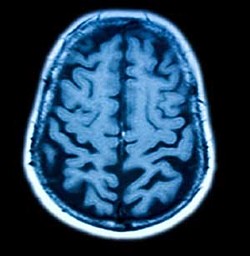
Brain -- In an effort to accelerate the development of next-generation automobiles and robots, Toyota is turning to some of Japan’s top neuroscientists. According to a December 14 announcement, the automaker has teamed up with the Institute of Physical and Chemical Research (RIKEN) in a 20-year project aimed at researching the human brain and developing neurotechnology-based auto safety systems, sophisticated robots, and machinery that users can operate with their minds.

Toyota and RIKEN will conduct the brain research at the recently established RIKEN BSI-Toyota Collaboration Center, which will initially be staffed by 30 researchers, 5 of whom are from Toyota. The research will fall into three broad categories: (1) neuro-driving research, which focuses on the mental processes at work as drivers perceive, judge and react to the external environment, (2) neuro-robotics research, which focuses on how the brain processes information, and (3) mind-health research, which focuses on the physiology of the brain and nervous system and the relationship between the brain and physical health.

Through the neuro-driving research, which is expected to shed new light on how the brain works as drivers perceive obstacles and operate their vehicles, Toyota ultimately hopes to develop auto safety technology that can completely prevent all traffic accidents.

In addition, the automaker explains that the purpose behind the neuro-robotics research is to develop advanced robots that can interact more effectively with humans. Toyota, which sees robotics as one of its core businesses in the future, has been stepping up efforts in recent years to develop “lifestyle support” androids for use in nursing and health care. The company also believes the research will lead to the development of brain-machine interfaces that allow users to operate equipment by thought.

Toyota explains that the decision to pursue brain research is driven by an ever-increasing demand for more sophisticated automotive and robot technology. With a better understanding of the cognitive mechanisms underlying human feelings, thoughts and actions, the company reckons it can get a head start in the race to develop the cars and robots of the future.

[Sources: Sankei, Nikkei]

‘Tondon’: Balinese-style robot janitor

Tondon, robot janitor --- An autonomous robot janitor built by Subaru (Fuji Heavy Industries) and Sumitomo has landed a job cleaning the outdoor hallways of a new 14-story Bali-themed luxury apartment complex in Tokyo. Lovingly nicknamed ‘Tondon’ in an apparent reference to a legendary Balinese snake god, the robot is a close relative of RFS1, the autonomous floor cleaning robot that received Japan’s 2006 Robot of the Year Award last December.

Like the RFS1, which currently cleans hallway floors inside ten Tokyo-area office buildings, Tondon works unsupervised and relies on an optical communication system to control the building’s elevators, allowing it to move freely from floor to floor as needed. To improve the robot’s ability to clean gritty outdoor surfaces, Tondon’s makers have added a set of heavy-duty brushes designed to sweep up leaves and dirt from hallway floors and drains. Furthermore, Tondon’s outer shell has been strengthened and waterproofed to protect its internal components from the elements, and it has been painted with a unique design to complement the apartment building’s Bali-themed decor.

Tondon also has a number of safety features that help it better coexist with the building’s residents, including proximity sensors that help prevent collisions with people, as well as bumper switches that stop the robot in its tracks when it is touched. A protective guard around the brushes prevents the robot from giving people unwanted shoeshines, while lamps and voice announcements provide ample warning when it is approaching.

A set of video cameras has also been added to the robot. With four cameras that record the robot’s every move and a hard disk that stores the video feed, human overlords can keep close tabs on Tondon to make sure it doesn’t nap on the job. The cameras can also be used for hallway surveillance, the company says, allowing the robot to double as a watchful security guard as it cleans.

[Source: Fuji press release]

Smart car seat detects drowsy drivers

Smart seat --- Researchers from the University of Tokyo, Oita University, the Shimane Institute of Health Science and Delta Tooling, an industrial equipment manufacturer, have developed a prototype smart car seat capable of detecting when its occupant is on the verge of falling asleep. The seat was unveiled at a symposium held at the University of Tokyo on February 5.

The researchers began by studying the physiological signs of 100 sleepy subjects, focusing particularly on the changes in pulse and respiration that occur 10 minutes before falling asleep. They then developed a system of sensors that could both detect these changes and be embedded in the seat.

The seat is equipped with a pair of pulse-monitoring pressure sensors in the seat-back and a set of respiration-monitoring sensors underneath. The researchers successfully tested the system in a variety of simulated and actual driving conditions, and they claim it works effectively even when the driver is bundled in layers of clothing.

Previous drowsiness prediction systems that rely on physiological data require the subject to attach electrodes or other hardware to his or her body. And since these systems tend to be bulky, they have not seen widespread use in automobiles. However, unlike previous systems, this newly developed smart car seat does not require the driver to wear any special hardware — it can detect drowsiness as long as the driver remains in the seat.

Though the seat can sense when the driver is sleepy, it is not yet equipped to respond. The next step will be to outfit the seat with an alarm function that is automatically activated when its occupant becomes drowsy. The researchers hope to make the smart seat commercially available in 5 years.

[Sources: Asahi, Yomiuri, University of Tokyo press release (PDF)]

Ubiko robot knows where the smokers hang

Ubiko sniffs out ashtrays -- Robot manufacturer tmsuk, Kyushu University and the Kanazawa Institute of Technology have teamed up to develop a robot that can sniff out the smells that accompany fire. A public demonstration of the robot’s new abilities was held at Kyushu University on February 21.

The researchers outfitted a 60-kilogram (132-pound), 112-centimeter (44-inch) tall Ubiko — a tmsuk robot originally designed to serve as a temporary receptionist — with a first-of-a-kind set of olfactory sensors specifically tuned to detect the odors of smoke and ash.

In the test, Ubiko, which moves on wheels and has a slightly humanoid appearance (albeit with a pair of triangular feline ears atop its head), was tasked with patrolling four rooms, each with a different smell. One room smelled of perfume, one smelled of garlic, one smelled of cigarettes, and one was odorless. When the robot smelled the room with ashtrays, it identified it as likely to catch fire and sent a wireless message to security.

Kiyoshi Toko, electronic engineering professor at Kyushu University, says, “We want to increase the accuracy of the sensors and create a fire-prevention robot that can detect subtle smells that humans cannot perceive.”

For now, the robot has no fire-fighting skills except the ability to alert the authorities when it detects a funny smell. This is probably a good thing in an office environment, for example, where Ubiko might wreak havoc by spraying fire retardant on heavy smokers or on innocent employees who happen to visit smoky restaurants during their lunch breaks.

[Source: Nikkei Net]

Cyber-concrete lets walls speak

YRP Ubiquitous Networking Laboratory -- Sumitomo Osaka Cement and YRP Ubiquitous Networking Laboratory have developed cyber-concrete, a smart form of concrete embedded with RFID tags that can store data. Researchers developed a durable coating for YRP’s “ucode” tags, which have a larger storage capacity than ordinary IC tags, and they developed a special reader that, when held near the concrete, retrieves the stored data and converts it into spoken form.

Sumitomo is set to begin field testing the technology at its cement factories this month, with the aim of making it available to large construction companies in the spring of 2007.

While the potential applications of cyber-concrete are endless, the companies are initially promoting it as a new tool for managing structural safety data. Cyber-concrete can store information about itself, such as when, where and how it was manufactured and data about strength and quality, making for more efficient and reliable safety inspection systems. This traceability data can be used by construction companies, inspectors, or tenants concerned about building safety.

Public concern for structural safety has risen with a recent building safety inspection scandal involving the discovery of falsified quake-resistance data for a number of buildings in Tokyo and the surrounding areas. Perhaps cyber-concrete will bring a little peace of mind, allowing people to bypass the shady inspectors and ask buildings directly how safe they are — which is great as long as buildings have no reason to be dishonest.

And should you find yourself trapped under three floors of cyber-concrete after the Big One, at least you’ll have something to talk to while waiting for the rescue bots to arrive.

[Sources: Fuji Sankei, Nikkei Net]

Video: Asteroid impact avoidance system

This video shows a very simple, yet ingenious way to save the planet from destruction by a giant meteor.

Pre-quake alarm gives 20 seconds to duck and cover

NTT's earthquake alarm system --

NTT is developing a device that provides advance warning of earthquakes seconds before they strike by relying on data from a nationwide system of seismometers put in place by the Japan Meteorological Agency. The sensors detect an earthquake’s primary waves (”P-waves”), which travel more quickly and are much weaker than the lower-velocity secondary waves (”S-waves”) that cause the major damage associated with earthquakes.

When the sensors detect P-waves, data about the timing and strength of the coming S-waves is instantly delivered to the earthquake alarms via NTT’s fiber optic network, notifying the users in their homes before the S-waves strike. The time difference between the arrival of P-waves and S-waves depends on the distance from the epicenter, so locations farther from the epicenter can receive warnings much more in advance than those near the epicenter. Unfortunately, people located directly above the epicenter, where the earthquake is at its strongest, are unlikely to receive any advance warning at all.

The TV commercial for the device (as well as the extended web version, now on YouTube) shows a mildly touching dramatization of the device at work.

The commercial focuses on a female college student who is majoring in home economics and living at home with her parents. When home alone, the girl spends most of her free time in the kitchen honing her cooking skills by preparing dishes like goya kinoko champuru, an Okinawan stir-fry made with bitter gourd, mushroom and eggs. The kitchen is equipped with an NTT earthquake alarm.

The first time the earthquake alarm sounds, the girl goes into a mild panic, squandering her 20-second warning by wondering where to set the dish she is holding. She finally crawls under the dining table and all is well.

The next time an earthquake comes, she is prepared. The alarm sounds and the mechanical voice informs her that a magnitude 3 earthquake will strike in 20 seconds. As the countdown begins, she calmly turns off the stove, opens the patio doors, and crawls under the table. The voice instructs her to protect herself from physical harm until the shaking stops, advising her not to run outside in a panic. The voice then instructs her to make sure the gas is turned off and evacuate to a safe place once the quake has passed. Finally, the voice instructs her to pay attention to the information provided by the mass media and the local authorities, again reminding her to remain calm.

Later, the girl’s mother calls to check on her. Having cooked a great deal of food, the girl tells her mother to come home hungry. Later they will feast.

Luckily for all, the earthquake was only a magnitude 3 affair, unlike the monster that struck Kobe back in 1995.

I have fortunately never seen the need to duck and cover during an earthquake and I don’t know how well I would fit under my dining table, but nonetheless it would be nice to have a 20-second warning before the Big One hits.

[Further reading: Asahi Shimbun (English)]

Intelligent wheelchair sees all

SOS: Stereo Omnidirectional System --

On September 20, Japan’s National Institute of Advanced Industrial Science and Technology (AIST) unveiled an intelligent wheelchair that relies on an omnidirectional camera for a view of its surroundings, avoids collisions with people and obstacles, and knows when something is wrong with the chair’s occupant. Developed with the cooperation of the National Rehabilitation Center for Persons with Disabilities, the new technology is expected to improve the safety and security of electric wheelchairs for the disabled and elderly.

While the increased prevalence of electric wheelchairs has improved the mobility of persons with serious disabilities, they have also resulted in an increased number of collisions and accidents. To boost wheelchair safety, AIST engineers incorporated elements of intelligent automotive systems, which are capable of calculating the risk of collisions before they happen and automatically applying the brakes when necessary.

The prototype wheelchair is equipped with a camera system — interestingly dubbed Stereo Omnidirectional System (SOS) — whose 360-degree field of vision has no blind spot. Relying on the camera images, the chair detects potential hazards that arise while in motion and decelerates or stops accordingly. The chair also checks the occupant for signs of abnormality (unusual posture) and is equipped with a function that allows the occupant to control the chair by gesturing (pointing). Check out the AIST press release for videos of the chair in action.

The wheelchair is currently equipped with a function for transmitting the camera’s color video via wireless LAN, and AIST is investigating the possibility of enabling the video to be delivered via cellular phone and providing support for remote-control functions. AIST will soon subject the prototype to rigorous testing and continue upgrading the functions.

This intelligent wheelchair technology will be demonstrated at the 2006 Home Care and Rehabilitation Exhibition scheduled for September 27 to 29 in Tokyo.

[Sources: MYCOM Journal and AIST press release]

Intelligent road system to boost traffic safety

Driving Safety Support System

Japan’s National Police Agency is moving forward with plans to introduce a road safety system that alerts drivers to potential hazards through audio and visual notifications on in-vehicle navigation systems. With testing scheduled to begin in Tokyo this year, the system is expected to be rolled out in 2008 after the test results are verified.

The system, developed by the Universal Traffic Management Society of Japan (UTMS), is known as the Driving Safety Support System (DSSS). The system relies on networks of two-way communication devices called infrared beacons installed at a height of 5.5 meters above roadways, particularly in accident-prone areas. These infrared beacons detect the presence of vehicles and pedestrians in hard-to-see locations and communicate this information to drivers through their in-vehicle navigation systems.

As many as 20 different subsystems, each designed to prevent a specific type of accident (rear-end collisions, head-on collisions, right-turn collisions, etc.), are being studied. Of these subsystems, 5 are expected to be rolled out in 2008 and are being tested in Tokyo — including one that alerts drivers to the presence of pedestrians when turning left through intersections, one for highways that provides information about merging traffic, and one that provides information about traffic snarl-ups to prevent rear-end collisions.

DSSS is similar to the Vehicle Information and Communication System (VICS), an existing system that also relies on infrared beacons to communicate traffic information to in-vehicle navigation systems, but only about 10% of all vehicles in Tokyo make use of this system. Future studies will focus on developing ways to popularize this type of system.

The tests in Tokyo are designed to provide a detailed investigation of the effectiveness and impact on the safety of ordinary drivers. When experimental testing of the 5 systems was carried out in Toyota City in Aichi prefecture from 2002 to 2004, more than 80% of users thought they were effective.

[Source: Corism]

Kawasaki BULLDOG to sweep Cambodian landmines

Kawasaki's BULLDOGOn June 21, Kawasaki Heavy Industries announced plans to send its BULLDOG landmine clearing system to Cambodia, where it will be put to the test in the field. The BULLDOG system, which employs Kawasaki’s robotic remote control and electronic control technology, has undergone some upgrades after conducting mine clearing operations in Afghanistan in 2004 and 2005.

By conducting test operations in Cambodian minefields, Kawasaki hopes to gather data that will help them develop a BULLDOG system well-suited to the local vegetation, soil conditions, and terrain. As was the case in Afghanistan, the operations are financed by a grant extended by the Japanese government.

The BULLDOG system consists of three parts: (1) the MINE DOG, a mine-detecting vehicle equipped with mine detection sensors and a variety of cameras, (2) the MINE BULL, a mine-clearing vehicle equipped with a drum that drills the earth to excavate and detonate mines and a mechanism to collect waste products, and (3) a system of devices for remote control and operation.

Relying on an 8-channel system of mine detection sensors that automatically adjust their height with respect to uneven terrain, the MINE DOG can detect anti-personnel mines and unexploded bombs underground. A camera mounted on top of the vehicle detects trip wires and mines scattered on the ground surface. Sensor data is analyzed using software developed by Kawasaki, which allows operators to distinguish mines from objects such as rocks or cavities in the soil. For the tests in Cambodia, Kawasaki added features to help the MINE DOG deal with vegetation, as well as features to improve mobility on soft ground.

The MINE BULL detonates anti-personnel mines by means of a high-speed digging drum that turns the soil in front of the vehicle. The vehicle’s excavation depth monitor, GPS antenna, and route-monitoring cameras ensure steady digging and forward motion, and a system of magnets extract waste materials that typically slow down the safety inspections that follow mine clearing operations. To deal with Cambodia’s sticky soil, Kawasaki added a system of brushes to prevent soil buildup and mobility-enhancing features similar to those added to the MINE DOG.

The MINE BULL will be shipped to Cambodia in June, and work will begin in a minefield near Siem Reap in July. The MINE DOG will be shipped in August, and it will go to work beginning in October.

Kawasaki aims to use the data obtained from these tests to quickly develop a BULLDOG system well-suited for the Cambodian landscape, which they hope will make a valuable contribution to international demining activities that involve the Japanese government and international NGOs.

[Source: ZDNet Japan]